Faris Adani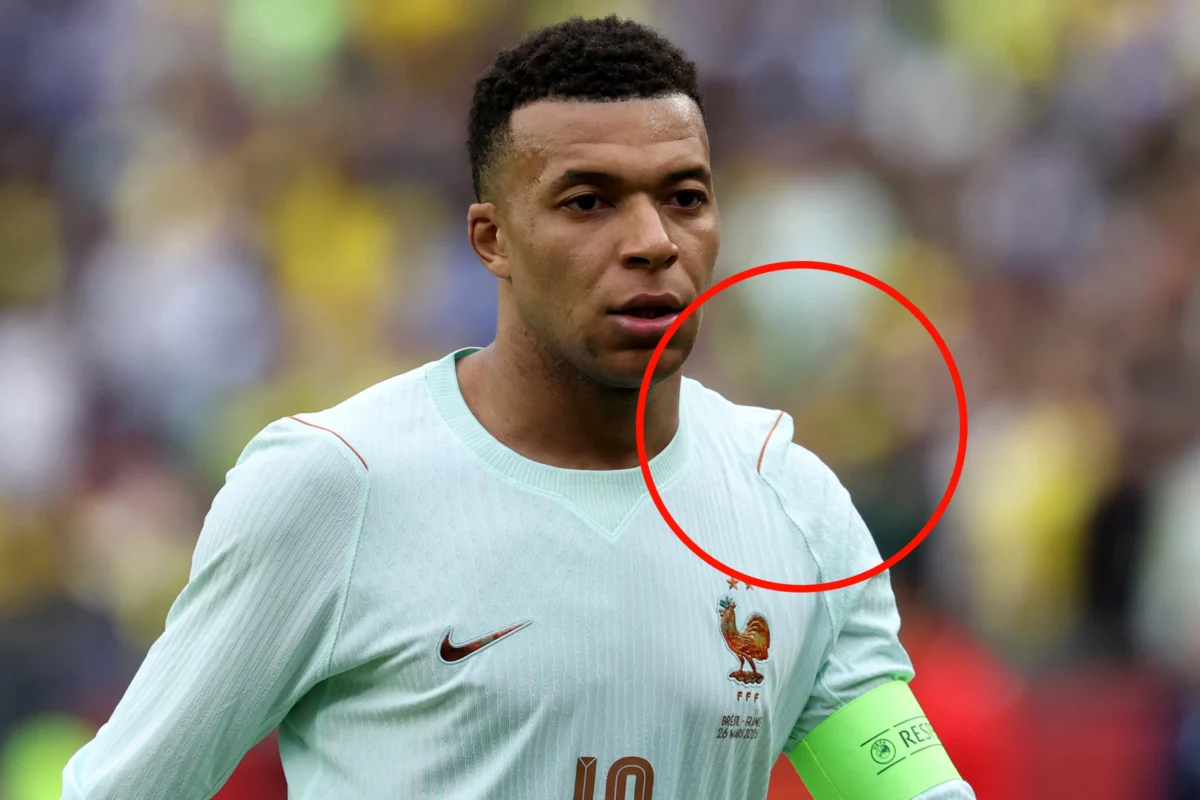
Eagle-eyed fans and discerning fashion critics alike immediately pinpointed the egregious misshapen shoulders marring the new kits. What was intended to be a sleek, performance-enhancing garment has instead resulted in an awkward, bunched-up silhouette, most notably around the shoulder seams. The effect is comically unflattering, making even the most sculpted physiques of global football icons appear disproportionate. France’s megastar Kylian Mbappé, known for his impeccable style on and off the pitch, was among the first to be seen in the flawed design, his athletic frame seemingly swallowed by the ill-fitting shoulders. Perhaps the most striking example of this design gaffe was Uruguay’s captain, Federico Valverde, who, during a recent game against England, looked as though he was squeezed into a jersey three sizes too small, with the fabric creating an almost grotesque bulge that drew immediate mockery and concern. This widespread issue, affecting numerous national teams sponsored by Nike, including England, the US, and Uruguay, raises critical questions about the design and manufacturing process of a brand that has long been synonymous with athletic excellence and style innovation.
Nike has heavily promoted its new "Aero-FIT" design, touting it as a revolutionary leap in sports apparel engineering, specifically designed to help athletes maintain optimal body temperature during what is anticipated to be a scorching hot tournament across North America. The marketing materials proudly state that this technology “leverages computational design and a highly specialized, stitch-specific knitting process.” While the term "computational design" might sound sophisticated and futuristic, industry insiders and observers quickly interpreted it as a thinly veiled euphemism for artificial intelligence. A source familiar with Nike’s design process, speaking to The Guardian, confirmed that elements of AI were indeed integrated into the workflow, collaborating with human designers. This revelation immediately cast suspicion on the AI component, raising the distinct possibility that an algorithmic miscalculation or a flaw in the AI’s generative design capabilities could be directly responsible for the now infamous shoulder bulge. The promise of AI in design typically involves optimizing for complex variables like airflow, ergonomic fit, and material stress points, all based on vast datasets. However, this incident suggests a critical breakdown in either the AI’s understanding of human anatomy and aesthetic proportion or the human oversight in validating the AI’s output.
Nike, a titan in the athletic apparel industry, has built its empire on a foundation of relentless innovation and a keen understanding of both performance and style. For decades, its World Cup kits have not merely been uniforms; they have been cultural statements, eagerly anticipated by fans and often becoming iconic symbols of national pride. From the sleek designs of the 90s to the technologically advanced fabrics of the 21st century, Nike has consistently pushed boundaries. This makes the current debacle all the more jarring. The commercial implications for a brand of Nike’s stature are significant. A World Cup year is a massive revenue driver, with millions of jerseys sold globally to ardent fans eager to support their national teams. A widespread design flaw of this magnitude not only risks damaging Nike’s brand reputation for quality and innovation but also threatens to trigger a wave of returns and a dip in sales, potentially impacting investor confidence. The timing couldn’t be worse, as the entire world’s attention will soon be fixated on these very garments.
Beyond the sartorial misstep, the jersey fiasco feeds into a larger narrative of an ill-prepared and mismanaged 2026 World Cup. FIFA’s decision to introduce new, exorbitant ticket categories, some of which reportedly left fans with obstructed views despite premium pricing, sparked outrage and accusations of outright scamming. The political climate further exacerbated tensions, with President Trump’s controversial threat to deploy Immigration and Customs Enforcement (ICE) agents at stadium perimeters and in host cities, raising concerns about safety, human rights, and the overall welcoming atmosphere for international visitors. Simultaneously, a partial government shutdown led to an exodus of crucial TSA airport security personnel, plunging major US airports into chaos and threatening to derail the travel plans of hundreds of thousands of fans and teams. Against this backdrop of political turmoil, financial exploitation, and infrastructural instability, Nike’s jersey blunder stands out as a symbol of the broader systemic failures plaguing the event, tarnishing what should be a celebration of global unity and sporting excellence.
The reaction from fans and athletes has been predictably scathing. On social media platforms and sports forums, the "Nike shoulder" quickly became a meme, a punchline for a tournament already fraught with problems. Fans who shelled out up to $200 for the replica jerseys voiced their frustration, describing the fit as "horrible" and the design as "stupid, STUPID." One Reddit user lamented, "The way the shoulders are sewn together just makes them bunch like this no matter what. This is a stupid, STUPID design." This sentiment underscores the emotional connection fans have to their team’s kit; it’s a piece of their identity, and a poorly designed one feels like a personal affront. For the athletes, while Nike claims "performance is unaffected," the psychological impact of wearing an aesthetically flawed uniform cannot be dismissed. Professional athletes are acutely aware of their image, and distractions, however minor, can subtly erode confidence. Moreover, the constant media scrutiny and public ridicule can be an unwanted added pressure in a high-stakes competition.
The logistical challenge facing Nike is immense. With the World Cup only months away, and millions of these flawed jerseys already in circulation – either sold to consumers or distributed to national teams – the prospect of a complete recall and redesign seems daunting, if not impossible. Redesigning and mass-producing millions of intricate garments within such a tight timeframe would be a monumental undertaking, involving staggering costs in terms of material, labor, and shipping. It would also require a complete overhaul of their production lines and supply chains, which are already finely tuned for efficiency. Nike’s public statement, acknowledging a "minor issue with our Nike national team kits, most noticeable around the shoulder seam," and conceding that "the overall aesthetic is not where it needs to be," while insisting "performance is unaffected," rings hollow to many. It reads less like an apology and more like a corporate deflection, failing to address the root cause or propose a concrete solution to mollify disgruntled fans and partners.
This incident also serves as a cautionary tale for the burgeoning integration of AI in creative and design industries. While AI offers unparalleled potential for optimizing processes, generating novel designs, and analyzing complex data, it fundamentally lacks human intuition, aesthetic judgment, and the nuanced understanding of cultural and emotional resonance. The "black box" nature of some AI algorithms means that designers might receive optimized outputs without fully comprehending the underlying logic, leading to unexpected and undesirable results. The Nike jersey debacle highlights the critical importance of robust human oversight, iterative design, and thorough real-world testing in any AI-assisted creative process. It underscores that while AI can be a powerful tool, it is not a panacea, and its outputs must always be critically evaluated through a human lens.
As the 2026 World Cup draws nearer, the shadow of these ongoing controversies looms large. From the financial grievances and political tensions to the infrastructural vulnerabilities and now, the visual embarrassment of the official kits, the tournament appears to be staggering from one crisis to the next. For Nike, the coming months will be a crucial test of its ability to manage a major PR crisis and perhaps even salvage its reputation for innovation. Whether it can redesign the kits, offer satisfactory recourse to consumers, or simply weather the storm of criticism remains to be seen. What is clear, however, is that the 2026 World Cup is already shaping up to be a defining moment not just for football, but for the complex, often chaotic, intersection of global events, cutting-edge technology, and human expectation, where even the most advanced AI can, seemingly, make a fashion faux pas of epic proportions.