Faris Adani
China has recently achieved a significant milestone in its ambitious space program, with the Yuxing 3-06 satellite, also known as the Hukeda-2, successfully demonstrating a robotic "octopus tentacle" designed for in-orbit refueling of other spacecraft. This low Earth orbit (LEO) satellite, launched on March 16, marks a pivotal step toward creating the world’s first operational "space refueling station," a development poised to revolutionize satellite operations and potentially reshape the economics and sustainability of space exploration.
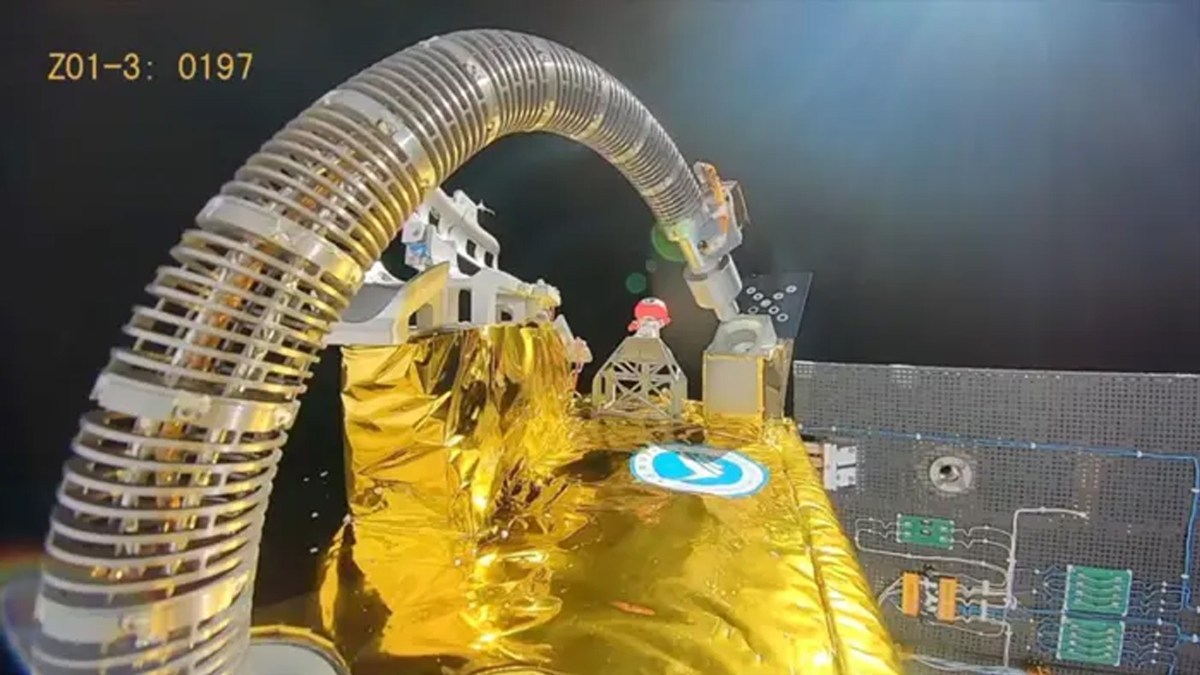
The demonstration, widely reported by Chinese state media outlet CCTV and corroborated by the South China Morning Post, involved a precise and intricate maneuver. While hurtling around the planet at an astounding speed of approximately 16,800 miles per hour, the robotic tentacle successfully performed both a compliance control and a refueling test. This involved the arm accurately inserting a specialized nozzled tip into its own dummy fuel port, simulating the crucial act of docking and fuel transfer between two autonomous spacecraft in the vacuum of space. The intricate dance of mechanical parts in microgravity highlights the advanced engineering capabilities behind this innovative system.
At its core, the robotic arm is an assemblage of spring-laden tubes, meticulously articulated by individually motorized cables. This design allows for the necessary flexibility and precision to navigate the unique challenges of a microgravity environment, where delicate maneuvers are paramount. The ability to control such a complex mechanism autonomously, ensuring proper alignment and connection, represents a significant leap in orbital robotics. Engineers faced numerous hurdles, including compensating for thermal expansion and contraction, radiation exposure, and the inherent difficulties of remote operation without human intervention. The "octopus tentacle" moniker aptly describes its multi-jointed, adaptable nature, mimicking the dexterity and flexibility of its biological namesake, essential for grappling with and servicing other satellites.
This successful test is not merely a technical triumph; it’s the foundational step toward establishing the Yuxing 3-06’s fuel-arm platform as a commercially viable aerospace product. The long-term vision is to develop an operational orbital refueling infrastructure that could dramatically extend the lifespan of LEO satellites. Currently, satellites operating in LEO face a finite existence primarily due to their limited fuel supply. This fuel is crucial for maintaining their orbital positioning against the relentless, albeit subtle, drag exerted by residual atmospheric gasses. Once a satellite depletes its propellant, it can no longer counteract this friction and is inevitably dragged back down to Earth, often burning up upon re-entry, or worse, contributing to the growing problem of space debris.
The economic implications of this fixed lifespan are staggering. Replacing a single LEO satellite can cost tens of millions of dollars, encompassing manufacturing, launch, and operational expenses. With thousands of satellites already in orbit and plans for megaconstellations numbering in the hundreds of thousands, the financial burden of continuous replacement is immense and unsustainable. A successful orbital refueling system could drastically reduce these operational costs, transforming the business model for satellite operators. Instead of launching new satellites every few years, existing ones could be topped up, allowing for longer mission durations, deferred replacement cycles, and a significant return on investment. This innovation could unlock entirely new commercial opportunities, fostering a robust satellite servicing industry that includes not only refueling but also repair, upgrade, and relocation services.
Beyond the financial benefits, orbital refueling offers significant environmental advantages. By extending the operational life of satellites, the frequency of new launches and, consequently, the generation of space junk, could be substantially reduced. This directly addresses the escalating problem of orbital debris, often referred to as the Kessler Syndrome, where a cascade of collisions could render certain orbital altitudes unusable. Longer-lived satellites also mean fewer defunct spacecraft tumbling through space, posing hazards to active missions. From a strategic perspective, the ability to refuel satellites confers a distinct advantage. Control over such technology could grant a nation or commercial entity unprecedented dominance over critical orbital infrastructure, including communication, navigation, and Earth observation networks. However, this dual-use technology also raises concerns, as a robotic arm capable of refueling could theoretically be adapted for other purposes, such as inspection, manipulation, or even de-orbiting of other satellites, adding a layer of complexity to space security discussions.
China’s rapid advancements in space technology provide crucial context for the Yuxing 3-06 mission. With over 1,100 satellites currently in orbit, China is a major player in the global space arena. Its ambitions extend far beyond LEO, encompassing lunar missions, Mars exploration, and the construction of its own modular space station, Tiangong, where fascinating experiments like hatching a butterfly in zero gravity and even hosting an orbital barbecue have taken place. Furthermore, China has filed paperwork for colossal megaconstellations totaling nearly 200,000 satellites in the coming years, primarily aimed at providing global internet services. These plans, notably the "Guo Wang" (GW) and "GWO" projects, underscore the immense strategic and economic value China places on LEO dominance. The successful refueling test is a testament to China’s multifaceted approach to space development, blending scientific curiosity with practical, commercially driven innovation.
While the Yuxing 3-06 represents a significant leap, it’s important to acknowledge precursors in the field. The first successful demonstration of any LEO gas station came in 2007 with DARPA’s Orbital Express mission. This pioneering test successfully transferred fuel from one experimental craft, ASTRO, to another, NextSat, proving the fundamental mechanics of autonomous in-orbit refueling. However, Orbital Express was explicitly a research and development mission, designed to explore the feasibility of the concept without immediate commercial production goals. The Yuxing 3-06, in contrast, is part of a stated large-scale commercial production initiative, aiming to translate experimental success into a viable, market-ready aerospace product. This distinction highlights China’s intent to move beyond theoretical proof-of-concept to practical, scalable solutions.
The vision for a "space refueling station" is a crucial component of a broader paradigm shift towards in-orbit servicing (IOS). This burgeoning sector aims to create a circular space economy where spacecraft are not merely launched and discarded, but maintained, repaired, upgraded, and even recycled in orbit. Refueling is perhaps the most fundamental service in this ecosystem, but it paves the way for a host of other capabilities, from active debris removal to the assembly of large structures in space. Several other nations and private companies, such as Northrop Grumman with its Mission Extension Vehicles (MEVs) and Astroscale’s debris removal concepts, are also investing heavily in IOS technologies, recognizing their transformative potential.
The successful demonstration by Yuxing 3-06 heralds a new era for space operations. It offers a tangible pathway to significantly reduce the costs and environmental impact associated with satellite constellations, while simultaneously enhancing their utility and resilience. As humanity becomes increasingly reliant on orbital infrastructure for everything from global communication to climate monitoring, the ability to service and sustain these assets in space will be paramount. Whoever masters the art of orbital refueling stands to secure a dominant position in the burgeoning space economy, making China’s robotic "octopus tentacle" not just a piece of advanced engineering, but a potential game-changer for the future of space.