Imroatul Nasiyah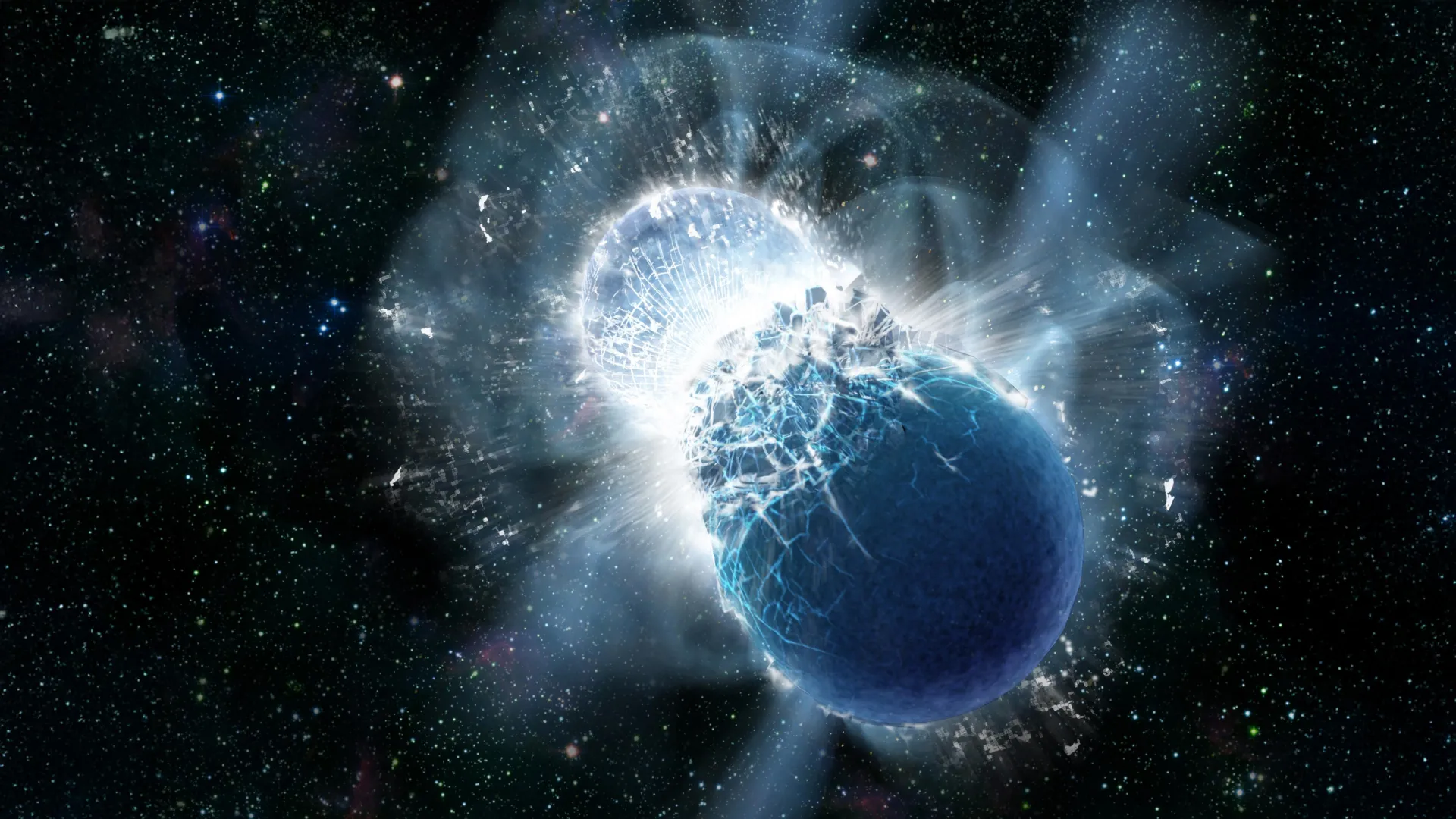
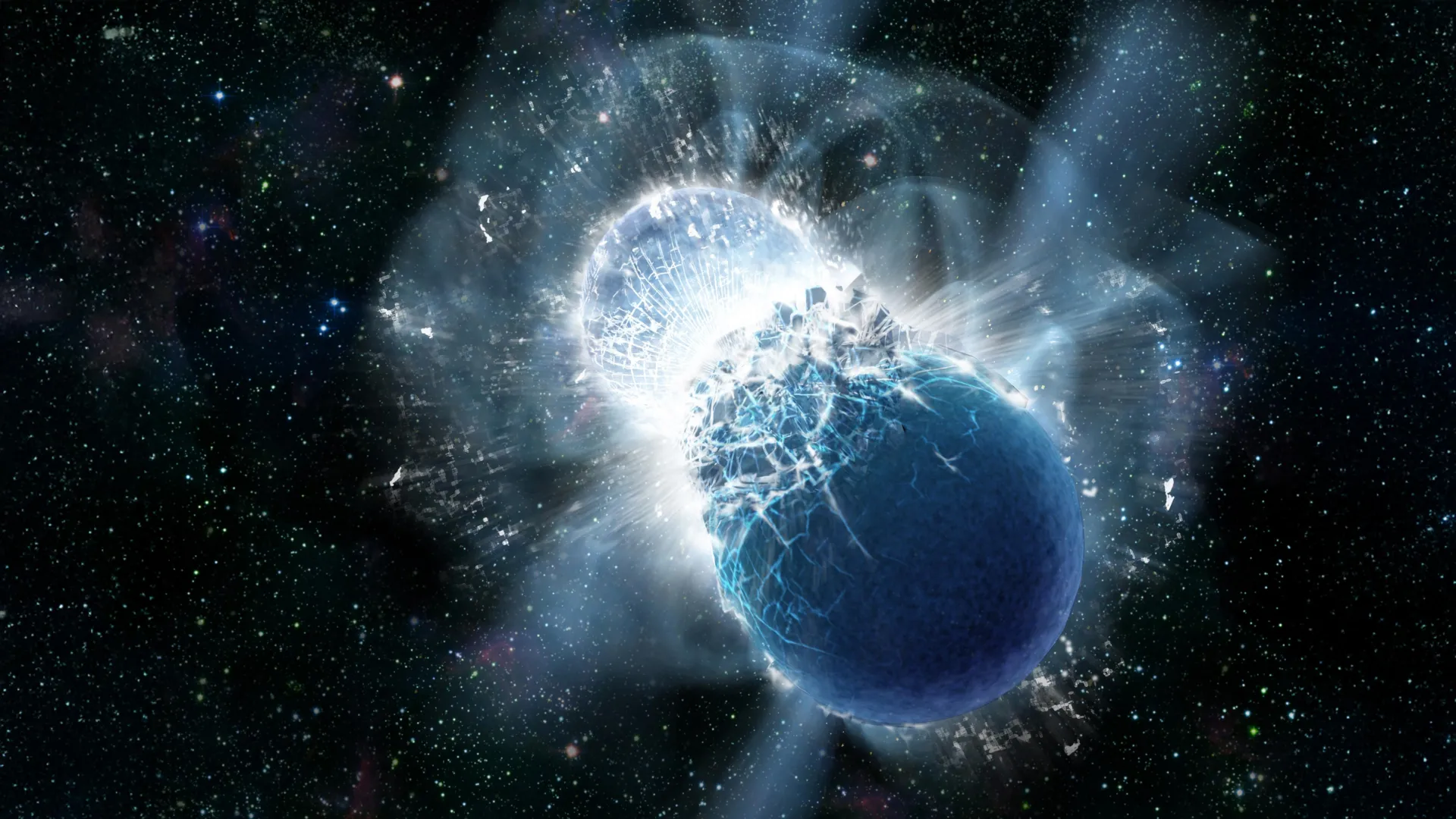
The universe’s most precious and heavy elements, the building blocks of everything from our planet to the stars themselves, are forged in the most extreme cosmic crucibles imaginable. Among these cataclysmic events, the merger of two neutron stars stands out as a particularly potent factory for creating elements heavier than iron. For decades, scientists have grappled with the immense complexity of simulating the nuclear reactions that occur during these violent collisions, a process known as the rapid neutron capture process, or the r-process. Now, an international team of researchers at GSI Helmholtz Centre for Heavy Ion Research and the Facility for Antiproton and Ion Research (FAIR) has unveiled a groundbreaking artificial intelligence (AI) powered simulation tool that promises to unlock unprecedented insights into this fundamental cosmic phenomenon. This innovative machine learning model, named RHINE (r-process heating implementation in hydrodynamic simulations with neural networks), significantly enhances the efficiency and detail of simulations for neutron star mergers and other energetic stellar events, as detailed in their recent publication in the journal Physical Review D.
The r-process is a rapid sequence of nuclear reactions where atomic nuclei, bombarded by a torrential influx of neutrons, absorb them at an astonishing pace. These newly acquired neutrons can then transform into protons, thereby increasing the atomic number of the nucleus. This continuous growth allows for the creation of elements far heavier than those formed in stellar cores through standard fusion processes. Elements like gold, platinum, uranium, and the very building blocks of our bodies, are thought to be primarily synthesized through the r-process. However, precisely modeling these reactions presents a formidable challenge. The sheer number of possible nuclear species and their intricate interactions, coupled with the extreme astrophysical conditions of temperature and density, necessitate astronomical computational resources. Traditional simulation methods often require vast amounts of processing power, forcing researchers to make simplifying assumptions that can limit the accuracy and scope of their findings.
"Researchers around the world strive to make these complex reactions understandable through theoretical simulations," explained Dr. Oliver Just, the first author of the study and a researcher in the "Nuclear Astrophysics & Structure" department at GSI/FAIR. "However, modeling all parameters requires incredible computing power, which is why the models often have to be simplified. Our new model RHINE, which uses artificial intelligence, offers an efficient alternative."
The core innovation of RHINE lies in its strategic application of machine learning, specifically a deep learning neural network. Instead of recalculating every nuclear reaction’s energy contribution during a simulation, RHINE leverages AI to rapidly estimate this crucial factor. The energy released during these nuclear reactions, often referred to as "heating," plays a pivotal role in dictating the dynamics of stellar explosions. It influences the speed at which material is ejected and the subsequent electromagnetic radiation emitted. In the context of neutron star mergers, this brilliant aftermath is observed as a kilonova, a transient astronomical event that provides direct observational evidence for the production of r-process elements.
The development process for RHINE involved an extensive training phase. The neural network was fed a comprehensive library of reference calculations, which included complete and highly detailed nuclear reaction networks. By analyzing this vast dataset, the AI learned to predict the energy released by nuclear reactions with remarkable accuracy. Once trained, RHINE can then be integrated into hydrodynamic simulations, providing these energy estimates on demand with a fraction of the computational cost associated with performing the full nuclear calculations.
"First, the ML models are trained using a large number of reference calculations produced with a full set of nuclear reactions. Subsequently, the models are adopted in running hydrodynamical simulations to approximate the heating rates during the r-process with minimal effort," elaborated Dr. Zewei Xiong, another key developer of the machine learning models and a scientist in GSI/FAIR’s "Nuclear Astrophysics & Structure" department. "With detailed comparisons, we validated our ML scheme against reference data. The high degree of agreement suggests that the use of ML models can save a tremendous amount of computing time. We also deduced from the results that r-process heating is an important effect that should be better accounted for in future modeling."
This significant reduction in computational demand opens up exciting new avenues for astrophysical research. Scientists can now conduct more detailed and comprehensive simulations, exploring a wider range of parameters and scenarios that were previously computationally prohibitive. This enhanced fidelity in simulations allows for a deeper understanding of the intricate interplay between nuclear physics and hydrodynamics that governs the synthesis of heavy elements.
Furthermore, RHINE’s ability to accurately capture the r-process heating is crucial for connecting theoretical predictions with real-world astronomical observations. By improving the accuracy of simulations for events like neutron star mergers, researchers can better interpret the light curves and spectral signatures of kilonovae. This, in turn, allows them to infer the specific conditions under which heavy elements are produced and the abundance of these elements in different cosmic environments. The ultimate goal is to link these improved simulations with ongoing and future observational campaigns, creating a powerful feedback loop between theory and observation.
The potential impact of RHINE extends beyond fundamental research. The upcoming FAIR research facility is poised to become a world-leading center for studying matter under extreme conditions, including the very processes that drive the r-process. The detailed simulations enabled by RHINE will be invaluable for interpreting the experimental results from FAIR, helping scientists to design future experiments and to validate their theoretical models. By bridging the gap between laboratory experiments and cosmic observations, RHINE facilitates a more holistic approach to understanding the origins of the elements.
In a testament to their commitment to scientific collaboration and progress, the researchers have made the source code for RHINE publicly available. This open-access approach ensures that the broader scientific community can benefit from this advancement, build upon the existing work, and contribute to further refinements. The project received significant co-funding from the European Research Council (ERC), underscoring the importance and potential impact of this research on a European and global scale.
In conclusion, the development of RHINE represents a significant leap forward in our ability to study the cosmic origins of heavy elements. By harnessing the power of artificial intelligence, this new simulation tool dramatically enhances computational efficiency, allowing for more detailed and accurate modeling of neutron star mergers and other r-process events. This breakthrough promises to deepen our understanding of nucleosynthesis, bridge the gap between theoretical astrophysics and observational astronomy, and pave the way for exciting new discoveries at the forefront of scientific inquiry. The universe’s most precious elements are no longer a complete mystery; with RHINE, we are gaining an increasingly clear picture of their spectacular birth.