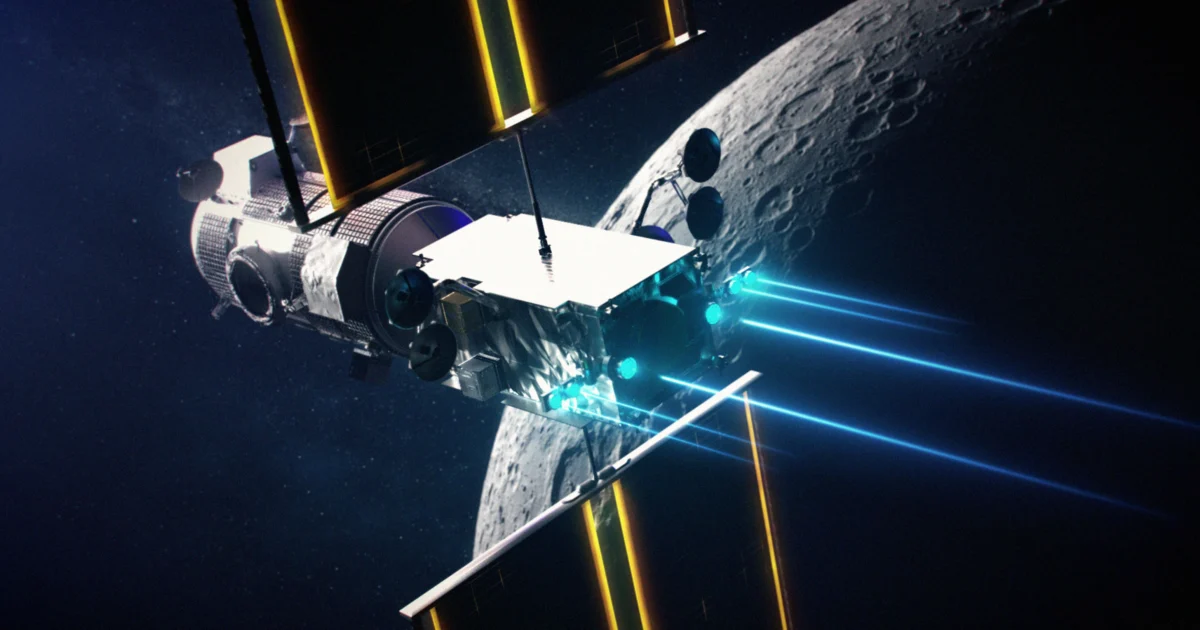
NASA Announces Nuclear Mission to Mars by 2028
Prepare to witness a bold leap into the future of space exploration. While NASA’s ambitious plans for a Moon base under the Artemis program have recently dominated headlines, the agency is now firmly setting its sights back on the Red Planet. A groundbreaking, first-of-its-kind nuclear mission, slated for launch by the end of 2028, promises to redefine our capabilities for deep-space travel, bringing the vastness of the cosmos within closer, more efficient reach. This endeavor represents a significant pivot, showcasing innovations from the bleeding edge of science and technology.
Introducing SR-1 Freedom: A Nuclear-Powered Voyage to Mars
This pivotal mission, officially dubbed “Space Reactor 1 Freedom” (SR-1 Freedom), marks a historic milestone as the “first nuclear-powered interplanetary spacecraft,” according to a recent NASA announcement. Its primary objective is to demonstrate advanced nuclear electric propulsion (NEP) in the challenging environment of deep space. The concept of NEP, while theoretically offering immense advantages in high energy efficiency and the ability to cover vast distances with unprecedented speed, has remained largely elusive in practice. SR-1 Freedom aims to turn this long-held aspiration into a tangible reality.
NASA highlights the profound benefits of NEP, stating, “Nuclear electric propulsion provides an extraordinary capability for efficient mass transport in deep space and enables high power missions beyond Jupiter where solar arrays are not

Related Posts

Faris Adani
- Future Tech
- Innovation
- September 13, 2026
- 0 Comments
Amazon Unleashes AI Lip-Syncing for Dubbed Content, Igniting "Uncanny Valley" Fears and Artistic Integrity Debates
Yuganov Konstantin / Shutterstock / Futurism In a move poised to fundamentally reshape the global consumption of filmed entertainment, Amazon’s Prime Video streaming service announced this Thursday, September 10, 2026,…

- Future Tech
- Innovation
- September 12, 2026
- 0 Comments
Earth May Have Had a Larger Cousin that the Sun Devoured
A groundbreaking investigation by a team of astronomers suggests a dramatic and previously unknown chapter in the history of our solar system: the Sun may have consumed a massive, rocky…