Faris Adani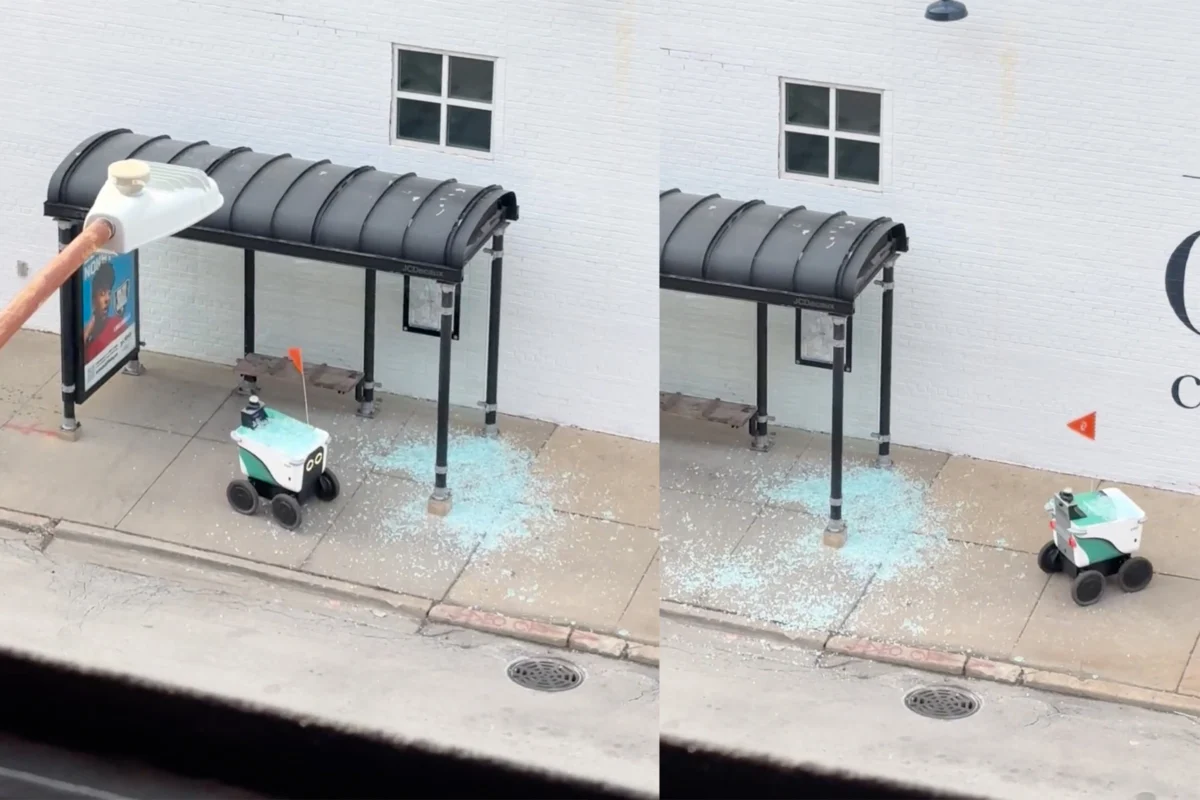
u/Realnostalgia via Reddit (r/Chicago)
Sign up to see the future, today
Can’t-miss innovations from the bleeding edge of science and tech
Delivery Robot Allegedly Smashes Through Bus Stop Window, Keeps Driving Covered in Broken Glass.
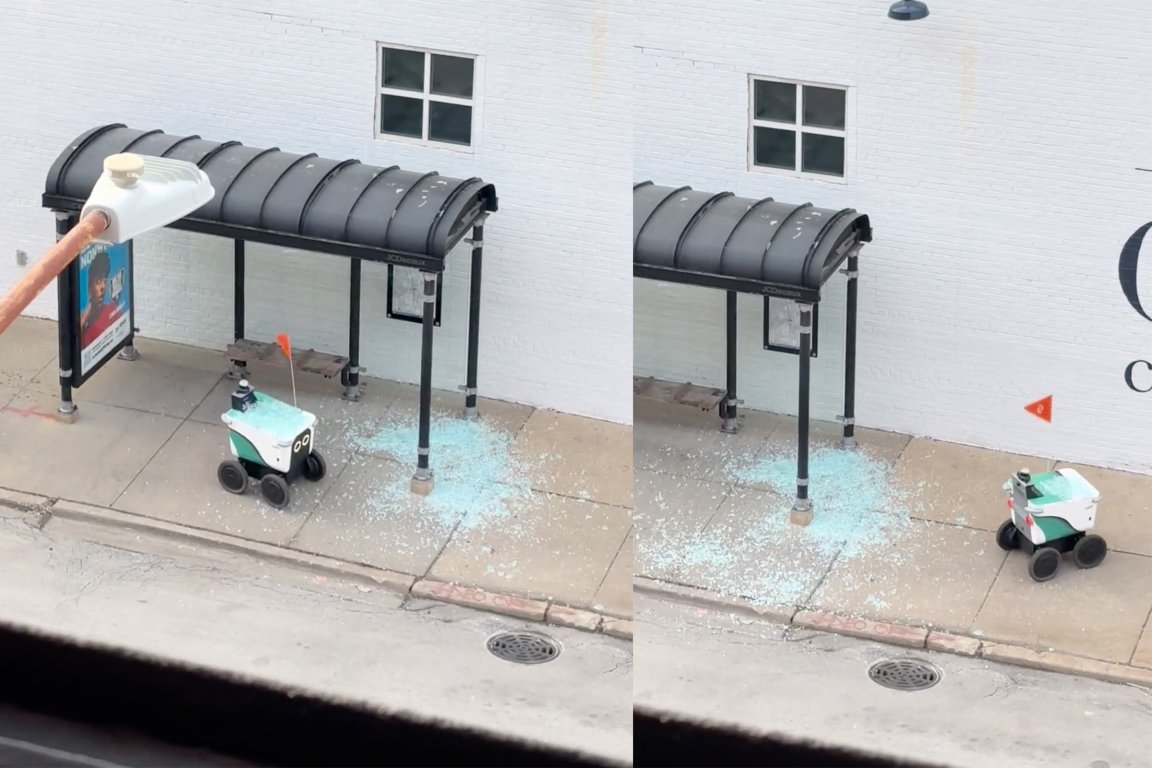
The streets of Chicago, already a battleground for the integration of autonomous delivery vehicles, witnessed a dramatic escalation in the ongoing “robot wars” when a Serve Robotics delivery bot allegedly crashed through a bus shelter panel, scattering shattered glass across a busy sidewalk. This incident, captured and shared on the popular r/chicago subreddit by user u/Realnostalgia, not only reignited local frustrations but also cast a harsh spotlight on the operational reliability and corporate accountability of these burgeoning urban automatons. The viral footage, which doesn’t show the initial impact but prominently features the small, white-and-green robot at the scene, its body coated in glistening shards of blue-tinted glass, has quickly become a potent symbol of the unintended consequences that arise when cutting-edge technology intersects with the unpredictable realities of metropolitan life.
The scene described by u/Realnostalgia painted a vivid picture of disruption. A Serve Robotics delivery robot, designed to navigate urban landscapes with precision, found itself in a compromising position, having seemingly collided with the glass panel of a JCDecaux-operated bus shelter. While the video evidence itself did not capture the precise moment of impact, the aftermath was undeniable: a bus stop rendered partially useless, its protective glass shorn away, and the sidewalk transformed into a hazardous expanse of fragmented material. The robot’s subsequent movements—a series of jerks and tentative backward motions, as if trying to dislodge the unwelcome adornment of glass—lent an almost anthropomorphic quality to its predicament, amplifying the absurdity of the situation. It then reportedly pulled off to the side, where it was met by a bystander, heavily laden with bags, who seized the opportunity to document the bizarre tableau on his phone. The unsettling question lingered: did this glass-encrusted courier continue its journey, potentially littering Chicago’s footpaths with dangerous debris, or was its mission abruptly terminated by this unfortunate encounter?
The aftermath of the alleged crash brought further scrutiny to the operational protocols of Serve Robotics. According to the Reddit post, a representative from Serve Robotics eventually arrived on the scene to retrieve their malfunctioning unit. However, the uploader claimed that this employee, despite the clear danger posed by the scattered glass, neglected to undertake any cleanup efforts. This alleged oversight shifted the burden of responsibility, with an employee from JCDecaux, the advertising giant responsible for maintaining the city’s bus shelters, reportedly stepping in later to clear the hazardous mess. This sequence of events, if accurate, raises serious questions about the immediate response strategies of companies deploying autonomous vehicles in public spaces and their commitment to public safety beyond the retrieval of their own assets. Neither Serve Robotics nor JCDecaux offered a public comment on the incident, leaving a void where clarity and accountability might otherwise have resided.
This incident is far from an isolated event in the ongoing saga of delivery robots in urban centers, particularly in Chicago, where these autonomous couriers have been a hot-button issue. For many residents, the appearance of these devices, including those operated by Serve and competitor Coco, represents a complex mix of potential convenience and undeniable nuisance. One of the most frequently cited grievances revolves around sidewalk obstruction. These robots, designed to traverse pedestrian pathways, often impede the flow of foot traffic, creating particular challenges for individuals with disabilities, parents pushing strollers, or the elderly who may find their paths blocked or narrowed. Instances of robots “tormenting” or blocking disabled individuals have been documented, highlighting a critical flaw in their current navigation and interaction protocols. The sheer volume of these devices, especially in densely populated areas, can transform a pleasant stroll into an obstacle course, disrupting the very fabric of urban pedestrian life.
Beyond physical obstruction, the deployment of delivery robots has sparked significant economic and privacy concerns. Human delivery drivers, a vital part of the gig economy, view these automated competitors as a direct threat to their livelihoods. Labor advocates argue that the unchecked proliferation of these bots could lead to job displacement, exacerbating economic precarity for a segment of the workforce already grappling with challenging conditions. Furthermore, the constant presence of cameras on these devices, necessary for navigation and obstacle avoidance, raises pertinent questions about pervasive surveillance. While companies assert that data is anonymized or used solely for operational purposes, the specter of constant monitoring on public sidewalks creates discomfort and erodes privacy expectations, contributing to a sense of unease among residents.
Chicago’s robust resistance to delivery robots culminated in legislative action earlier this year. Alderman Daniel La Spata, representing the city’s 1st Ward, effectively banned these companies from operating within his jurisdiction in February. This decisive move was not arbitrary but a direct response to overwhelming public sentiment; a survey conducted among residents of the 1st Ward revealed that over 80 percent were opposed to the presence of delivery bots. This level of community opposition underscores a broader dissatisfaction with the unilateral deployment of new technologies without sufficient public discourse, regulatory oversight, or consideration for local impact. The Chicago experience serves as a microcosm of the challenges cities worldwide face in balancing technological innovation with the preservation of urban quality of life and democratic decision-making processes.
The Serve Robotics incident also echoes previous, equally alarming, failures of autonomous delivery systems. In a stark role reversal of the bus shelter crash, a delivery bot operated by Coco met a catastrophic end in Miami when it malfunctioned and became stranded on train tracks, subsequently being “obliterated by a train.” This event, like the Chicago bus shelter incident, dramatically illustrates the fragility of autonomous systems when confronted with unforeseen circumstances or critical failures in complex, dynamic environments. These incidents are not isolated glitches but rather symptomatic of the profound technical and ethical challenges inherent in deploying AI-driven machines in public spaces. The “last mile problem” of delivery, while tempting for automation, proves far more complex than a simple mapping exercise when human safety and urban infrastructure are at stake.
Moreover, the public’s interaction with these robots isn’t always benign. News of a “Delivery Robot Dogpiled on the Streets of Philly” highlights another facet of the problem: public frustration can manifest in vandalism or even targeted attacks on these machines. While no excuse for property damage, such incidents reflect a broader societal unease and a sense of powerlessness when new technologies are introduced without community consent or clear avenues for redress. This further complicates the operational landscape for companies like Serve Robotics and Coco, forcing them to consider not just technical malfunctions but also the unpredictable element of human interaction and public sentiment.
As cities grapple with the accelerating pace of technological change, the case of Chicago’s delivery robots serves as a critical case study. The promise of enhanced efficiency, reduced costs, and faster deliveries must be weighed against tangible social costs: sidewalk congestion, job displacement, privacy concerns, and, as the bus shelter incident vividly demonstrates, potential hazards to public safety and urban infrastructure. The deployment of autonomous vehicles necessitates not just technological prowess but also robust ethical frameworks, clear lines of accountability, and proactive engagement with the communities they serve. Without these foundational elements, the future of urban delivery risks being a chaotic, glass-strewn path, rather than the seamless, beneficial innovation envisioned by its proponents. The challenge lies in forging a path where technology truly serves the city, rather than merely existing within it, often to its detriment.