anjir abdul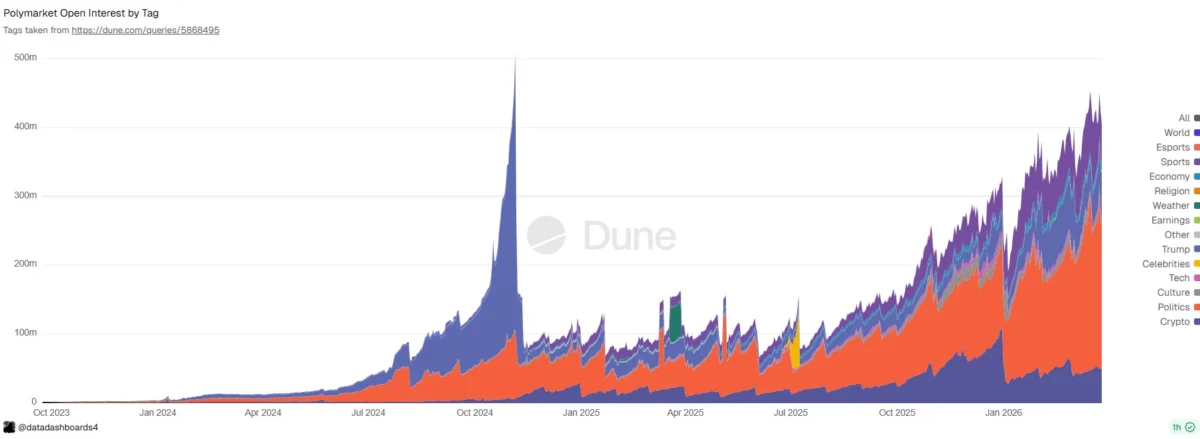
Prediction markets, theoretically designed to aggregate human judgment into accurate forecasts, are increasingly becoming a battleground where the swift, unfeeling logic of artificial intelligence agents is poised to capture consistent trading opportunities that far outpace human capabilities. While these platforms aim to harness collective wisdom, their inherent inefficiencies, manifesting as fleeting mispricings or delayed reactions to new information, present fertile ground for advanced AI systems to exploit. This technological evolution promises to not only refine market efficiency but also introduce unprecedented challenges related to fairness, accessibility, and potential manipulation, fundamentally altering the landscape of speculative trading.
Arbitrage opportunities, often appearing as ephemeral price discrepancies, are a common feature in nascent and even mature markets. In prediction markets, these can range from simple scenarios where the probabilities assigned to all possible outcomes don’t sum precisely to 100%, indicating an imbalance, to more complex situations involving short delays in how quickly market prices adjust to breaking news or confirmed events. Rodrigo Coelho, CEO of Edge & Node, highlights that rudimentary bots are already tirelessly scanning hundreds of markets per second, a role that is rapidly converging with and being subsumed by more sophisticated, AI-driven agents. "Capturing those opportunities requires monitoring thousands of markets and executing trades almost instantly, which is why they’re largely dominated by automated systems," Coelho explained to Cointelegraph. This intrinsic demand for speed and scale makes prediction markets an ideal proving ground for AI-driven systems designed to capitalize on fleeting pricing gaps with minimal or no human intervention.

The recent underperformance of Bitcoin and broader crypto prices, with figures like BitMine’s Tom Lee describing the sentiment as a "mini-crypto winter," underscores the appeal of prediction markets as alternative venues. Here, users can potentially profit independently of prevailing economic conditions, by betting on specific future events. The surge in popularity of these markets has, however, also opened doors to specialized forms of arbitrage, such as what Coelho terms "latency arbitrage." These strategies exploit extremely narrow windows – sometimes mere seconds – that are far too brief for human traders to identify and act upon manually. Coelho elaborated, "If there’s even a few-second delay between an event happening and the market updating, bots scan for that and place bets on the correct outcome. For that window, they have a 100% guaranteed win." Such opportunities arise from the time lag between an external event occurring and the market data being updated or reflected in prices. An AI agent, with its instantaneous data ingestion and execution capabilities, can identify these lags and place trades before the market corrects itself, securing a near-riskless profit.
Academic research further substantiates the prevalence of these inefficiencies. A recent study, presented at the International Conference on Advances in Financial Technologies, revealed that Polymarket, a prominent prediction market platform, frequently exhibits pricing inconsistencies. These opportunities manifest both within individual markets, where outcome probabilities fail to sum to 100%, and across related markets where pricing remains inconsistent. The researchers conservatively estimated that approximately $40 million has already been extracted from these inefficiencies, a figure that highlights the significant financial incentives driving the development of automated trading systems. While prediction markets are still in their early stages, their underlying technology is continuously improving. For instance, Polymarket recently introduced taker fees, a measure aimed at increasing trading costs and potentially reducing the profitability of some arbitrage strategies. Moreover, outcomes aren’t always finalized immediately, adding layers of complexity and making certain arbitrage strategies less reliable or instantly profitable. However, these counter-measures often serve as new challenges for AI agents to overcome, spurring further innovation in their design.
Beyond simply exploiting arbitrage, AI agents are increasingly poised to dominate overall activity in prediction markets, raising profound concerns about whether these automated systems will merely replicate, or even amplify, the same problematic behaviors observed in human traders. Given that AI models are trained on vast datasets of human activity, there is a legitimate fear that they could inherit and scale up manipulative tactics. Coelho pointed out the existing issue where large players can influence market outcomes by placing substantial bets on one side, effectively swaying prices due to market thinness. He cited a notable example: "If you have a large pool of money and the market is thin, you can bet on one side and sway the market, like we saw in the election when some French guy put in like [$45 million] on Donald Trump winning." Such "whale" activity, traditionally associated with human actors, could be replicated and even optimized by more advanced AI agents operating with immense capital and sophisticated strategies, leading to market manipulation at an unprecedented scale and speed. Data from Dune Analytics shows Polymarket’s open interest peaking around the contentious 2024 US elections, with politics consistently being the most popular topic, followed by sports and crypto, underscoring the high-stakes environment where such manipulation could occur.

Pranav Maheshwari, an engineer at Edge & Node, emphasized the urgency of these risks, advocating for robust guardrails as AI agents rapidly advance alongside prediction market technologies. "Up until now, AI agents have medium capability and we give them a lot of permissions. With this medium capability, they have already started acting autonomously," Maheshwari told Cointelegraph. He cautioned that the future will bring AI agents with "really high capabilities," akin to human intelligence, necessitating stricter permissioning and oversight. The challenge lies in designing systems that can leverage AI’s power for efficiency without enabling widespread market abuse. Federal regulators are already taking notice, with several states scrutinizing prediction markets, hinting at a future where regulation will inevitably grapple with the implications of AI-driven trading.
The broader landscape of trading itself is undergoing a paradigm shift, moving from basic, rule-based execution bots to highly advanced, AI-assisted systems capable of identifying, analyzing, and acting on opportunities in real time. While many systems currently exploiting market inefficiencies are still predominantly rule-based, the underlying tools and methodologies are rapidly evolving. Archie Chaudhury, CEO of LayerLens, noted that most retail participants are not yet directly employing AI agents for trading, instead using chatbot interfaces like ChatGPT or Gemini for research. However, a growing segment of more advanced users is actively experimenting with automation. "Some of us simply use coding agents such as Claude Code to create automated bots or algorithms for executing trades, while others take it a step further, using autonomous tools such as OpenClaw to enable the automatic execution of trades and other policies," Chaudhury explained to Cointelegraph. This indicates a clear progression towards more self-governing and complex trading systems.
As AI literacy expands among retail traders, these agents could democratize access to sophisticated trading strategies previously reserved for institutional players with vast resources and specialized quantitative teams. This doesn’t eliminate competition, however; large institutions are already deeply entrenched in using AI, often without public disclosure, creating an arms race for technological superiority. Chaudhury highlighted that existing large language model (LLM) architectures are remarkably well-suited for interpreting structured financial data, which could significantly lower the technical barrier for building powerful trading systems that once demanded specialized quantitative expertise. This means that individuals or smaller entities, armed with AI tools, could potentially compete on a more level playing field with traditional financial giants.

The same dynamics are already vividly apparent across crypto markets, where profitable arbitrage increasingly hinges on automation and speed rather than human intuition or judgment. As these AI-driven systems continue to evolve and become more sophisticated, the critical "edge" in trading is inexorably shifting towards execution speed, superior data processing, and predictive analytics. Those who embrace AI and automation will undoubtedly possess a clear, compounding advantage over those who rely on manual processes or less advanced technologies. This transformation implies a future where prediction markets, and indeed financial markets at large, become highly efficient yet intensely competitive environments, driven by algorithms and artificial intelligence. The challenge will be to harness AI’s power to enhance market utility and accuracy, while simultaneously establishing robust frameworks to mitigate the inherent risks of manipulation and ensure a degree of fairness for all participants.