Faris Adani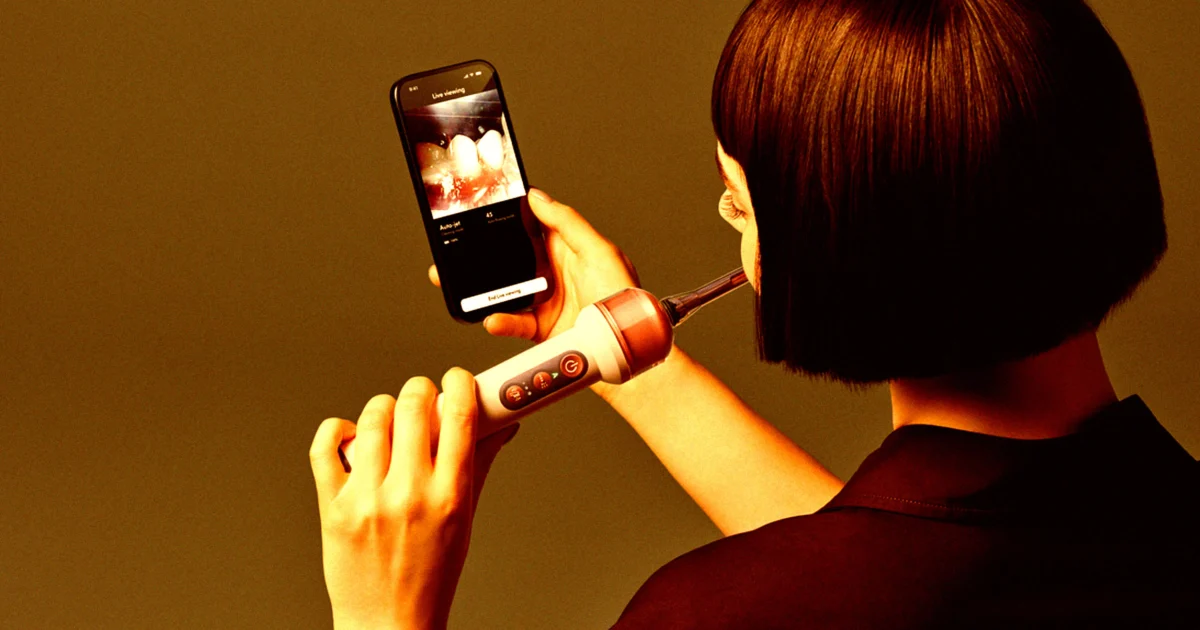
In an era where the lines between personal health and technological surveillance blur with increasing frequency, British innovation powerhouse Dyson has once again pushed the boundaries of what a household appliance can be, introducing a device that not only cleans your teeth but also scrutinizes the innermost recesses of your mouth with an almost clinical precision. This latest offering, the Dyson CameraJet, an AI-infused electric toothbrush, arrives amidst a backdrop of growing public debate around privacy and surveillance technology, particularly highlighted by recent acts of vandalism against ubiquitous Flock surveillance cameras across America. Dyson’s approach, however, shifts the gaze from public spaces to the intensely personal, offering a form of video surveillance that many didn’t even conceive was possible for oral hygiene.
At the heart of the CameraJet’s groundbreaking design is a sophisticated 100k pixel macro lens camera. This isn’t just any camera; it’s engineered to provide an unprecedented view of your oral cavity, allowing users — or "brushers," as Dyson might prefer — to "see what their dentist sees." For years, dental professionals have relied on small intraoral cameras to show patients problem areas, but now, that diagnostic capability is being placed directly into the hands of the consumer, albeit at a premium. The implication is clear: empowering individuals with detailed visual information about their oral health could revolutionize daily brushing habits, moving from a routine chore to a data-driven, highly optimized personal health ritual.
The technological marvel doesn’t stop with the camera. The CameraJet boasts an advanced AI machine-learning algorithm that processes a staggering 28 images per second. This rapid image acquisition, combined with intelligent analysis, enables the device to meticulously identify and target those notoriously difficult-to-reach "interdental gaps" where plaque often accumulates unseen. To overcome the inherent darkness of the mouth, Dyson has integrated a "stroboscopic light," a clever engineering solution that ensures "precise illumination for optimal camera visibility." This rapid, pulsed light freezes motion and brightly illuminates the target areas, allowing the camera to capture clear, high-resolution images even in the most challenging environments. The system essentially acts as a miniature, personal dental scanner, providing real-time feedback that traditional brushing methods simply cannot match.
Beyond its visual prowess, the CameraJet integrates what Dyson terms "precision fluid dynamics" and "advanced brushing technologies." This likely refers to a targeted water jet system, combined with sonic vibrations or similar mechanisms, designed to dislodge plaque and food particles identified by the AI. The synergy between the camera, AI, and fluid jet promises a level of cleaning precision that aims to transcend manual brushing and even many existing electric toothbrushes. The device’s connectivity suite, featuring both WiFi and Bluetooth, further elevates its smart capabilities. Theoretically, this allows the toothbrush to sync with a companion app, providing users with a visual map of their mouth, highlighting areas that require more attention, tracking progress over time, and perhaps even sharing anonymized data with dental professionals for more informed check-ups.
However, this sophisticated connectivity also introduces a new frontier of privacy and cybersecurity concerns. The notion of a device actively streaming video from inside one’s mouth, connected to the internet, naturally raises questions about data security. While Dyson undoubtedly employs robust encryption and privacy protocols, the specter of "cybersecurity shenanigans" looms large in a world increasingly vulnerable to data breaches. Sensitive personal health data, even if it’s just video of one’s teeth and gums, could be an attractive target for malicious actors. Users would need assurances about where this data is stored, who has access to it, and how it is protected from unauthorized viewing or exploitation. The contrast with the public’s current distrust of pervasive outdoor surveillance, as evidenced by the targeting of Flock cameras, highlights a societal tension that Dyson’s CameraJet implicitly navigates: the trade-off between perceived utility and personal privacy.
Dyson’s founder and chief engineer, James Dyson, proudly encapsulates the product’s ambition: "By combining a camera, machine learning, precision fluid dynamics, advanced brushing technologies, connectivity and WiFi, Dyson CameraJet introduces an entirely new way to keep your mouth healthy." This statement not only underscores the multi-faceted engineering effort behind the device but also aligns perfectly with Dyson’s established brand identity – a commitment to radical innovation, often in overlooked product categories, with a strong emphasis on design and performance. The company has a history of disrupting markets with unconventional, high-performance, and often high-priced solutions, from bagless vacuum cleaners to bladeless fans and supersonic hair dryers. The CameraJet fits squarely within this lineage, representing a significant investment in research and development, allegedly requiring the input of 661 engineers to bring this complex vision to fruition.
This advanced gadget comes with a price tag that positions it firmly in the luxury tech segment: a hefty $499. For this sum, consumers receive the futuristic toothbrush, two brush heads, a charging cable, and a "refill dock." The cost immediately invites comparisons, as the original article points out, to a full-sized iPad Air or roughly ten standard Oral-B Pro 1000 electric toothbrushes – a popular, budget-friendly option for those content with simpler brushing mechanics. This pricing strategy targets a specific demographic: early adopters, tech enthusiasts, individuals with a strong focus on preventative health, or those simply willing to pay a premium for what promises to be the most advanced oral hygiene tool on the market. It’s a statement purchase, signaling a user’s commitment to cutting-edge technology and a belief in Dyson’s ability to deliver superior performance.
Adding another layer of proprietary convenience, Dyson also offers a "proprietary non-foaming toothpaste." This specialized toothpaste omits common synthetic foaming agents like sodium lauryl sulfate (SLS). The reasoning is purely practical: traditional toothpaste suds, while giving a satisfying sensation of cleanliness, would obstruct the CameraJet’s macro lens, impeding its ability to capture clear images of the teeth and gums. This thoughtful detail ensures the core functionality of the camera remains uncompromised, but it also means users are encouraged, if not subtly nudged, towards Dyson’s ecosystem for consumables. This is a common strategy among premium appliance manufacturers, extending their brand influence beyond the initial product purchase.
The Dyson CameraJet represents more than just an electric toothbrush; it’s a microcosm of broader trends in consumer technology. It exemplifies the relentless march towards embedding sensors, AI, and connectivity into every aspect of daily life, transforming mundane routines into data-rich experiences. It raises profound questions about the future of personal health monitoring – if our toothbrushes can perform intraoral video surveillance, what other bodily functions or areas might be next? The product challenges us to weigh the benefits of enhanced health insights and preventative care against the potential erosion of personal privacy and the increasing cost of hyper-optimized living. Whether consumers will deem the CameraJet’s unprecedented features worth its considerable price and the implications of having a camera scrutinizing their every brushstroke remains to be seen. It’s a bold leap into the future of oral hygiene, a future that is undeniably intelligent, highly connected, and perhaps, a little bit unnerving.