Faris Adani
Mercedes
It Turns Out That Drivers Absolutely Detest Those Giant Touchscreens They Put in Cars Now. The automotive industry’s relentless pursuit of digital dashboards and increasingly enormous in-car touchscreens is hitting a significant roadblock: consumer disapproval and outright frustration, with a new comprehensive study revealing that drivers are actively put off by these “luxuries” and the often-flawed software that accompanies them.
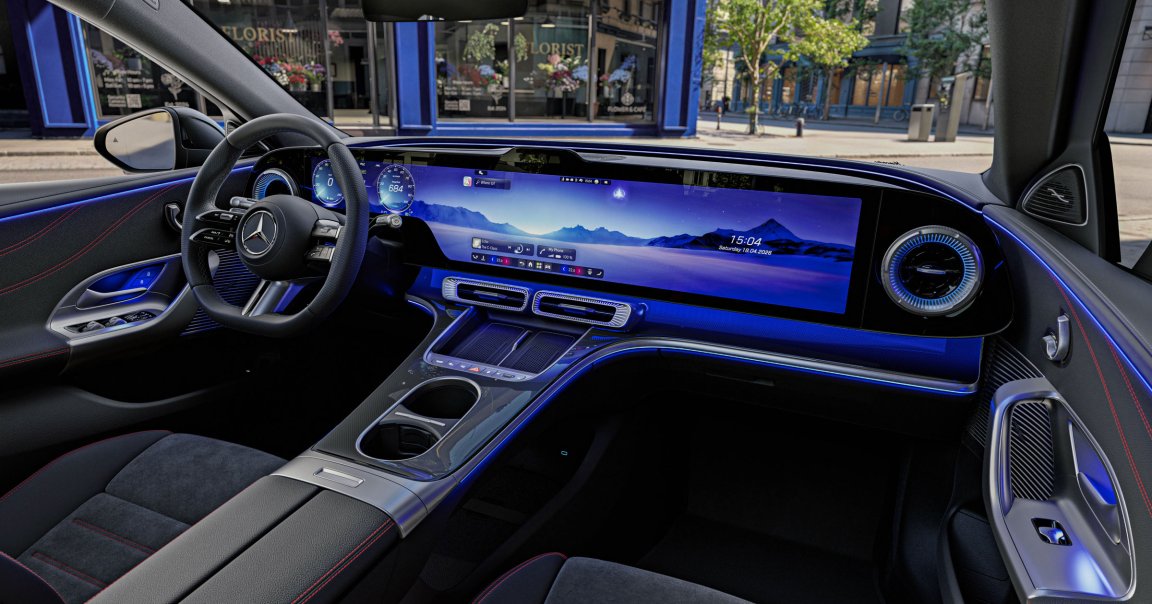
For years, automakers have been engaged in an unwritten arms race, striving to outdo one another with the sheer size and number of digital displays integrated into their vehicles. What began as a modest navigation screen has rapidly evolved into sprawling infotainment systems, often stretching from the driver’s side across to the passenger area, exemplified by offerings like Mercedes-Benz’s Hyperscreen. The underlying assumption has been that more screen real estate equates to a more modern, premium, and desirable driving experience. However, a recent and extensive survey by consumer research firm JD Power decisively indicates that this industry-wide gamble is largely failing, as owners of 2026 model-year vehicles are finding these expansive digital interfaces to be more of a hindrance than a help.
The 2026 U.S. Tech Experience Index (TXI) Study, which gathered insights from a substantial sample of over 68,000 vehicle owners, paints a clear picture of user dissatisfaction. A staggering revelation from the study is that more than a third of these owners admitted to never even attempting to use the passenger screens, which are often touted as a feature for co-pilots or rear-seat occupants. Furthermore, a paltry six percent reported using these passenger displays every time they entered the car. This data starkly undermines the perceived value proposition of such features, suggesting a significant disconnect between what manufacturers are pushing and what consumers genuinely desire or utilize.
Adding to the woes, JD Power’s own investigation into infotainment systems uncovered a critical functional flaw: the larger and more complex the screens, the more prone they were to experiencing technical glitches and operational problems. This correlation between increased screen size and decreased reliability directly contradicts the notion that these advanced systems enhance the driving experience. Instead, they appear to introduce a new layer of frustration, forcing drivers to contend with unresponsive interfaces, software bugs, or cumbersome menus that divert attention from the road.
The study further elucidated consumer preferences by ranking 40 different car technologies based on owner satisfaction and usage. Tellingly, the most highly valued technologies were those that seamlessly integrated into the driving experience without demanding constant interaction or cognitive load. Features like smart ignition, which simplifies the start-up process, or smart HVAC, which intelligently manages cabin climate, topped the list. These are technologies that “simply work,” as Doron Hikry, JD Power’s director of customer success, articulated in an accompanying press release. Hikry emphasized, “The technology customers value most is often the technology they barely notice because it simply works. Smart ignition and smart climate control make everyday driving easier without demanding the driver’s attention, while more automation and additional screens don’t necessarily translate into a better experience.” This statement underscores a fundamental principle of good user interface design: technology should be intuitive and unobtrusive, serving the user without becoming a focal point of distraction or frustration.
Conversely, passenger console touchscreens languished at the very bottom of the entire list. This low ranking is particularly concerning given previous research that has linked in-car touchscreens to significant driving safety issues. Studies have repeatedly demonstrated that interacting with complex touchscreen menus requires more gaze time away from the road and increased cognitive effort compared to operating traditional physical knobs and buttons. The tactile feedback and muscle memory associated with physical controls allow drivers to adjust settings with minimal visual distraction, a critical safety advantage that touchscreens inherently lack. The inability to adjust volume or temperature by feel alone forces drivers to look down, process visual information on a screen, and then make a precise touch input, all while operating a moving vehicle.
Beyond infotainment, the JD Power study also delved into driver assistance systems, revealing a similar preference for subtle assistance over aggressive automation. Owners expressed less enthusiasm for Level 2 Plus driver assistance systems, which permit hands-off driving on certain roads – a category that includes controversial features like Tesla’s Full Self-Driving. Instead, owners demonstrated a clear preference for Level 2 systems, which provide assistance while still requiring the driver to keep their hands on the wheel and maintain active control. This preference was noted across both design and quality of experience metrics. Hikry elaborated on this finding, stating, “The results indicate that owners may currently be more comfortable with systems that clearly assist the driver rather than those that introduce a greater degree of automation.” This suggests a prevailing sentiment among drivers that technology should augment their capabilities and enhance safety, rather than attempting to replace their role entirely, especially when the reliability and safety of higher levels of automation are still subject to public debate and scrutiny.
This widespread frustration with feature overload and convoluted touchscreen interfaces is not a new phenomenon. It represents a growing consumer backlash against an industry trend that prioritized perceived modernity and digital flash over practical usability and driver safety. Many consumers feel that basic functionalities have been needlessly buried several layers deep within digital menus, making simple tasks like adjusting fan speed or changing radio stations unnecessarily complex and dangerous. This trend, which often saw automakers chasing the minimalist, screen-heavy aesthetic popularized by Tesla, has been met with increasing resistance from both the public and automotive journalists.
Encouragingly, some automakers are beginning to acknowledge this widespread frustration and adjust their design philosophies. Volkswagen, for instance, has publicly committed to bringing back more physical buttons and knobs into its car interiors, directly in response to strong customer complaints regarding their previous all-touchscreen approach. This pivot signifies a crucial recognition that the pursuit of digital minimalism, while aesthetically pleasing to some, can severely compromise the user experience and driver safety in a vehicle environment. The reintroduction of tactile controls offers a more intuitive, safer, and less distracting way for drivers to interact with essential vehicle functions.
The deeper issue lies in the fundamental difference between interacting with a smartphone and interacting with a car. While a large touchscreen is highly desirable for media consumption or productivity on a stationary device, the demands of driving necessitate a different approach. A driver’s attention must remain primarily on the road, with peripheral and haptic feedback allowing for quick, instinctual adjustments to vehicle settings. Fingerprint smudges, glare from sunlight, slow software response times, and the lack of physical anchors on a smooth glass surface all contribute to a poorer user experience in a car than they might in a handheld device. The cognitive load required to navigate complex digital interfaces, especially when the car’s software is buggy or unintuitive, actively detracts from the primary task of driving safely.
Looking ahead, the automotive industry faces a critical juncture. It must reconcile its drive for technological innovation with the practical realities and preferences of its customers. This doesn’t necessarily mean abandoning screens altogether, but rather adopting a more thoughtful, hybrid approach. Large screens can be valuable for displaying navigation, vehicle information, or entertainment for passengers, but critical functions like climate control, volume adjustment, and driving modes should ideally be controlled by intuitive physical buttons, dials, or switches. Voice controls and gesture controls offer potential alternative interaction methods, but they too come with their own set of limitations and learning curves, often failing to match the immediacy and reliability of physical controls.
Ultimately, the JD Power study serves as a stark reminder that technology in a vehicle should enhance, not complicate, the driving experience. Innovation should be guided by a clear understanding of user needs and safety considerations, rather than solely by marketing trends or a desire for a futuristic aesthetic. Drivers are sending a clear message: they value reliability, intuitiveness, and safety over gratuitous digital displays. For automakers to truly succeed in the evolving landscape of vehicle technology, they must listen attentively to this feedback and prioritize functional, subtle, and dependable technology that genuinely serves the driver.
**More on car interiors:** Volkswagen Bringing Back Buttons, Knob After Touchscreen Complaints