anjir abdul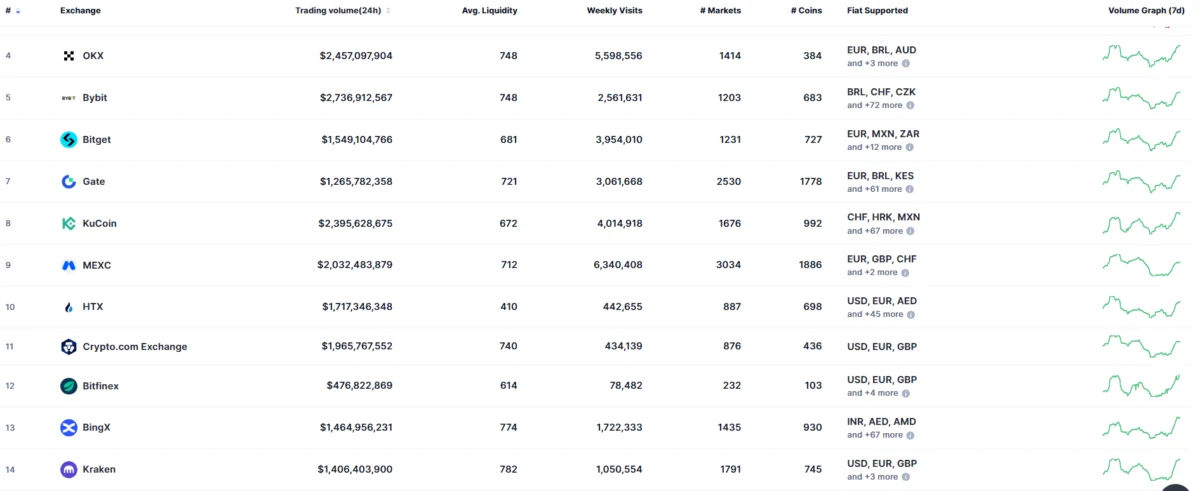
Today in crypto, the digital asset landscape witnessed significant shifts as major players positioned themselves for future growth: Crypto.com made a strategic entry into the burgeoning prediction markets sector through a definitive agreement with High Roller Technologies, while European financial giant Deutsche Börse announced a substantial $200 million investment in Kraken’s parent company, signaling a deeper integration of traditional finance with the crypto world, and Bitcoin soared to nearly $75,000, buoyed by optimistic speculation surrounding a potential diplomatic resolution between the US and Iran.
Crypto.com Charges into Prediction Markets with High Roller Alliance
In a bold move that underscores the growing ambition of cryptocurrency exchanges to diversify their offerings, Crypto.com has formally entered the event-based prediction markets arena. This strategic foray is facilitated by a definitive agreement with online casino company High Roller Technologies, positioning Crypto.com to challenge established players like Kalshi and Polymarket in a sector projected to reach a staggering $1 trillion valuation by 2030. The announcement, made via a Tuesday notice from High Roller, detailed that the collaboration would enable Crypto.com to launch a specialized "event-based prediction markets offering" specifically targeting users within the United States. A critical aspect emphasized in the notice is the regulatory compliance of this new venture: the event contracts will be offered through CDNA, an exchange duly registered with the Commodity Futures Trading Commission (CFTC). This adherence to regulatory frameworks is particularly pertinent given the recent scrutiny and crackdowns by various US state gaming authorities on prediction market operations, highlighting Crypto.com’s calculated approach to navigating the complex regulatory environment.
The CEO of High Roller Technologies, Seth Young, expressed strong confidence in the partnership, stating, "We believe this partnership gives us a strong starting position in a market with meaningful long-term potential, and we’re confident in our ability to deliver." This sentiment reflects the mutual understanding of the immense, untapped potential within prediction markets. These platforms allow users to speculate on the outcomes of real-world events, ranging from political elections and economic indicators to sports results and scientific breakthroughs. Their appeal lies in their ability to aggregate collective intelligence, providing a unique form of decentralized forecasting that can sometimes outperform traditional polling or expert analysis. For Crypto.com, this move represents a significant expansion beyond its core exchange and crypto services. It aims to tap into new revenue streams, enhance user engagement, and provide its extensive user base with innovative tools for participating in financial markets.

The entry of a major exchange like Crypto.com into this space is not an isolated incident but rather indicative of a broader industry trend. Just last week, Binance, another crypto titan, integrated similar prediction market features into its wallet app, facilitated by an arrangement with Predict.fun, a platform operating on the BNB Chain. This parallel development signals a competitive race among top-tier crypto exchanges to capture market share in this nascent yet promising sector. The allure of prediction markets lies in their potential to transform how information is valued and traded, offering a new frontier for speculation and risk management. However, navigating the intricate web of US regulations, which often blur the lines between legitimate financial instruments and gambling, remains a primary challenge. By partnering with a CFTC-registered entity like CDNA, Crypto.com is attempting to build a compliant and sustainable foundation for its prediction market ambitions, differentiating itself from more decentralized or less regulated platforms. The success of this venture could pave the way for wider adoption of prediction markets, bringing mainstream attention to a sector that has long been a niche within the broader crypto ecosystem. As the market matures and regulatory clarity improves, the $1 trillion valuation by 2030 seems increasingly attainable, with Crypto.com now firmly positioned to play a pivotal role in shaping its future.
Deutsche Börse’s $200 Million Kraken Investment Signals Deepening TradFi-Crypto Integration
In a landmark development that further blurs the lines between traditional finance (TradFi) and the rapidly evolving cryptocurrency industry, Deutsche Börse, the operator of Germany’s primary stock exchange, announced a substantial $200 million investment in Payward, the parent company of leading crypto exchange Kraken. This strategic investment, disclosed on Tuesday, is set to deepen the existing partnership between the two entities and serves as a powerful testament to the accelerating trend of established financial institutions embracing digital assets. The deal, which is subject to regulatory approval and anticipated to finalize in the second quarter, will grant Deutsche Börse a 1.5% fully diluted stake in Kraken through a secondary share purchase. This acquisition is more than just a financial transaction; it represents a significant vote of confidence from a major European exchange operator in the long-term viability and strategic importance of the cryptocurrency sector.
The investment underscores Deutsche Börse’s proactive strategy to expand its footprint in the digital asset space. The Frankfurt-headquartered exchange operator has publicly stated its intentions to offer access to a wider array of blockchain-based securities and tokenized investment products. This move with Kraken builds upon a prior strategic partnership forged on December 4, 2025, which aimed to enhance institutional access to regulated crypto investment products. That initial collaboration focused on areas such as spot trading, tokenized markets, and derivatives, notably including the integration of Kraken-backed xStocks into Deutsche Börse’s cutting-edge digital asset infrastructure, 360X. The vision is clear: to bridge the gap between TradFi and crypto, creating a more seamless and integrated financial ecosystem for institutional clients.

A spokesperson for Kraken elaborated on the significance of the deal, confirming that the investment was structured as a secondary transaction involving existing shares. They emphasized that this move is a crucial step towards the shared objective of both companies: to forge a "single, cohesive infrastructure for institutional clients," rather than maintaining parallel, disparate systems for traditional and digital assets. This vision extends beyond mere trading; Deutsche Börse anticipates that the collaboration will spawn new products and services across various critical financial functions, including trading, custody, settlement, collateral management, and tokenized assets. For Kraken, this investment provides not only capital but also invaluable institutional validation and access to Deutsche Börse’s vast network and regulatory expertise. It reinforces Kraken’s position as a trusted partner for traditional finance, accelerating its growth trajectory and enhancing its capabilities to serve a broader institutional client base. The 1.5% stake, while not a controlling interest, signifies a strategic alignment that could lead to deeper operational integration and shared development efforts. This investment is indicative of a broader paradigm shift, where leading traditional financial players are moving beyond exploratory initiatives to make concrete, substantial commitments to the digital asset space, recognizing its transformative potential for the global financial landscape.
Bitcoin Nears $75,000 as US-Iran Deal Hopes Fuel Crypto Rally
The cryptocurrency market experienced a significant uplift this week, with Bitcoin (BTC) surging to its highest price in nearly a month, nearing the $75,000 mark. This impressive rally, which saw the flagship cryptocurrency tap a four-week high just below $75,000 on Coinbase in late trading on Monday, was primarily ignited by burgeoning hopes of a diplomatic resolution between the US and Iran. The prospect of a deal to end weeks of heightened conflict between the two nations injected a wave of positive sentiment across the entire crypto market, signaling a strong "risk-on" appetite among investors. According to TradingView data, Bitcoin, despite touching this peak, faced heavy resistance at $75,000 and subsequently retreated slightly to $74,300, where it continued to trade into early Tuesday. This price action highlights both the strength of the bullish sentiment and the significant psychological and technical resistance levels at play.
The ripple effect of this geopolitical optimism extended beyond Bitcoin, propelling the wider crypto market to a total valuation of $2.6 trillion, marking its highest level in a month. This rapid ascent, while beneficial for many, also triggered substantial volatility, resulting in the liquidation of 177,000 traders’ positions, totaling an estimated $530 million, over the past 24 hours, as reported by CoinGlass. Such large-scale liquidations typically occur when leveraged positions (bets made with borrowed capital) are forced closed due to sudden price movements against the traders’ predictions, amplifying market swings. The significant figure underscores the highly speculative nature of some crypto trading, particularly in times of geopolitical uncertainty.

Industry analysts were quick to attribute the rally to the perceived de-escalation of tensions. Jeff Mei, the Chief Operating Officer at BTSE, a prominent crypto exchange, articulated this sentiment, telling Cointelegraph that markets are rallying largely because "traders believe the US and Iran are coming closer to a deal." Mei further elaborated on Iran’s motivation, suggesting that the nation is "frantically looking to broker a deal" amidst a severe US military blockade of its vital oil shipping lanes and ports. This economic pressure, coupled with the desire to alleviate international isolation, appears to be a driving force behind the renewed diplomatic efforts. Adding to the optimistic narrative, former President Trump himself told reporters on Monday that Iran genuinely wants to make a deal. However, he reiterated his administration’s firm stance, emphasizing that any agreement would strictly prohibit Tehran from developing a nuclear weapon, setting clear boundaries for any potential resolution. The market’s reaction suggests that investors are factoring in the positive economic implications of reduced global instability and the potential for smoother international trade flows, which historically tend to favor riskier assets like cryptocurrencies. While the political landscape remains complex and subject to rapid changes, the current sentiment indicates a strong belief among crypto traders that a significant geopolitical hurdle might be on its way to being cleared, paving the way for further market upside.