Imroatul Nasiyah
In a groundbreaking development poised to revolutionize computing and communications, researchers at the California Institute of Technology (Caltech) have achieved a monumental feat: enabling light to traverse silicon wafers with unprecedentedly low signal loss, mirroring the near-perfect transmission capabilities of optical fiber. This advancement, detailed in a recent publication in the prestigious journal Nature, promises to unlock a new era of highly coherent and energy-efficient photonic integrated circuits (PICs). The implications are vast, spanning applications from ultra-precise optical clocks and gyroscopes to the high-speed, low-energy data center communications essential for artificial intelligence, and the cutting-edge demands of quantum computing.
Optical fiber, the invisible backbone of our modern digital world, owes its exceptional performance to two key factors: the extreme purity of the glass core and the meticulous engineering of its internal surface to achieve unparalleled smoothness. These properties minimize the absorption, scattering, and reflection of light, allowing signals to travel vast distances with minimal degradation. Scientists refer to this characteristic as "ultralow loss performance," a benchmark that Caltech researchers have now brought within reach of silicon chip technology.
"For years, our goal has been to translate the spool-based fabrication of optical fiber onto silicon wafers, all while striving to preserve the fiber’s hallmark of ultralow loss," explained Professor Kerry Vahala, a leading figure in information science, technology, and applied physics at Caltech. "We have successfully developed a method to directly print optical circuits, utilizing the very same material found in optical fiber, onto the standard 8- and 12-inch wafers used for conventional computer chips. This paradigm shift towards fiber-like performance, particularly in the visible spectrum, will pave the way for novel technologies that leverage the benefits of negligibly low circuit energy loss."
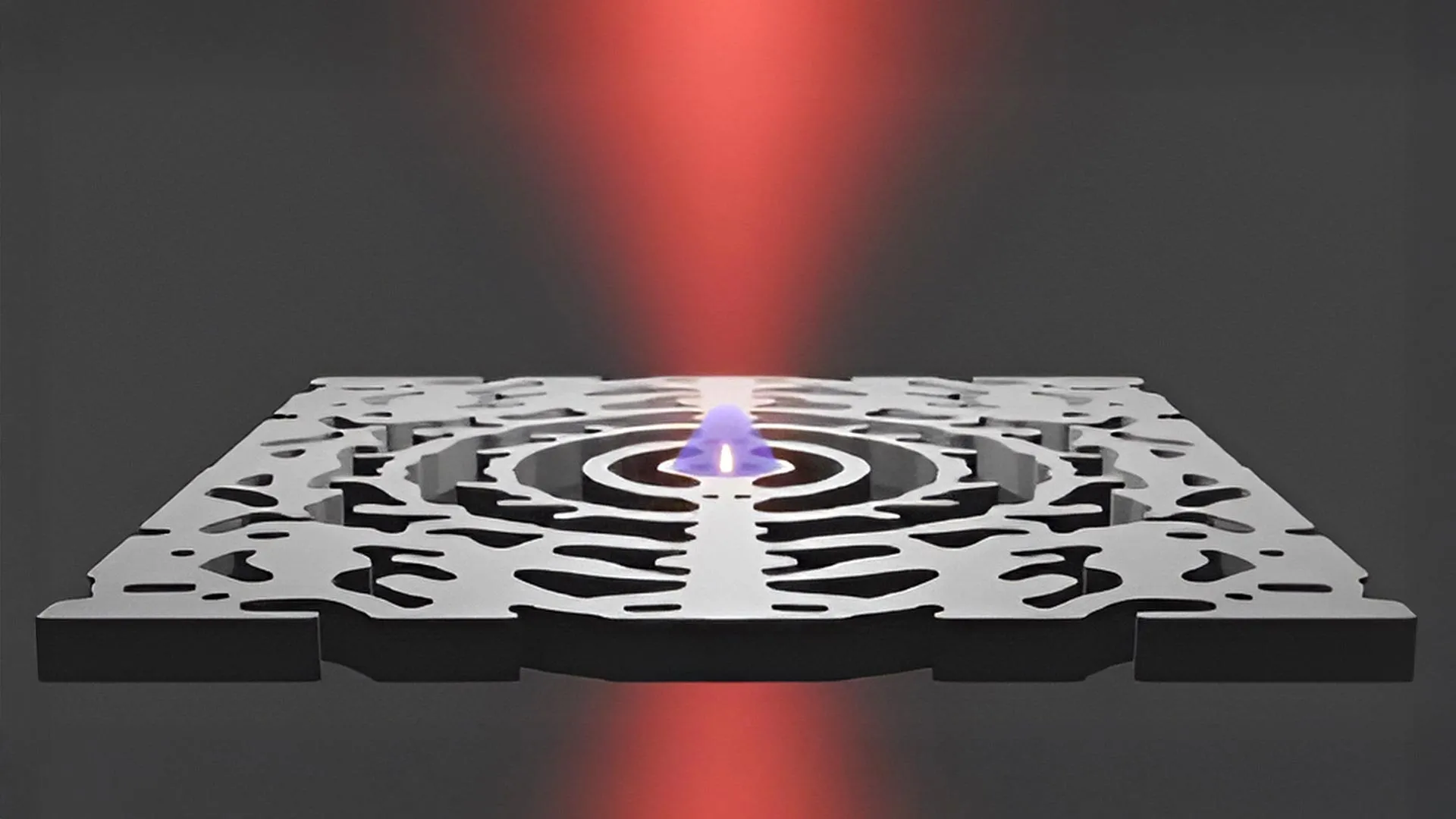
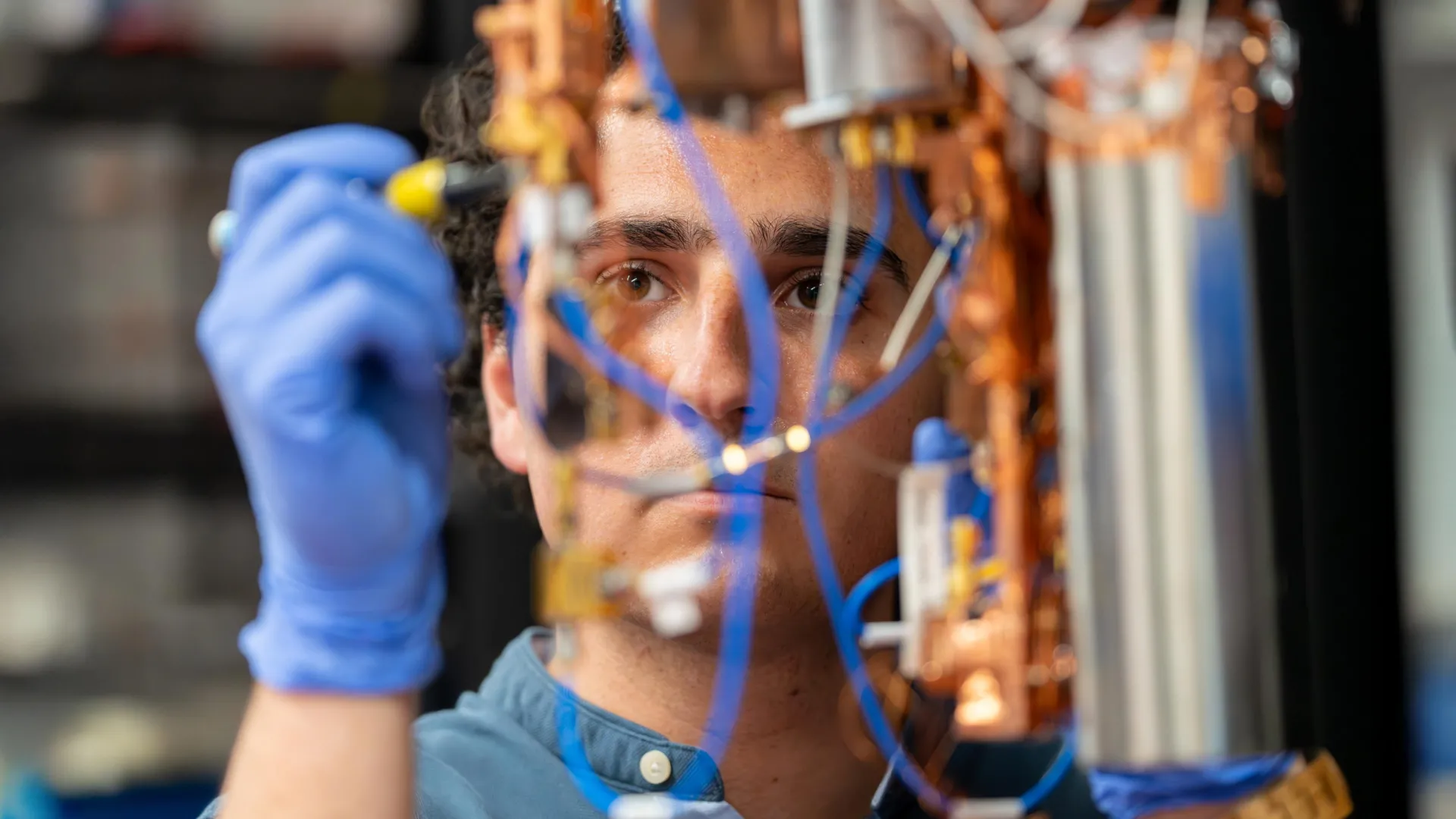
The pioneering technique was spearheaded by Caltech postdoctoral scholar Hao-Jing Chen and graduate student Kellan Colburn, who conducted their research under Vahala’s guidance. Their work involved creating nanoscale pathways on the chip, known as waveguides, using germano-silicate glass. This is the identical material that forms the core of high-performance optical fibers. The crucial innovation lies in adapting this material to a lithography-based manufacturing process, a standard approach in semiconductor fabrication, making it compatible with wafer-scale production.
Instead of forming straight lines, the germano-silicate waveguides are intricately arranged in spiral configurations. This ingenious design allows light to traverse significantly longer optical paths while remaining confined within a remarkably small physical area. The concept draws a parallel to winding optical fiber around a spool, but the precision of nanofabrication enables these extended pathways to be integrated into a far more compact footprint.
Henry Blauvelt, a visiting associate in applied physics and material science at Caltech and chief technology officer at Emcore, a company specializing in photonic circuits, highlighted the practical advantages of this approach. "Germano-silicate waveguides exhibit exceptionally low loss and are also readily adaptable for efficiently transferring light between optical fibers and semiconductor lasers," Blauvelt stated. "This is critically important for reducing the overall energy consumption of server infrastructure, a major bottleneck in today’s data-intensive world."
The performance gains are particularly striking when examining different wavelengths of light. At near-infrared wavelengths, the devices fabricated using the new Caltech platform have already demonstrated performance comparable to some of the most advanced silicon nitride devices. Silicon nitride is a widely adopted material in optical technology due to its relatively low signal loss. However, the true revolution unfolds at visible wavelengths. Here, the new germano-silicate platform significantly outperforms silicon nitride, achieving an advantage of up to 20 times.
"The comparatively low melting temperature of the germano-silicate material allows us to employ a furnace process to ‘reflow’ the surface of our waveguides," explained Hao-Jing Chen. "This reflow process achieves a surface smoothness down to the level of individual atoms, which effectively suppresses the severe scattering loss that has historically limited conventional visible PICs. At visible wavelengths, our recent platform surpasses the previous record held by silicon nitride by a factor of 20, and we believe there is still significant room for further improvement."
This reduction in signal loss has a profound impact on the performance of optical devices. For instance, lasers manufactured using the new platform exhibit more than a 100-fold improvement in the coherence of their light output, meaning the light waves remain synchronized for much longer durations. This enhanced coherence is crucial for a wide array of precision applications.
"The expanded wavelength coverage our method offers will be instrumental in supporting numerous critical atomic operations, making chip-scale atomic sensors, ultra-precise optical clocks, and advanced ion-trap systems a tangible reality," Chen added.
The seemingly paradoxical pursuit of kilometer-scale performance for devices that reside on microscopic chips is rooted in the fundamental physics of light-matter interaction. Kellan Colburn acknowledged that aiming for losses measured in percentages over distances of meters or kilometers might initially appear "a little ridiculous" for chips that are only a couple of centimeters across. However, he elaborated on the profound practical implications. "In reality, there are a multitude of applications where this capability would be incredibly powerful," Colburn noted.
A prime example is the ring resonator, a fundamental optical device integral to both scientific research and data transmission. In a ring resonator, light enters and is guided into a circular path. The light then circulates within the ring for an extended period, a process that effectively amplifies light at specific frequencies. While the physical dimensions of the ring might be a mere few millimeters, the total effective distance traveled by the light is directly dependent on how little energy is lost from the waveguide with each pass around the ring.
"This is precisely where achieving low loss over meters, and ultimately kilometers, becomes critically important," Colburn emphasized. "The longer light can circulate without significant degradation, the higher the ultimate performance of the resulting devices can be." For lasers that rely on these resonators to enhance coherence, the benefits are exponential. Every tenfold decrease in signal loss translates into a hundredfold improvement in coherence.
The ability to engineer ultralow-loss waveguides across the visible spectrum opens doors to a diverse range of transformative technologies. "One of the reasons this advancement is so compelling is its ‘Swiss Army knife’ quality – its potential to be applied in a wide array of settings," Professor Vahala remarked.
To illustrate this versatility, the researchers showcased several prototype devices fabricated with the new germano-silicate material in their Nature paper. These included various ring resonators, multiple types of lasers, and nonlinear resonators capable of generating a broad spectrum of frequencies. The researchers are quick to point out that their current achievements represent an early but significant stride rather than a final destination.
"We haven’t reached the ultimate limit of what we aspire to achieve, but we have made substantial progress over the past five years, and that is what we are reporting here," Vahala concluded.
The paper, titled "Towards fibre-like loss for photonic integration from violet to near-infrared," boasts a comprehensive list of contributing authors from Caltech, including graduate students Peng Liu, Hongrui Yan, Jinhao Ge, Jin-Yu Liu, and Phineas Lehan; former graduate student Qing-Xin Ji; former postdoctoral scholar Zhiquan Yuan; and undergraduate researcher Hanfei Hou. Collaborations extended to Dirk Bouwmeester of UC Santa Barbara and Leiden University, and Christopher Holmes and James Gates of the University of Southampton. The research was generously supported by grants from the Defense Advanced Research Projects Agency, the Air Force Research Laboratory, the Engineering and Physical Sciences Research Council, and the Kavli Nanoscience Institute at Caltech.