anjir abdul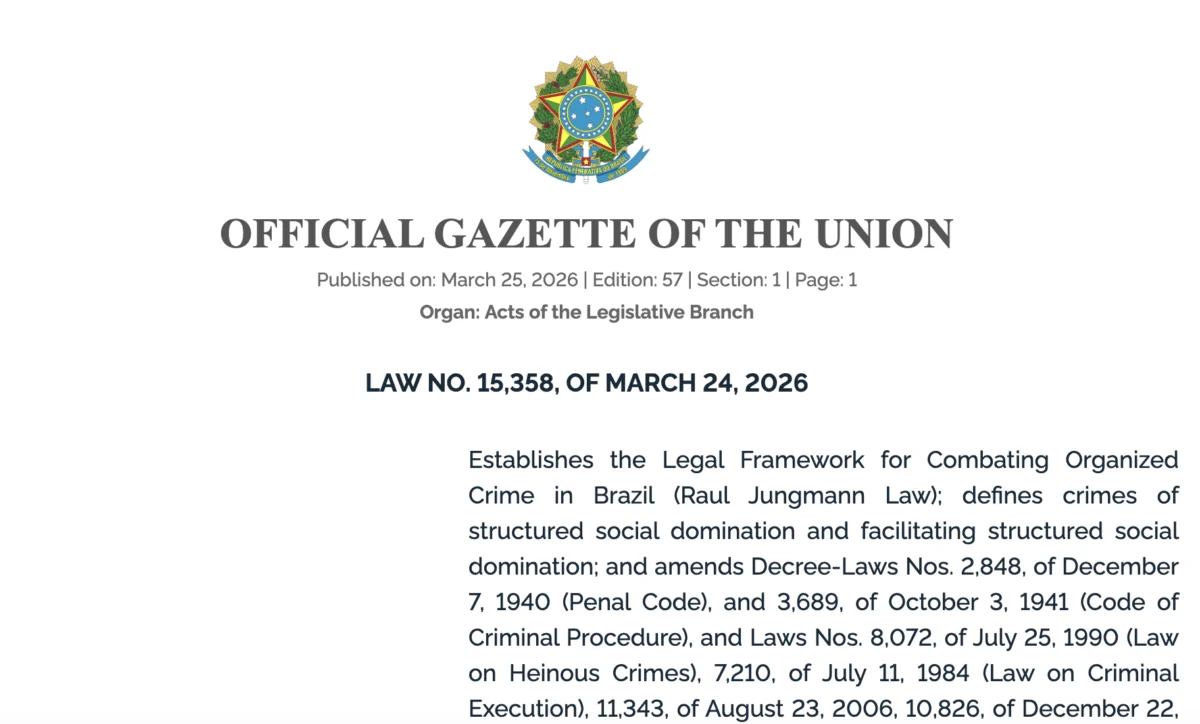
This groundbreaking legislation redefines the scope of asset forfeiture, explicitly stating that "For the purposes of forfeiture of assets, any asset that has been used to commit a crime shall be considered an instrument of the crime, even if it was not intended exclusively for that purpose." This broad definition is crucial in the context of cryptocurrencies, which, due to their fungibility and often decentralized nature, can be inadvertently or indirectly involved in criminal enterprises. The law’s language ensures that even if a portion of a digital asset was used illicitly, or if the asset facilitated a crime without being its primary objective, it can still be subject to forfeiture. This closes potential loopholes that criminals might exploit by commingling illicit and legitimate funds or by using crypto as an intermediate step in a broader criminal scheme. The implications for individuals and crypto exchanges are substantial, requiring enhanced due diligence and robust compliance frameworks to identify and report suspicious activities, lest they risk having assets seized or facing complicity charges.
Crucially, the law outlines a clear mechanism for the deployment of these seized digital assets, stipulating that "The forfeited assets and valuables may be used provisionally by public security agencies for police re-equipment, training, and special operations, subject to authorization from the judge overseeing the execution of the sentence." This provision bypasses the traditional, often lengthy, process of liquidating seized assets and integrating them into the general treasury, allowing for a more immediate and direct impact on the capabilities of law enforcement. Imagine police forces in Brazil, historically challenged by budget constraints, suddenly able to acquire advanced surveillance technology, specialized forensic tools for digital investigations, or conduct intensive training programs focused on crypto crime, all funded by the very assets used by criminals. This direct allocation model ensures that the proceeds of crime are reinvested directly into the fight against it, creating a virtuous cycle where successful enforcement directly enhances future enforcement capacity. The requirement for judicial authorization provides an essential layer of oversight, ensuring transparency and preventing potential abuses of power, balancing efficiency with accountability.
Beyond national borders, the law explicitly authorizes Brazil to coordinate and cooperate with international authorities for investigation and asset recovery, particularly in cases involving digital assets. This is a critical addition, acknowledging the inherently global nature of cryptocurrency transactions and the organized crime networks that exploit them. Cybercriminals and money launderers rarely confine their operations to a single jurisdiction, often leveraging international exchanges, mixers, and jurisdictional arbitrage to obscure their trails. By enabling robust international cooperation, Brazil positions itself as a proactive partner in global efforts to dismantle transnational criminal organizations. This could involve sharing intelligence with Interpol, Europol, or agencies like the FBI and DEA, facilitating joint investigations, and streamlining the process of tracing and seizing assets across borders. Given Brazil’s significant population of over 213 million, many of whom are active users of cryptocurrencies, this legislation has profound implications for bolstering the Brazilian government’s war chest against crime and its standing as a serious contender in the global fight against financial illicit activities.
Brazil’s high crypto adoption rates are a double-edged sword. While indicative of financial innovation and inclusion, they also present fertile ground for criminal exploitation. Reports suggest that millions of Brazilians engage with cryptocurrencies, driven by factors such as inflation hedging, investment opportunities, and the ease of cross-border remittances. This widespread adoption, combined with the relative anonymity and speed of crypto transactions, has made Brazil an attractive target and operational base for organized crime. Money laundering, drug trafficking, ransomware attacks, and various forms of fraud are increasingly facilitated through digital assets. Before this law, authorities faced significant hurdles in effectively tackling these crimes, often lacking the legal clarity or direct means to seize and utilize illicit crypto.
The urgency for such legislation was underscored by cases like the 2025 "Operation Lusocoin," spearheaded by the Brazilian Federal Police. This massive investigation targeted a sophisticated laundering and foreign exchange evasion architecture that, according to a 2026 TRM Labs report, moved tens of billions of Brazilian reais. The network was a complex web of shell companies, over-the-counter (OTC) crypto brokers, and non-custodial wallets, meticulously designed to obscure the origins and destinations of illicit funds. The challenges faced by authorities in Operation Lusocoin highlighted the need for more agile and effective legal instruments to combat the evolving tactics of organized crime in the digital realm. The new law, with its provisions for asset forfeiture and international cooperation, directly addresses many of the obstacles encountered in such complex investigations.

The signing of Law No. 15.358 followed closely on the heels of other significant developments in Brazil’s approach to digital assets. Notably, Brazil’s Finance Minister, Dario Durigan, had reportedly planned to delay discussions on changing the country’s tax policy on crypto. The rationale behind this decision was to avoid potentially divisive changes to tax policy in the run-up to Brazil’s presidential election in October, indicating a cautious political approach to contentious economic issues. This delay suggests a prioritization of stability and political consensus over immediate fiscal adjustments in the crypto sector, allowing the government to focus on other pressing policy matters. The contrast between the decisive action on crypto forfeiture and the delay in tax reform reflects a government strategy that is both pragmatic in combating crime and politically astute in managing economic policy.
When comparing Brazil’s new law to approaches taken by other nations, a distinct difference emerges. In countries like the United States, cryptocurrencies seized as part of criminal cases are often liquidated and the proceeds either fed into general government funds or used to bolster a national digital asset stockpile. While some US agencies like the IRS or Secret Service do use seized funds for specific operational needs, there isn’t a broad, explicit mandate to funnel all forfeited crypto directly into public security agencies for re-equipment or training in the same immediate way Brazil has now legislated. The US approach often involves holding significant amounts of confiscated Bitcoin or other cryptocurrencies, occasionally auctioning them off, which can introduce market volatility concerns and lengthy administrative processes. Brazil’s law, by contrast, directs these funds to an immediate, practical application, focusing on direct operational enhancement rather than long-term asset management or market speculation.
However, Brazil is not entirely averse to the idea of a national crypto reserve. In August 2025, the Brazilian government discussed a proposal to create a national Bitcoin (BTC) reserve. This bill, initially introduced in 2024, envisioned allowing Brazil to allocate up to 5% of the country’s treasury to purchase Bitcoin. In February of the following year, lawmakers reintroduced the legislation, significantly expanding its scope to potentially allow for the purchase of up to one million BTC. This ambitious proposal, if passed, would place Brazil among a handful of nations exploring sovereign crypto reserves, signifying a long-term strategic interest in digital assets beyond just their criminal implications. As of March, it remained unclear whether the BTC reserve bill would garner sufficient support to pass, highlighting an ongoing internal debate about the optimal role of cryptocurrencies in national finance and security.
The broader regulatory environment in Brazil for cryptocurrencies has been evolving rapidly. The Central Bank of Brazil (BCB) and the Securities and Exchange Commission (CVM) have been actively working to establish clearer guidelines for crypto assets, with a focus on consumer protection, market integrity, and anti-money laundering (AML) / combating the financing of terrorism (CFT) measures. The new forfeiture law fits into this evolving landscape by providing a powerful enforcement tool that complements existing and forthcoming regulations. It underscores the government’s dual approach: fostering innovation and adoption while simultaneously cracking down on illicit activities. The BCB, for instance, has been at the forefront of digital currency innovation with its "DREX" central bank digital currency (CBDC) project, indicating a forward-thinking stance on digital finance. This new law, therefore, is not an isolated measure but part of a comprehensive strategy to manage the opportunities and risks presented by the digital asset revolution.
The economic and social implications of this law are far-reaching. For the crypto industry operating in Brazil, it will undoubtedly lead to increased scrutiny and compliance burdens. Exchanges will need to enhance their know-your-customer (KYC) and AML processes, and potentially invest in more sophisticated blockchain analytics tools to identify and flag suspicious transactions. While this might be seen as an additional cost, it also contributes to legitimizing the crypto space by making it a less attractive haven for criminals. From a public perception standpoint, the law could be viewed positively as a robust measure against organized crime, potentially bolstering trust in the government’s ability to maintain law and order. However, it also raises questions about potential overreach or misuse of power, necessitating strict adherence to judicial oversight and transparent reporting on the use of seized assets. For Brazil’s financial stability, by systematically disrupting criminal financial networks, the law could help reduce the flow of illicit money, strengthening the integrity of the broader financial system and enhancing Brazil’s reputation as a digital economy committed to combating financial crime.
Looking ahead, the implementation of Law No. 15.358 will present new challenges. Authorities will need to develop expertise in managing and securing seized digital assets, including navigating volatile market conditions if assets are held for any period, and ensuring secure storage. The technical complexities of tracing, freezing, and seizing various types of cryptocurrencies across different blockchains will require significant investment in specialized training and technology for law enforcement personnel. Furthermore, the coordination mechanisms for international cooperation will need to be robustly established and tested. This law marks a significant step, but it is undoubtedly just one piece of Brazil’s evolving strategy to harness the potential of digital assets while mitigating their risks. The long-term success of this legislation will depend on its effective and transparent implementation, signaling Brazil’s unwavering commitment to leveraging every available tool in its fight against organized crime in the digital age.