Faris Adani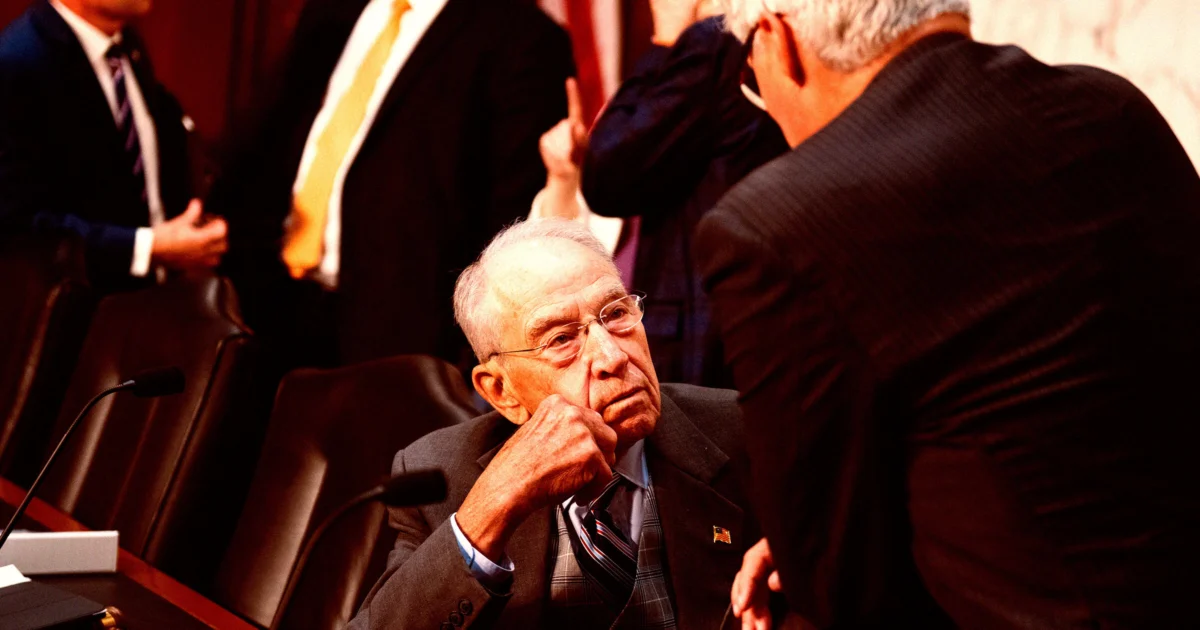
The persistent image of the United States Congress as a "creaking gerontocracy" has perhaps never been more sharply illuminated than in its current struggle to grapple with the nascent, disruptive, and rapidly evolving field of artificial intelligence. While the digital revolution has reshaped nearly every facet of modern life, the legislative body tasked with safeguarding the nation’s future appears to be operating on a different temporal plane, leading to profound concerns about its capacity to effectively govern AI. A recent investigation by Politico starkly underscores this disconnect, painting a picture of a legislative branch largely stumped by the complexities of AI, with over a dozen lawmakers and congressional aides voicing frustration over a palpable lack of urgency and fundamental comprehension on Capitol Hill regarding the technology.
The core of the problem, as articulated by many insiders, lies in a glaring knowledge gap. Representative Sam Liccardo (D-CA) offered a sobering assessment, telling Politico, "There is a percentage of my colleagues who are still trying to spell AI." This blunt remark, while perhaps hyperbolic, captures a widespread sentiment that a significant portion of elected representatives lack even a foundational understanding of the technology they are tasked with overseeing. Liccardo emphasized the critical need to "dramatically increase the base knowledge of Congress if we’re going to legislate meaningfully," acknowledging that such an educational transformation would not occur overnight. This sentiment echoes a wider concern about the generational divide in technological literacy, where many lawmakers from older generations, having come of age in a pre-digital era, find themselves inherently disadvantaged when confronting concepts like neural networks, machine learning algorithms, or generative AI.
The anecdotal evidence supporting this struggle is not hard to find. A minor brouhaha from the previous year, for instance, perfectly encapsulates the challenge. Linda McMahon, serving as Secretary of Education under the Trump administration, repeatedly mispronounced AI as "A1"—yes, like the steak sauce—while earnestly discussing the purported importance of chatbots in educational settings. Such public gaffes, while seemingly trivial, contribute to a perception that some key figures in government are not merely behind the curve, but are fundamentally disconnected from the technological realities shaping society. This isn’t just about pronunciation; it speaks to a deeper unfamiliarity with the underlying concepts, applications, and potential ramifications of AI. Without a clear grasp of what AI is, legislating what it should or should not be becomes an exercise in futility, akin to regulating quantum physics without understanding basic mechanics.
Despite these evident challenges, there appears to be a growing, albeit fragmented, consensus on the Hill that substantive AI regulation is imperative. This week, these concerns were sharply catalyzed by the dramatic departure of Anthropic researcher Jacob Coxon. In a post that rapidly went viral across social media platforms, Coxon announced his resignation, issuing a dire warning that AI companies were "gambling with our lives" by developing powerful AI models that, in their current form or potential future iterations, possessed the capability to inflict catastrophic harm, even to the point of humanity’s destruction. This public outcry from within the AI safety community brought the abstract threats of advanced AI into stark, immediate focus, forcing lawmakers to confront the ethical and existential dilemmas posed by the technology.
However, even with this renewed sense of urgency, the path to meaningful regulation remains shrouded in disagreement and legislative inertia. The fundamental problem is not a lack of concern, but a profound inability to coalesce around a unified vision of what AI regulation should entail. Lawmakers are seemingly content to pass the buck, defer responsibility, or propose solutions that, while well-intentioned, often miss the mark due to a lack of technical nuance.
Politico highlighted the example of Senator Ted Cruz (R-TX), who chairs the Senate Commerce Committee, endorsing legislation to prevent "catastrophic risk" in the wake of Coxon’s warnings. Cruz pointed to a bipartisan AI bill, touted by Senate Majority Leader John Thune (R-SD) and Senator Amy Klobuchar (D-MN), as a potential vehicle for more concrete regulations. Yet, the crucial detail is that neither senator has provided a timeline for the bill’s introduction, and requests for comment from their offices have either gone unanswered or been met with vague, non-committal statements. This legislative limbo exemplifies the broader problem: a recognition of the issue coupled with a significant delay in actionable steps, often due to political maneuvering, competing priorities, or simply the daunting complexity of the subject matter.
Meanwhile, other legislative factions are pushing for more radical, yet perhaps equally ungrounded, approaches. Senator Bernie Sanders (I-VT) and his progressive allies, for instance, are advocating for an outright ban on the development of AI superintelligence. While the concept of a superintelligent AI indeed poses clear, potentially existential risks, the scientific community itself remains divided on whether such a technology is even feasible, let alone how it might be defined or regulated in practice. Legislating against a theoretical future capability without a clear understanding of its parameters or pathways to development highlights the speculative nature of some congressional proposals, further demonstrating the chasm between legislative intent and technological reality.
The profound question then looms: Is anyone in a position of power actually going to do something substantive about regulating AI? It’s a deeply troubling sign when the very lawmakers responsible for governing the country are asking themselves the same question, indicative of a leadership vacuum and a collective paralysis. The stakes could not be higher. Unchecked AI development risks not only the "gambling with our lives" scenario warned by Coxon but also a host of other societal disruptions: exacerbation of biases, job displacement on an unprecedented scale, erosion of privacy, the proliferation of misinformation, and the potential for autonomous weapons systems.
Representative Chip Roy (R-TX), a conservative on his way out of office, offered a candid and frustrated assessment that cuts to the heart of the matter. "You cannot just put your head in the sand on AI and say, ‘I hope it works out.’ You can’t just go in and say, ‘Government’s got the solution — they’re just going to ban it all.’ That’s just not going to work," Roy told Politico. His plea for "thoughtful as leaders and actually have some friggin’ leadership" encapsulates the growing exasperation within the political landscape.
To move forward, Congress must bridge this knowledge gap. This could involve establishing dedicated AI advisory bodies comprising leading technologists, ethicists, and policymakers; increasing funding for congressional staff with deep technical expertise; mandating regular, in-depth briefings from industry and academia; and fostering a culture of continuous learning within legislative chambers. Without a fundamental shift in understanding and a concerted, bipartisan effort to craft informed and adaptable regulatory frameworks, the current legislative inertia risks allowing powerful AI technologies to develop largely unchecked, with potentially irreversible consequences for society. The future of AI, and perhaps humanity itself, hinges on whether this aging gerontocracy can overcome its inherent limitations and rise to the challenge of a truly novel technological frontier.
More on AI: OpenAI’s Supposed Mathematical Breakthrough Devolves Into Explosive Drama as Mathematician Accuses It of Stealing His Work