Imroatul Nasiyah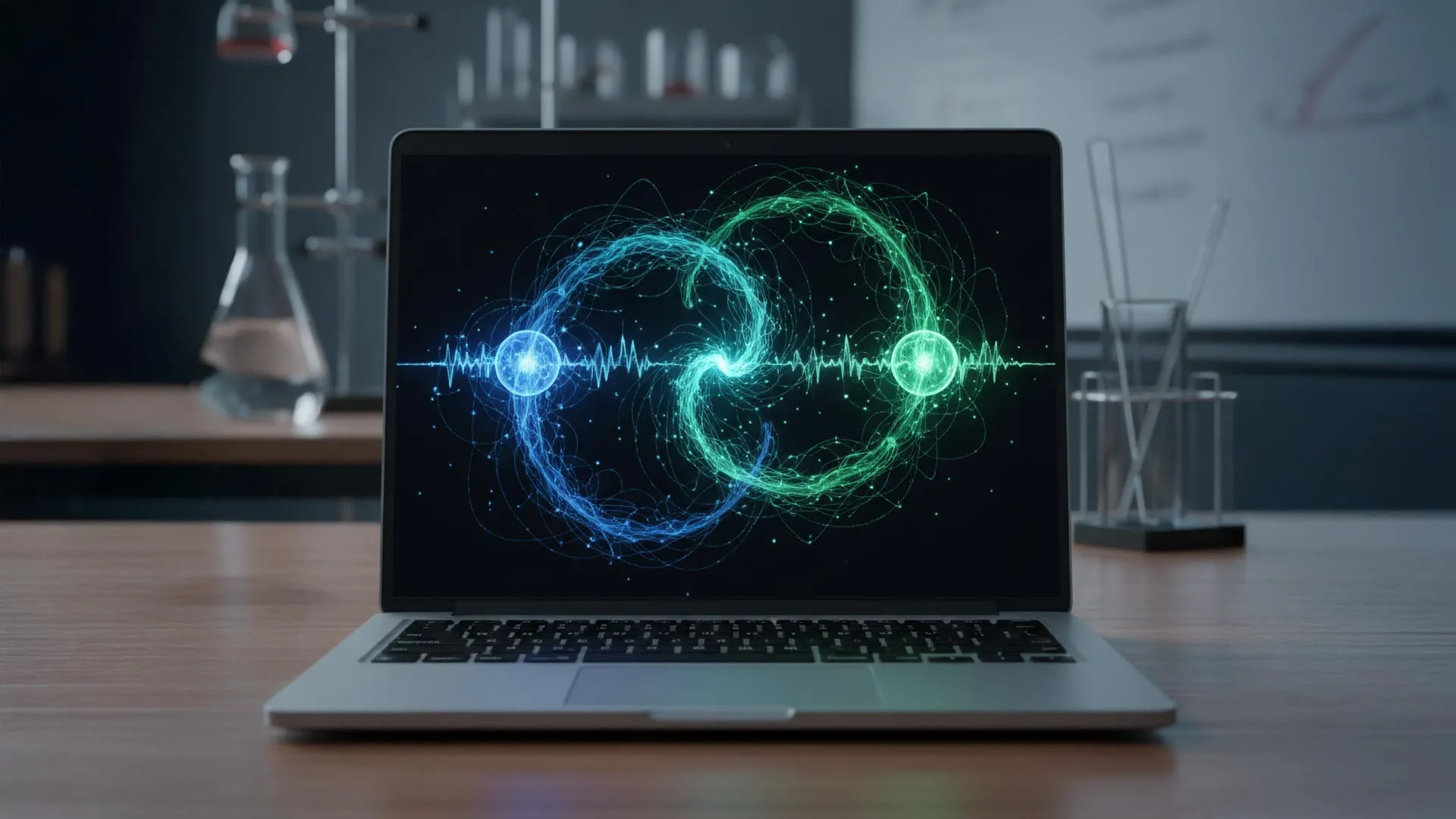
This advancement is not merely theoretical; it offers a practical, user-friendly framework. Scientists can now input their data and obtain meaningful results for complex quantum systems in a matter of hours, a stark contrast to the days or weeks previously required. Jamir Marino, PhD, the study’s corresponding author and an assistant professor of physics at UB, highlighted the dramatic reduction in computational cost and the simplified formulation of the dynamical equations. He expressed optimism that this method could soon become the go-to tool for exploring quantum dynamics on consumer-grade computers, democratizing access to a field previously confined to well-resourced institutions. Marino initiated this work during his tenure at Johannes Gutenberg University Mainz in Germany, collaborating with former students Hossein Hosseinabadi and Oksana Chelpanova, who has since joined Marino’s lab at UB as a postdoctoral researcher. The research received crucial support from esteemed organizations including the National Science Foundation, the German Research Foundation, and the European Union, underscoring its broad significance.
The core of this breakthrough lies in the strategic adoption of a semiclassical approach. Exact solutions for every quantum system are often computationally prohibitive, as the required processing power escalates exponentially with system complexity. Physicists have long resorted to semiclassical physics, a hybrid method that preserves essential quantum characteristics while shedding less impactful details. The truncated Wigner approximation (TWA), a semiclassical technique dating back to the 1970s, has been a valuable tool but was largely confined to isolated, idealized quantum systems, where energy exchange with the environment is negligible. Marino’s team has ingeniously extended TWA to accommodate the more realistic, "messier" systems prevalent in the real world, where particles are subject to external forces and energy dissipation into their surroundings – a phenomenon known as dissipative spin dynamics.
"Plenty of groups have tried to do this before us," Marino stated, emphasizing the long-standing recognition that certain complex quantum systems could be efficiently solved using a semiclassical approach. "However, the real challenge has been to make it accessible and easy to do." This accessibility was a major bottleneck. Previously, researchers employing TWA faced a steep learning curve, requiring them to meticulously re-derive the underlying mathematical formulations for each new quantum problem. The UB team’s innovation bypasses this hurdle by transforming pages of dense, often inscrutable mathematics into a straightforward conversion table. This table effectively translates complex quantum problems into a set of solvable equations, drastically lowering the barrier to entry.
Oksana Chelpanova elaborated on the ease of adoption, noting that "Physicists can essentially learn this method in one day, and by about the third day, they are running some of the most complex problems we present in the study." This rapid learning curve signifies a paradigm shift, empowering a wider range of researchers to engage with sophisticated quantum simulations without extensive prior expertise in the intricacies of TWA derivation.
The overarching goal of this research is to judiciously allocate valuable supercomputing resources. By enabling laptops to handle a significant portion of quantum simulation tasks, supercomputers and advanced AI models can be reserved for the truly monumental challenges – systems so complex they defy semiclassical approximations. These are systems that exhibit not just trillions, but more possible states than there are atoms in the universe. "A lot of what appears complicated isn’t actually complicated," Marino observed, advocating for a more efficient allocation of computational power. "Physicists can use supercomputing resources on the systems that need a full-fledged quantum approach and solve the rest quickly with our approach." This strategic division of labor promises to accelerate the pace of discovery across various scientific disciplines, from materials science and drug discovery to fundamental physics research.
The implications of this work are far-reaching. Imagine the potential for designing novel materials with unprecedented properties, engineering more efficient catalysts for chemical reactions, or developing new therapeutic agents by simulating molecular interactions at the quantum level. Previously, the computational cost of such endeavors often made them impractical or limited to highly specialized research groups. Now, with TWA made accessible and efficient, these simulations become a tangible possibility for a much broader scientific community. This democratization of quantum simulation power could ignite innovation across numerous fields, fostering collaborations and accelerating the development of new technologies that were once confined to the realm of science fiction.
Furthermore, the simplified formulation of the dynamical equations means that not only is the computational cost lower, but the interpretation of results can also become more straightforward. This can lead to a more intuitive understanding of quantum phenomena, facilitating deeper insights and the identification of novel patterns or behaviors that might have been obscured by the sheer complexity of raw data. The ability to obtain meaningful results within hours allows for iterative research cycles, where hypotheses can be quickly tested and refined, leading to more agile and efficient scientific exploration.
The study’s publication in PRX Quantum also lends it significant credibility and visibility within the physics community. PRX Quantum is known for publishing high-impact research that pushes the boundaries of quantum science, and the inclusion of Marino’s work signifies its importance and potential to shape the future of the field. The journal’s rigorous peer-review process ensures that the methodology and findings are sound, providing confidence to other researchers looking to adopt and build upon this new approach.
The collaborative nature of the research, spanning institutions in Germany and the United States, also highlights the global effort to advance quantum computing and simulation capabilities. The support from international funding agencies further underscores the recognition of this work’s significance on a global scale. This international collaboration not only enriches the scientific discourse but also fosters the exchange of ideas and expertise, which is crucial for tackling complex scientific challenges.
In essence, the University at Buffalo researchers have achieved a remarkable feat: they have democratized access to the quantum world. By making complex quantum simulations manageable on standard laptops, they have opened up new avenues for research and innovation, promising to accelerate discoveries that could reshape our understanding of the universe and lead to transformative technologies. The era of supercomputer-dependent quantum simulations is giving way to a more accessible and agile future, powered by ingenious simplifications and a commitment to making cutting-edge science available to a wider audience. This advancement is not just a technical triumph; it is a philosophical shift, bringing the profound mysteries of quantum mechanics closer to our everyday reach.