Imroatul Nasiyah
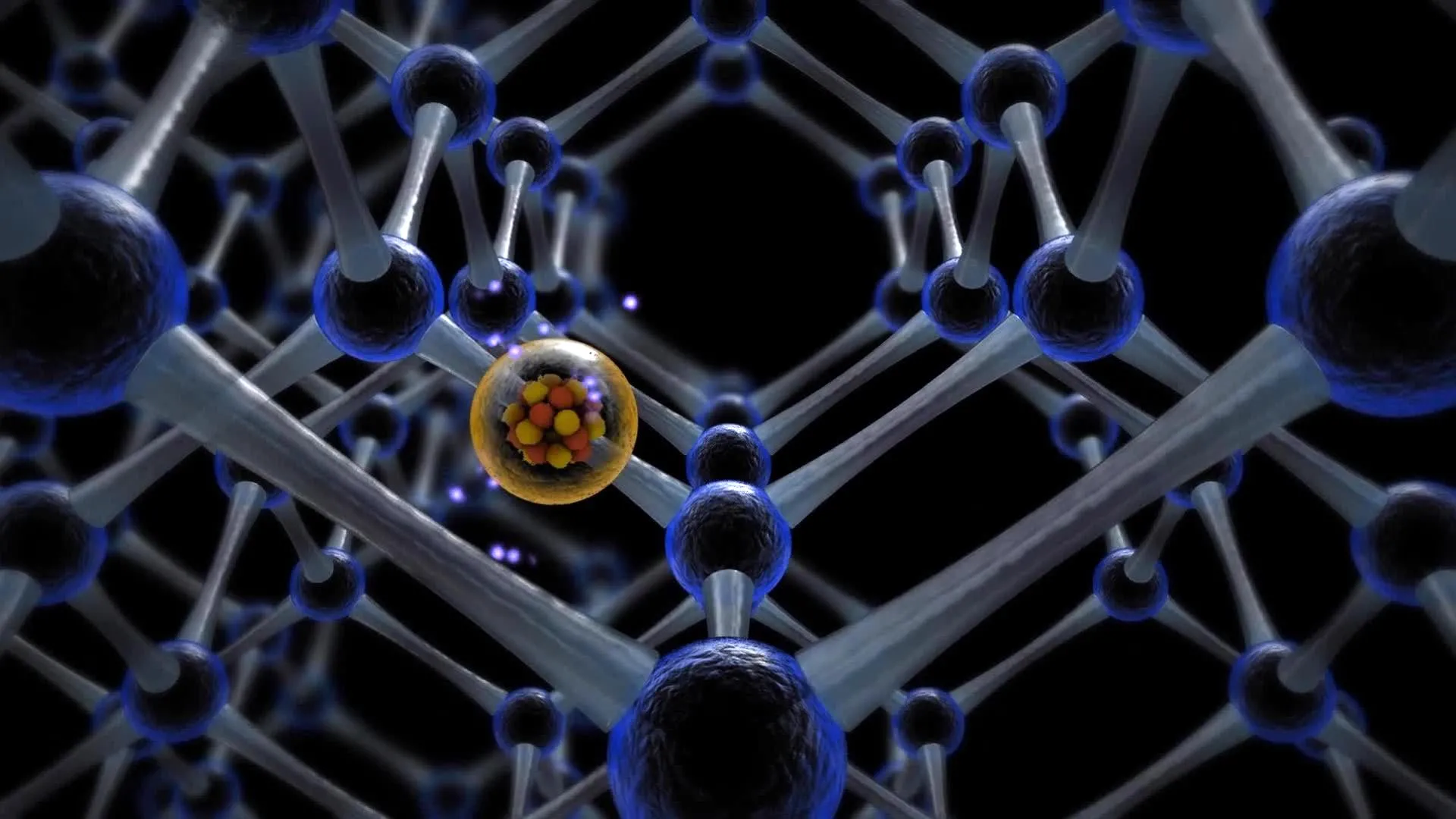
Harnessing the Power of Sound to Transport Quantum Information
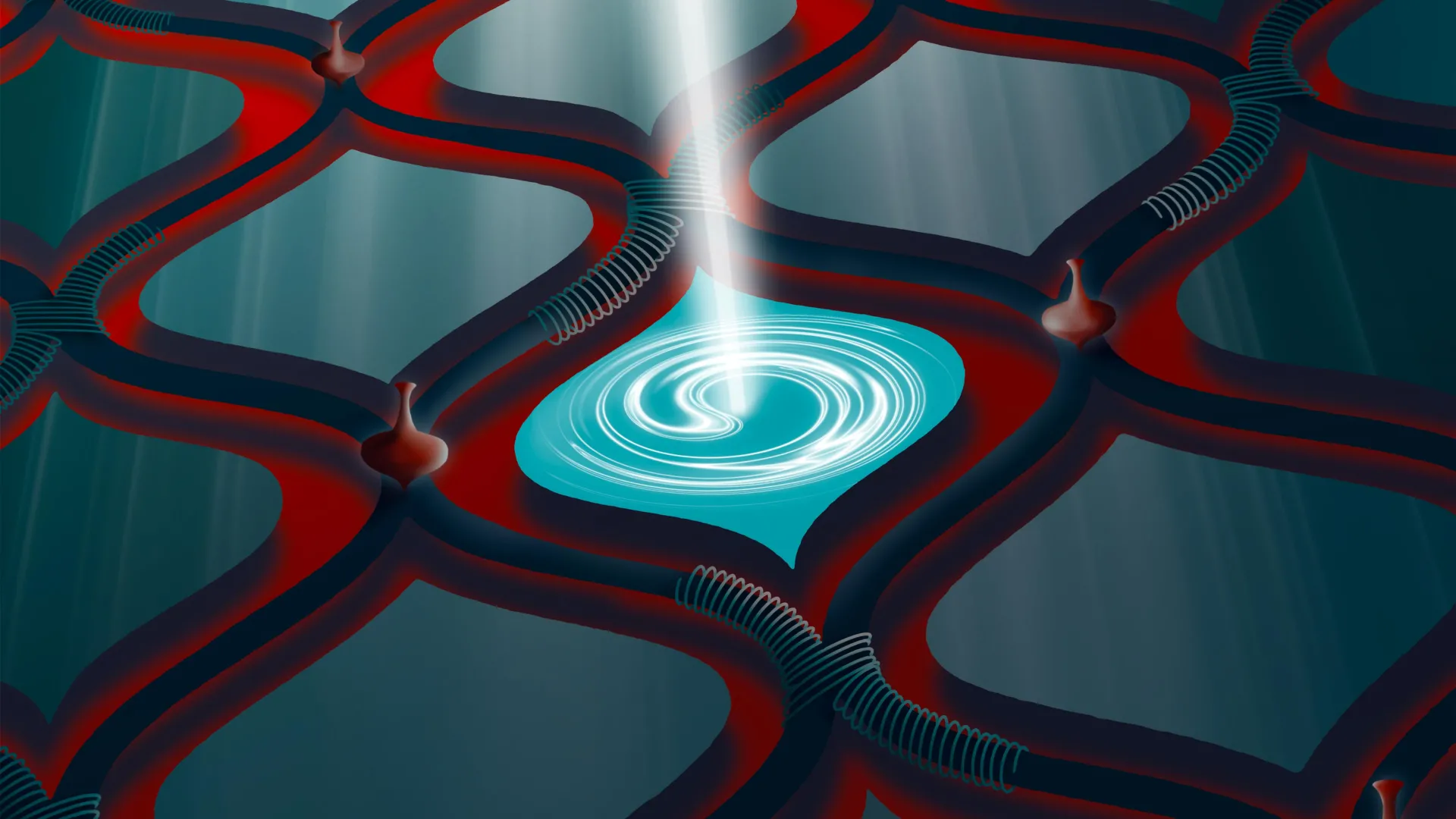
One of the most promising avenues being explored for the development of quantum networking relies on the intrinsic spin of electrons, particularly those associated with impurities found within diamond crystals, to serve as the fundamental units for storing quantum information. In this paradigm, minute packets of mechanical vibration, known as phonons, emerge as ideal candidates to act as carriers, facilitating the seamless transfer of quantum information between individual qubit nodes within a network. The Lončar laboratory has consistently been at the forefront of investigating the immense potential of these phononic systems, contributing several key advancements to the field. Among their notable achievements is the design and realization of a sophisticated structure termed a phononic cavity. This ingenious device is specifically engineered to trap and confine mechanical vibrations, thereby enabling a significantly stronger and more controlled interaction between these phonons and the electron spin residing within a qubit.
Phonons offer several distinct advantages over photons, the quantum particles of light, which are more conventionally employed for the transmission of quantum information across chip-scale networks. A crucial benefit lies in their wavelength at equivalent frequencies. Phonons exhibit considerably shorter wavelengths compared to light, a property that directly translates into the ability to construct significantly smaller and more compact components. This miniaturization capability allows for a much denser packing of these components, a critical factor for building scalable and efficient quantum systems.
Beyond their diminutive size, phonons possess a remarkable versatility in their interactions. They readily engage with both solid-state spins, such as those used in diamond qubits, and electromagnetic fields. This inherent dual interaction capability makes phonons exceptionally attractive for the development of hybrid quantum technologies. These advanced systems aim to integrate and leverage the unique properties of different types of qubits within a single, unified platform, unlocking new possibilities for computation and communication.
The Persistent Challenge of Preserving Quantum Memory
Despite the compelling advantages offered by phonons, their utilization presents a significant and persistent challenge: the imperative to effectively protect and preserve quantum memory. Qubits, the fundamental building blocks of quantum computers, are extraordinarily sensitive to even the slightest disturbances from their surrounding environment. To maintain their utility and perform complex computations, qubits must be able to preserve their delicate quantum state for a sufficient duration. This crucial ability to retain quantum information without degradation is known as coherence.
In the conventional approaches to quantum computing, researchers often employ sophisticated techniques to shield quantum memories from detrimental environmental interference. One common method involves the application of precisely timed microwave pulses. These pulses are designed to effectively separate, or decouple, the quantum memory from the pervasive ambient noise, thereby preventing decoherence. However, these well-established techniques have proven to be less effective when applied to qubits that are embedded within phononic cavities, the very structures that are essential for strong phonon-qubit interaction.
This inherent limitation has historically posed a significant hurdle, making it exceedingly difficult to simultaneously achieve both a strong, controlled interaction with phonons and the maintenance of long-lasting quantum memory within the same integrated device. The quest for a solution that reconciles these seemingly competing demands has been a central focus of quantum computing research.
"Dressed" Qubits: A New Era of Protection Through Sound
The SEAS team, through their innovative research, has successfully addressed this critical challenge by demonstrating what they aptly describe as "all-mechanical coherence protection" for a specific type of qubit: a silicon-vacancy spin defect within a diamond lattice. Instead of relying on the traditional and often inadequate microwave pulse techniques, these pioneering researchers adopted a novel approach. They continuously applied a meticulously engineered mechanical driving field, generated by phonons themselves. This sustained acoustic influence effectively transformed the qubit into a distinct and more robust quantum state, which they term a "dressed" qubit.
The designation "dressed" aptly captures the essence of this quantum state. It signifies that the qubit is, in effect, continuously "wearing" an acoustic field, becoming intrinsically interwoven with the mechanical vibrations. In this protected state, the qubit exhibits a significantly diminished vulnerability to low-frequency noise originating from its immediate surroundings. This is a crucial breakthrough, as low-frequency noise is a primary culprit in qubit decoherence.
A key advantage of this new method lies in the compatibility of the protection mechanism with the very structures that are essential for building quantum networks. Because the coherence protection is derived from a continuous mechanical field that is inherently compatible with phononic cavities, this technique can be seamlessly implemented within the same intricate structures that are envisioned to connect stationary nodes in future quantum networks.
This breakthrough bestows upon phonons a potentially powerful and dual role in the advancement of quantum technologies. Not only can they serve as efficient carriers of quantum information, transporting it between different components of a quantum network, but they can simultaneously act as a protective shield, safeguarding that precious quantum information from the insidious effects of environmental noise.
Eliza Cornell, one of the lead researchers, articulated the significance of their findings, stating, "We are solving two problems. We want the spin to have strong interaction with phonons, and we want the spin to have a long coherence time. Our paper demonstrates a method of extending the coherence time that is compatible with the silicon-vacancy center being in a cavity." This dual solution addresses a fundamental bottleneck that has impeded progress in the field.
Quantum Coherence Sustained Approximately Three Times Longer
The impact of this innovative approach is quantifiable and significant. With the implementation of this novel method, the researchers have successfully increased the coherence time of the silicon-vacancy spin by an impressive factor of roughly three. This substantial enhancement in coherence time is a direct testament to the efficacy of their "all-mechanical coherence protection" strategy.
This remarkable result provides compelling evidence that continuous-wave mechanical noise suppression can indeed lead to a tangible extension of quantum coherence in real-world devices. It strongly suggests that microscopic sound waves, once thought of as mere physical phenomena, could evolve into an indispensable tool for the construction of quantum systems that are not only more reliable and robust but also significantly more compact and scalable. The implications for the future of quantum computing and communication are profound, promising a more tangible pathway towards realizing the full potential of this transformative technology.
The research paper detailing these groundbreaking findings, titled "All-mechanical coherence protection and fast control of a spin qubit," was co-authored by a distinguished team of scientists including Zhaoyou Wang, Hana K. Warner, Eliana Mann, Michael Haas, Smarak Maity, Graham Joe, Liang Jiang, Peter Rabl, and Benjamin Pingault. The research received substantial support from various U.S. federal agencies, underscoring its national importance and scientific merit. Funding was provided by the National Science Foundation under grant number EEC-1941583, the Air Force Office of Scientific Research under award numbers FA9550-23-1-0333 and FA9550-23-1-0338, and Q-NEXT, a U.S. Department of Energy Office of Science National Quantum Information Science Research Centers program under award No. DE-FOA-0002253. Furthermore, a portion of the work was conducted at the Harvard Center for Nanoscale Systems, a vital member of the National Nanotechnology Infrastructure Network, which is supported by National Science Foundation award No. ECS-0335765. Recognizing the significant commercial potential of these innovations, the Harvard Office of Technology Development is actively engaged in pursuing patent protection and exploring commercialization opportunities for the groundbreaking technologies emerging from this research.