Faris Adani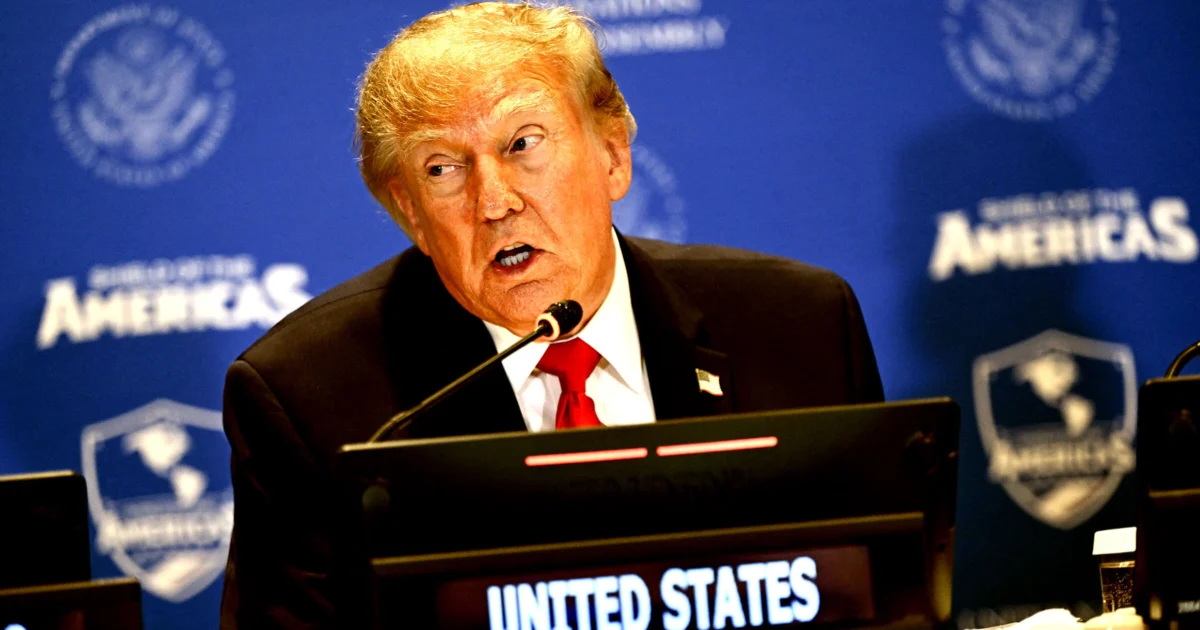
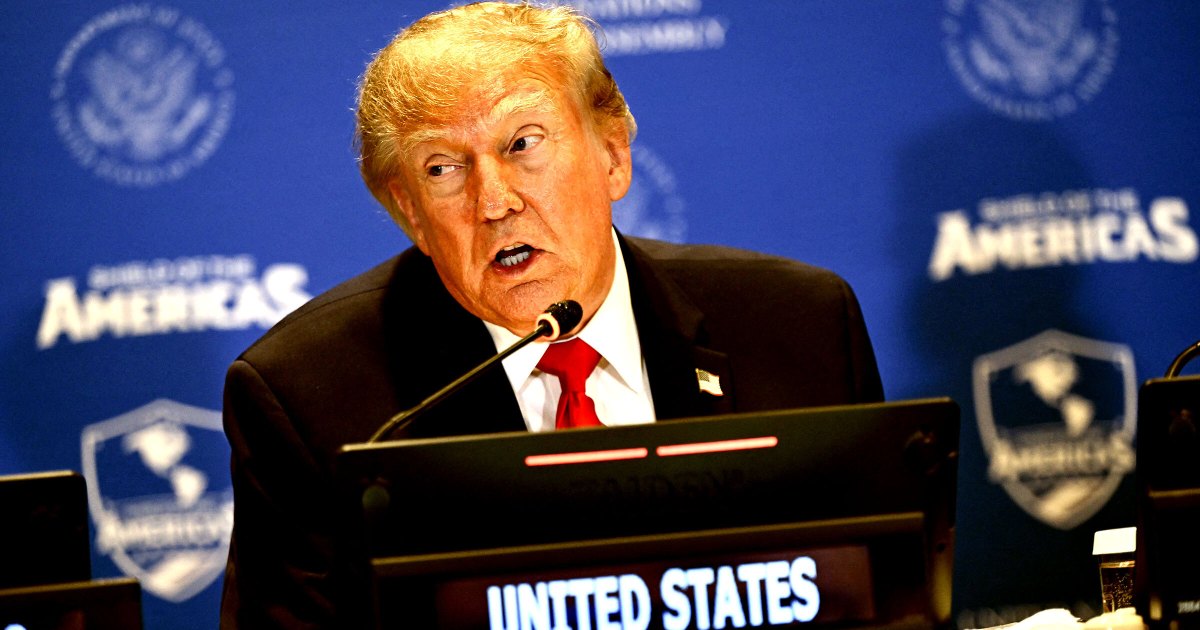
In a move that has sent ripples through international diplomatic and technological circles, former US President Donald Trump, addressing the United Nations General Assembly in New York City today, vehemently rejected calls for artificial intelligence regulation, drawing a controversial parallel to his administration’s approach to environmental policy. His rationale, stunning to many, suggested that near-total deregulation has worked "great" for the environment, and therefore, should be replicated for the burgeoning field of AI. This declaration not only challenges the prevailing global consensus on AI governance but also reignites fierce debates over his climate change rhetoric and its real-world consequences.
During his speech, Trump, with his characteristic blend of assertion and digression, declared, “The United States… totally rejects any attempt to construct a globalist scheme to control for the artificial intelligence being spoken of so much now.” He then proceeded to dismantle the credibility of those advocating for a pause or slowdown in AI development, painting them as alarmists akin to climate change activists. “Yet the very same people who said we’ll all be dead in 12 years because of global warming — a name since reborn to ‘climate change,’ because the planet was cooling, not warming, and nobody was dead — these are the same people that are now saying that AI is going to kill us all, that robots are going to attack us, that everything is going to be a total disaster.” This statement not only dismissed the profound scientific consensus on climate change but also sought to undermine the serious concerns raised by leading AI researchers, ethicists, and policymakers worldwide regarding the technology’s potential risks.
Adding another layer to his unconventional address, Trump also announced a personal rebranding of artificial intelligence, stating, “Herein after, officially called, ‘super intelligence’ — changing the name — and that the use of the word ‘artificial’ makes intelligence fake, it makes it sound fake. It’s actually not fake, it’s actually amazing — but we have to be careful.” This linguistic shift, from "artificial intelligence" to "super intelligence," while seemingly a minor semantic adjustment, carries significant implications. The term "superintelligence" has historically been used within AI discourse, notably by philosophers like Nick Bostrom, to describe a hypothetical intelligence that far surpasses human cognitive abilities. Trump’s appropriation and redefinition of the term, suggesting "artificial" implies "fake," appears to be an attempt to reframe the technology as inherently powerful and authentic, while simultaneously acknowledging a vague need for caution that contradicts his anti-regulation stance. This rhetorical maneuver aligns with his broader communication strategy of controlling narratives and dismissing dissenting views.
The former president’s comparison between AI regulation and climate change deregulation is particularly contentious, resting on a fundamentally flawed premise. His assertion that "nobody was dead" due to global warming directly contradicts a mountain of scientific evidence and lived experiences across the globe. Climate change, far from being a defunct crisis or a "cooling" planet, is an escalating existential threat actively claiming lives and devastating communities. This past summer alone, record-breaking heatwaves swept across continents, leading to thousands of fatalities and overwhelming healthcare systems. Glacial melt-off has triggered freak mudslides and flash floods in vulnerable regions like Nepal and Tibet, displacing populations and destroying infrastructure. Prolonged droughts have exacerbated food insecurity and fueled devastating wildfires, as seen in parts of North America, Europe, and Australia, blanketing cities in smoke and rendering vast areas uninhabitable. The Intergovernmental Panel on Climate Change (IPCC), the leading international body for assessing climate change, has consistently issued dire warnings, backed by thousands of scientists, detailing the accelerating impacts of human-induced global warming. Trump’s withdrawal of the United States from the Paris Agreement during his presidency and his administration’s rollback of numerous environmental protections further underscore his ideological opposition to climate action, an approach largely driven by a prioritization of short-term economic gains over long-term planetary health.
Trump’s comments also offer a revealing glimpse into his socioeconomic worldview. The climate movement, which he dismisses as having moved on to AI, remains a vibrant force globally, propelled by grassroots organizations, indigenous communities, international coalitions, and a vast network of academic researchers. What has indeed shifted, however, is the stance of many American corporations and billionaires, who, during his previous tenure, pivoted away from green capitalism initiatives to embrace his "drill baby, drill" energy policies. This strategic alignment between a deregulatory political agenda and powerful economic interests highlights how policies, or the lack thereof, can disproportionately benefit the wealthy while externalizing costs onto the environment and marginalized populations. The victims of climate change – often the poorest and most destitute globally – are precisely those who lack the political and economic power to influence policy, making them invisible to leaders like Trump who operate within insulated spheres of affluence.
The broader context of AI regulation stands in stark contrast to Trump’s unilateral rejection. The debate over AI governance is not merely "hysterical sloganeering" but a serious global discussion involving governments, tech leaders, academics, and civil society. Americans, across the political spectrum, overwhelmingly support stronger AI regulations. Concerns range from the ethical implications of algorithmic bias, the potential for widespread job displacement, the proliferation of misinformation and deepfakes, to more profound questions about autonomous weapons systems and existential risks posed by advanced AI. International bodies and individual nations, such as the European Union with its pioneering AI Act, are actively developing comprehensive regulatory frameworks to address these challenges. Even prominent figures within the tech industry have called for cautious development and robust safeguards. Furthermore, the environmental impact of AI itself – particularly the immense energy consumption and carbon footprint of large AI models and data centers – ironically links the two issues Trump sought to separate, presenting another compelling reason for responsible governance.
In hand-waving away the profound concerns surrounding both climate change and AI as mere scaremongering, Trump’s speech at the UN General Assembly serves as a stark declaration of his intention to ignore global calls for cooperative action on these critical issues. This stance signals to the international community a potential retreat from global responsibility, effectively placing the burden of addressing these complex, interconnected challenges on other nations. The implications are significant: a fragmented global regulatory landscape for AI, where innovation might outpace ethical considerations, and a continued exacerbation of climate change, with the world’s largest economy potentially remaining an outlier in mitigation efforts. The choice, as presented by Trump, is not between regulation and progress, but between a potentially chaotic, unmanaged future and a concerted, responsible effort to navigate the profound technological and environmental transformations of our time.