Faris Adani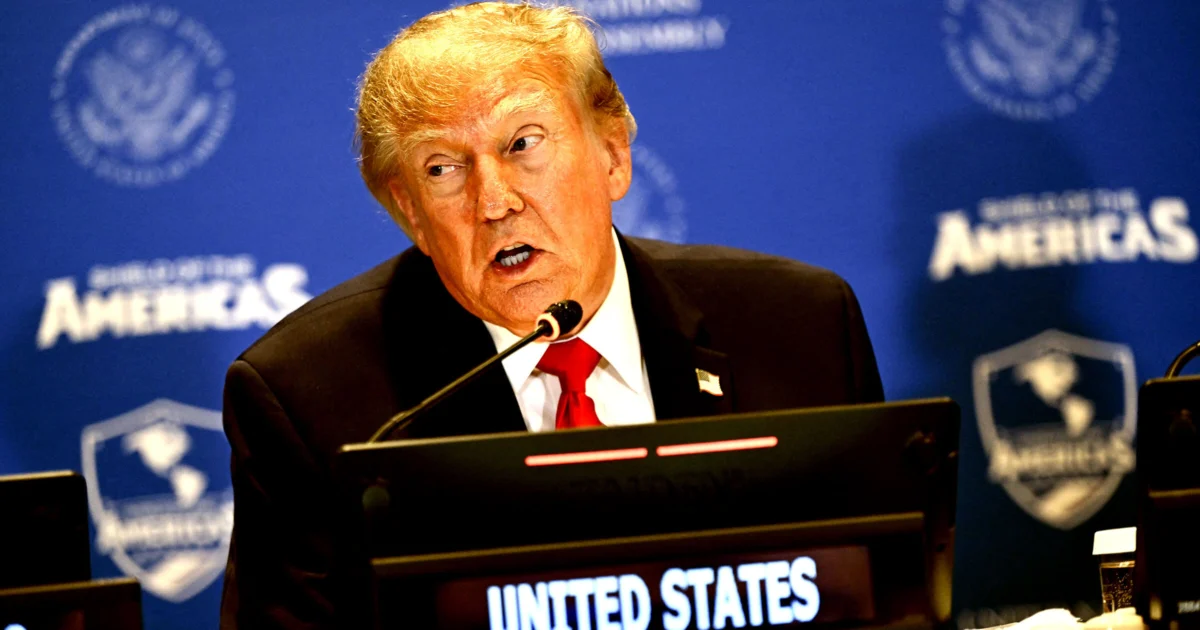
In a provocative address delivered to the United Nations General Assembly in New York City today, former President Donald Trump ignited a firestorm of debate by vehemently rejecting calls for artificial intelligence regulation. His rationale, which drew immediate criticism from environmental groups and technology ethicists alike, asserted that the purported success of deregulation in environmental policy should serve as a blueprint for managing the burgeoning field of AI. This declaration, delivered before a global audience of heads of state and international delegations, starkly contrasts with overwhelming public sentiment and expert consensus advocating for robust oversight of AI development.
The debate surrounding AI regulation has reached a fever pitch in recent times, with polls consistently showing that a significant majority of Americans, spanning the entire political spectrum, favor stronger governmental controls over artificial intelligence. Concerns range from the potential for widespread job displacement and algorithmic bias to the proliferation of misinformation, deepfakes, and even more speculative fears about existential risks posed by advanced AI systems. Industry leaders, academics, and policymakers have engaged in intense discussions on how to strike a balance between fostering innovation and safeguarding society from unforeseen consequences. Yet, against this backdrop of widespread apprehension and calls for caution, Trump presented a vision of unbridled technological advancement, seemingly untethered from regulatory constraints.
“The United States… totally rejects any attempt to construct a globalist scheme to control for the artificial intelligence being spoken of so much now,” Trump declared, his words echoing through the hallowed halls of the UN. His statement was a direct rebuff to international efforts and domestic proposals aimed at establishing ethical guidelines, safety protocols, and accountability frameworks for AI. He then launched into a remarkable comparison, linking the AI debate to climate change, a topic he has long dismissed. “Yet the very same people who said we’ll all be dead in 12 years because of global warming — a name since reborn to ‘climate change,’ because the planet was cooling, not warming, and nobody was dead — these are the same people that are now saying that AI is going to kill us all, that robots are going to attack us, that everything is going to be a total disaster.”
This assertion regarding climate change immediately drew incredulous reactions. Trump’s revisionist history of climate science stands in stark opposition to decades of peer-reviewed research and the consensus of virtually every major scientific organization worldwide. The notion that “the planet was cooling, not warming” is demonstrably false; global temperature records consistently show a clear upward trend, with the past decade being the warmest on record. His claim that “nobody was dead” due to global warming or climate change is not only factually incorrect but also deeply insensitive to the millions whose lives have been severely impacted or tragically cut short by climate-related disasters.
Indeed, the world is currently grappling with the devastating realities of a rapidly warming planet. This past summer alone, record-breaking heatwaves swept across continents, leading to thousands of fatalities, particularly among vulnerable populations. Glacial melt-off in mountainous regions has exacerbated the frequency and intensity of freak mudslides and flash floods, wiping out communities in places like Nepal and Tibet. Prolonged droughts have fueled unprecedented wildfires, scorching millions of acres, displacing populations, and choking skies with hazardous smoke from North America to Australia. These are not abstract predictions but present-day catastrophes, directly attributable to the climate crisis. To suggest that deregulation has been a “success” in this context is to wilfully ignore a mounting global humanitarian and ecological crisis. The scientific community did not change the term from “global warming” to “climate change” because the planet was cooling; rather, “climate change” is a more comprehensive term encompassing all the complex shifts in weather patterns, sea levels, and extreme events driven by rising global temperatures.
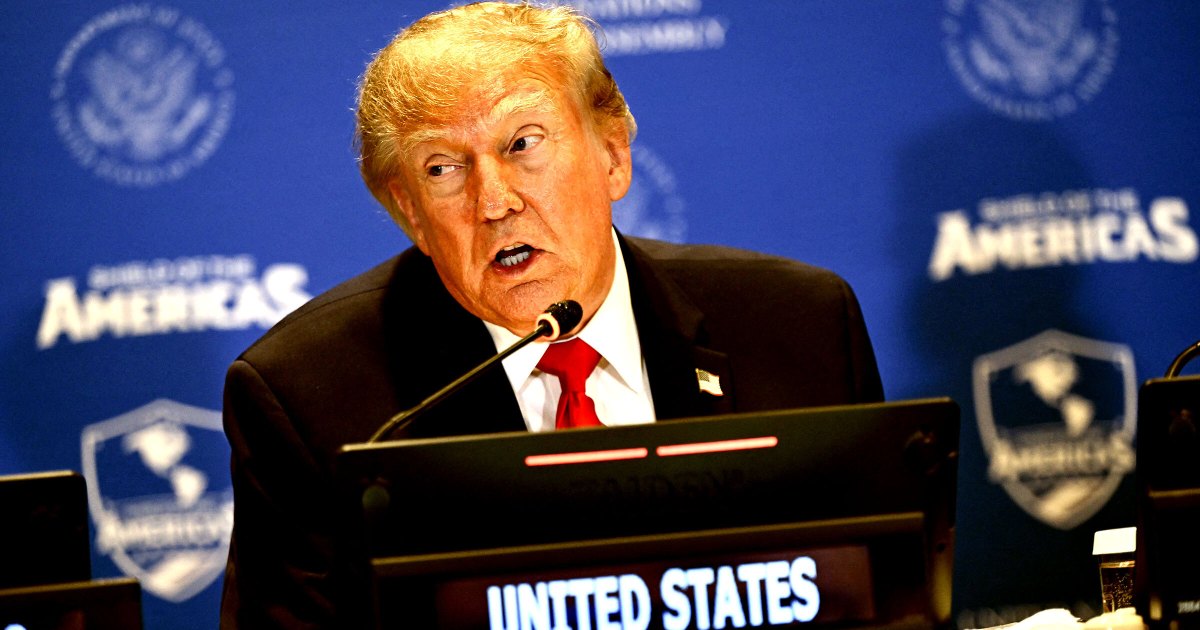
Furthermore, Trump utilized his UN platform to introduce a peculiar rebranding of the technology itself, declaring that “artificial intelligence” should henceforth be officially known as “super intelligence.” “Herein after, officially called, ‘super intelligence’ — changing the name — and that the use of the word ‘artificial’ makes intelligence fake, it makes it sound fake. It’s actually not fake, it’s actually amazing — but we have to be careful,” he rambled, seemingly contradicting his earlier dismissal of AI-related fears. This semantic shift appears to be a rhetorical tactic, perhaps aimed at reframing the conversation and downplaying legitimate concerns about AI’s limitations, biases, and potential for misuse by imbuing it with a more awe-inspiring, less problematic moniker. The brief, almost accidental acknowledgement that “we have to be careful” stands as a stark anomaly within his broader narrative of deregulation and dismissiveness, highlighting an inherent tension in his position.
The former president’s comments also offer a revealing glimpse into a socioeconomic worldview that appears insulated from the harsh realities faced by many. As an immensely wealthy individual in one of the world’s most affluent nations, Trump is largely shielded from the immediate and dire consequences of climate change that disproportionately afflict the poorest and most vulnerable communities globally. While coastal cities face rising sea levels and intensified storms, and agricultural regions battle drought and crop failures, the wealthy can often retreat to climate-controlled environments, access advanced healthcare, and leverage resources to mitigate personal risk. This disconnect allows for a detached dismissal of environmental degradation and its human cost.
Moreover, Trump’s stance on climate change and, by extension, AI regulation, reflects a broader shift among certain corporate and billionaire interests. While the climate movement remains robust at the grassroots level and within international coalitions, there has been a noticeable pivot among some powerful economic players. Having previously engaged in performative “green capitalism,” many have now aligned with policies that prioritize unfettered industrial growth and resource extraction, exemplified by Trump’s “drill baby, drill” energy regime. This strategic reorientation allows for the abandonment of costly environmental initiatives in favor of short-term economic gains, with the implicit understanding that new technological frontiers, like AI, can then become the next focus of investment and profit, largely unburdened by regulation.
By hand-waving away legitimate concerns about climate change and AI as mere “hysterical sloganeering,” Trump effectively signals to the international community his intention to disregard both issues. Such a declaration from a leader of a major global power is profoundly problematic, as it undermines cooperative efforts on two of the most pressing challenges of our era. It places an undue burden on other nations to address these complex, interconnected problems, effectively absolving his country of its shared responsibility. The implications for global governance, environmental sustainability, and the responsible development of transformative technologies are far-reaching and deeply concerning. In a world increasingly interconnected and facing unprecedented challenges, the call for unchecked technological advancement, coupled with a denial of ecological realities, risks exacerbating existing crises and creating new, unpredictable ones.
**More on AI:** *AI’s Impact on the Environment Is Absolutely Horrifying, New Paper Finds*