Imroatul Nasiyah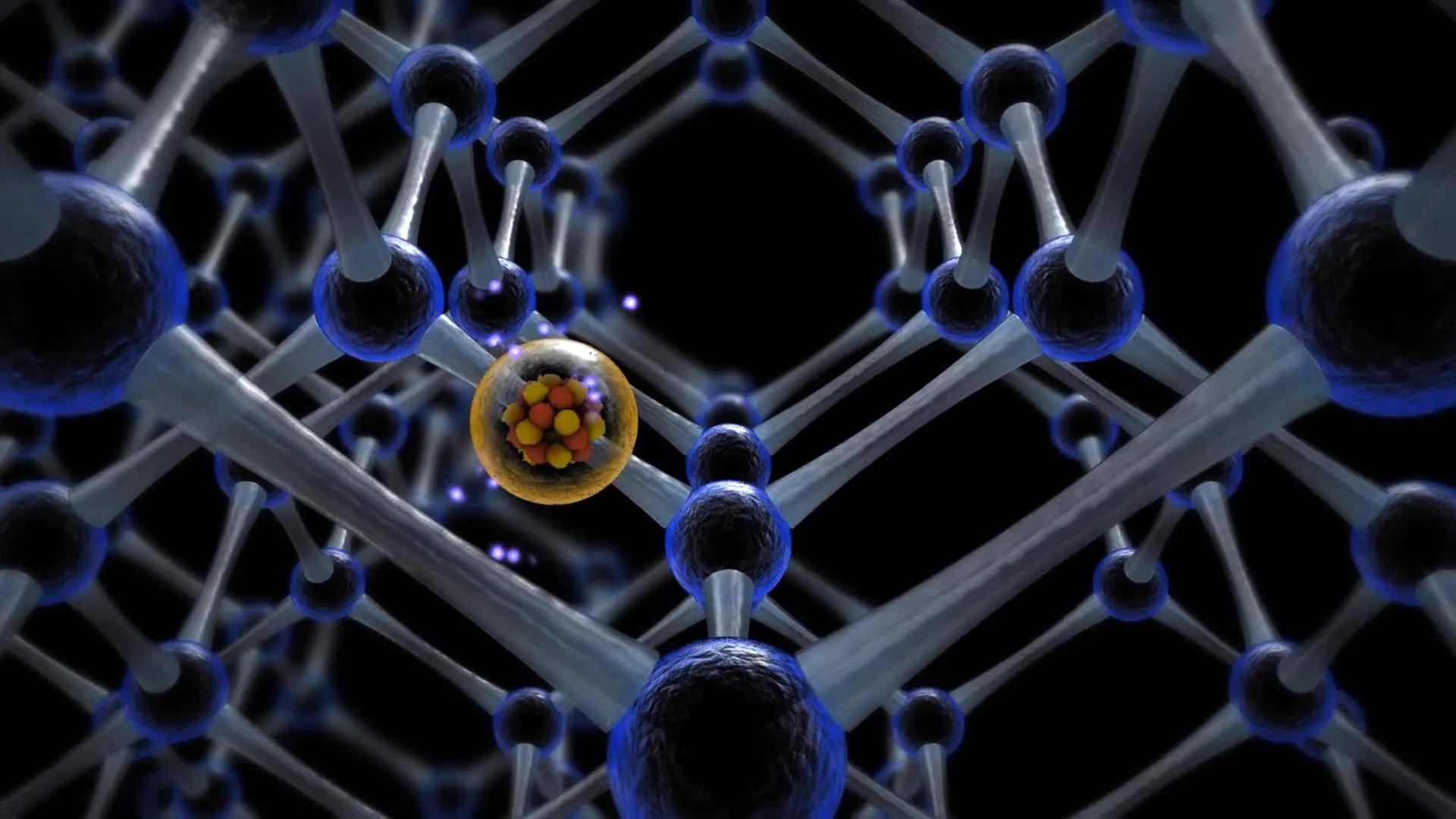
The potential of this research lies in its ability to address a critical bottleneck in the development of practical quantum technologies: the preservation of quantum information. Quantum bits, or qubits, are the fundamental units of quantum information, and their ability to maintain their delicate quantum states, known as coherence, is paramount for storing and processing data. Qubits are notoriously susceptible to even the slightest environmental disturbances, such as stray electromagnetic fields or thermal fluctuations, which can cause them to lose their quantum properties, a phenomenon called decoherence. This fragility has been a significant impediment to building stable and scalable quantum computers and networks.
One of the most promising avenues for quantum networking involves utilizing the spin of an electron, often associated with impurities within diamond crystals, as a qubit. To facilitate the transfer of quantum information between these qubit nodes, researchers have explored the use of phonons. Phonons are quantized packets of mechanical vibrations, essentially microscopic sound waves, that can act as carriers of quantum information. The Lončar lab has been at the forefront of exploring the capabilities of these phononic systems, having previously developed a key component known as a phononic cavity. This specially engineered structure is designed to trap and amplify mechanical vibrations, thereby enabling stronger interactions between phonons and the electron spin within a qubit.
Phonons offer several compelling advantages over light, which is the more conventional medium for transmitting quantum information across chip-scale networks. At the same frequency, phonons possess significantly shorter wavelengths compared to light. This inherent characteristic allows for the creation of considerably smaller and more densely packed components, paving the way for miniaturized quantum devices and intricate quantum circuits. Furthermore, phonons exhibit a remarkable versatility in their interactions, readily coupling with both solid-state spin qubits and electromagnetic fields. This dual interaction capability makes them exceptionally well-suited for the development of hybrid quantum technologies, which aim to integrate different types of qubits into a single, unified system, unlocking novel functionalities and computational power.
Despite these advantages, the use of phonons introduces a significant challenge: effectively protecting the quantum memory housed within these phononic systems. As mentioned, qubits are exquisitely sensitive to their environment. Maintaining their quantum state for sufficient durations – a property known as coherence time – is crucial for any practical quantum computation or communication. Traditionally, researchers have employed microwave pulses to shield quantum memories from environmental noise. These pulses work by effectively separating, or decoupling, the qubit from the surrounding disturbances. However, this conventional approach has proven to be less effective for qubits integrated within phononic cavities, where the very mechanism designed to enhance phonon interaction also amplifies susceptibility to noise. This limitation has created a dilemma: achieving strong phonon-qubit interaction and long-lasting quantum memory within the same device has been a formidable hurdle.
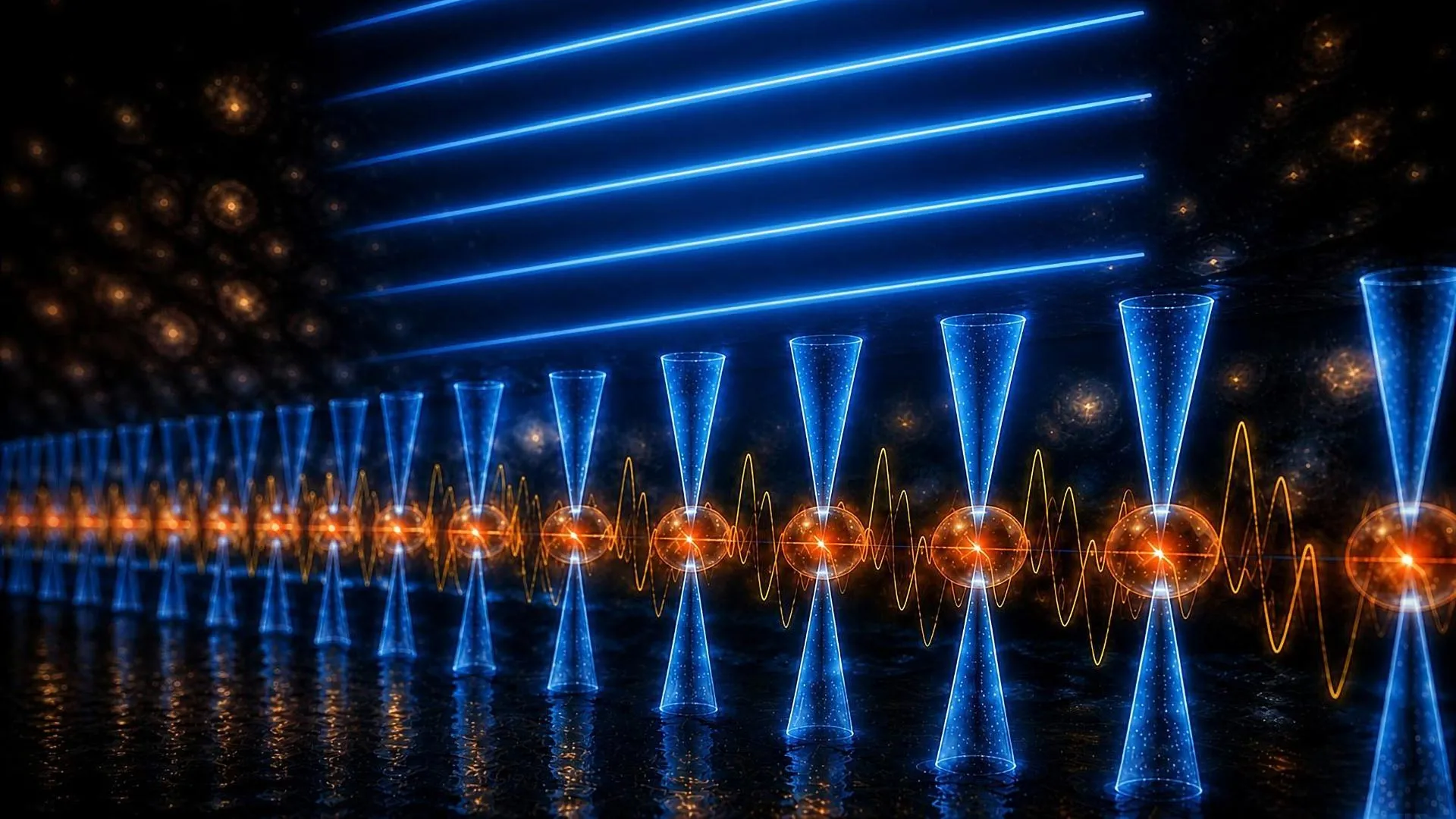
The SEAS team, however, has devised an ingenious solution, demonstrating what they term "all-mechanical coherence protection" for a silicon-vacancy spin qubit embedded in diamond. Instead of relying on the conventional microwave pulse techniques, their novel approach involves the continuous application of a mechanical driving field composed of phonons. This continuous sonic excitation effectively transforms the qubit into a different quantum state, a phenomenon they describe as a "dressed" qubit. The term "dressed" signifies that the qubit is perpetually enveloped by a continuous acoustic field, akin to wearing a sonic cloak. This unique "dressed" state renders the qubit significantly less vulnerable to low-frequency noise emanating from its surroundings.
The profound significance of this innovation lies in the fact that the coherence protection mechanism is entirely mechanical and intrinsically compatible with the phononic cavities that are central to phonon-based quantum networking. This compatibility means that the same structures designed to facilitate the transport of quantum information via phonons can simultaneously provide the necessary protection for that information. Consequently, phonons are poised to play a dual, powerful role: they can act as the conduits for quantum information across different nodes of a quantum network while simultaneously serving as guardians, shielding that information from the detrimental effects of environmental noise.
Eliza Cornell eloquently summarized the dual benefit of their breakthrough: "We are solving two problems. We want the spin to have strong interaction with phonons, and we want the spin to have a long coherence time. Our paper demonstrates a method of extending the coherence time that is compatible with the silicon-vacancy center being in a cavity." This elegantly captures the essence of their achievement – addressing two critical, intertwined challenges in quantum information science with a single, elegant solution.
The practical impact of this novel method is substantial. The researchers have successfully demonstrated an approximate threefold increase in the coherence time of the silicon-vacancy spin qubit. This substantial improvement underscores the efficacy of continuous-wave mechanical noise suppression as a viable strategy for extending quantum coherence in real-world quantum devices. The findings strongly suggest that microscopic sound waves, once a mere curiosity, are poised to become an indispensable tool in the construction of more reliable, robust, and compact quantum systems.
The publication detailing this research, titled "All-mechanical coherence protection and fast control of a spin qubit," lists a comprehensive list of co-authors, including Zhaoyou Wang, Hana K. Warner, Eliana Mann, Michael Haas, Smarak Maity, Graham Joe, Liang Jiang, Peter Rabl, and Benjamin Pingault, all of whom contributed significantly to this pioneering work.
This transformative research received substantial support from various U.S. federal agencies, highlighting its national importance. Funding was provided by the National Science Foundation under grant number EEC-1941583, the Air Force Office of Scientific Research under award numbers FA9550-23-1-0333 and FA9550-23-1-0338, and Q-NEXT, a U.S. Department of Energy Office of Science National Quantum Information Science Research Centers initiative, under award No. DE-FOA-0002253. These grants underscore the commitment to advancing quantum science and technology at the highest levels.
Furthermore, a portion of the experimental work was conducted at the Harvard Center for Nanoscale Systems, a vital member of the National Nanotechnology Infrastructure Network, which itself is supported by National Science Foundation award No. ECS-0335765. This collaborative infrastructure plays a crucial role in enabling cutting-edge nanoscale research.
Recognizing the significant potential of these innovations, the Harvard Office of Technology Development is actively engaged in pursuing patent protection and exploring commercialization opportunities. This proactive approach signals the profound impact this research is expected to have on the future of quantum computing and related technologies, potentially leading to practical applications and commercial ventures that could reshape industries. The discovery that tiny sound waves can act as both carriers and protectors of quantum information represents a significant leap forward, bringing the promise of a quantum-enabled future closer to reality.