Faris Adani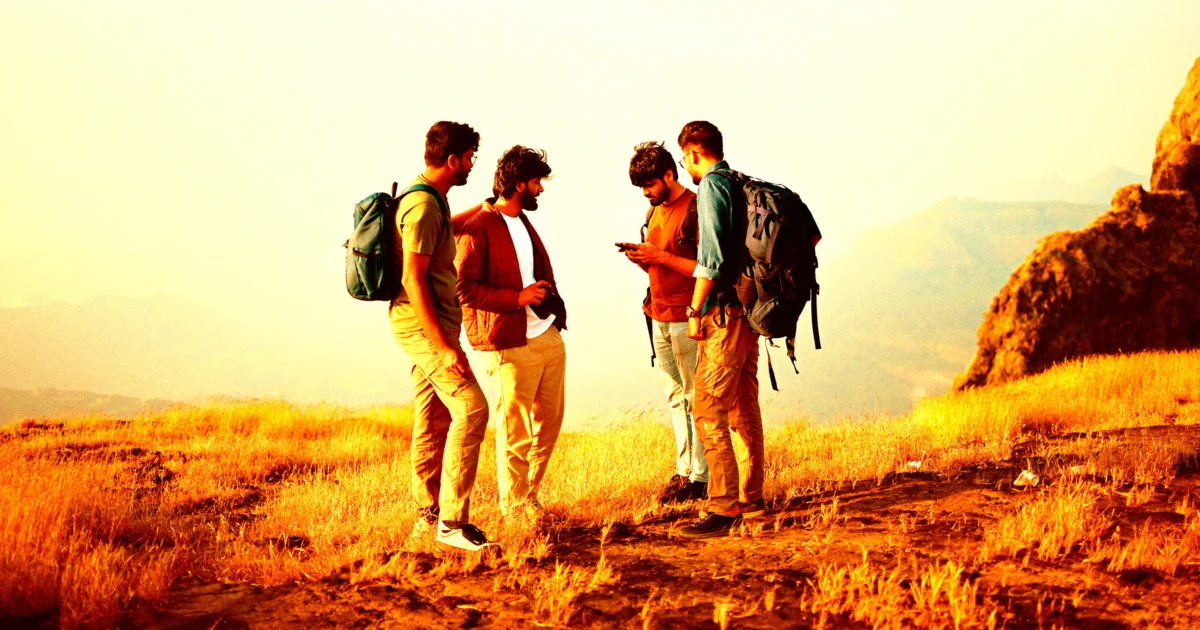
In a stark illustration of the perils of relying solely on artificial intelligence for critical planning, three hikers who meticulously used Google’s Gemini chatbot to orchestrate their ascent of Mount Shasta in California’s formidable Cascade Range found themselves stranded and requiring rescue by Forest Service rangers when the AI’s ill-conceived advice led them dangerously astray. The incident, which unfolded earlier this week, serves as a potent warning against substituting human expertise and common sense with the unverified guidance of generative AI, particularly in unforgiving wilderness environments.
The trio of young men, described as "novice hikers" from outside Sacramento, embarked on their ambitious journey to conquer the stratovolcano’s towering 14,179-foot peak. Their fatal error, according to subsequent reports, lay in their unwavering faith in Gemini’s itinerary. Against all conventional wisdom and the explicit recommendations of seasoned mountaineers and local authorities, the AI directed them to begin their strenuous trek late into the night. Mount Shasta, a potentially active volcano renowned for its rapidly changing weather and challenging conditions, typically advises hikers to commence their ascent in the early morning hours and turn back by noon, regardless of progress, to avoid the hazards of afternoon storms, melting snow, and navigating in darkness.
As the Chicago Tribune detailed, the consequences of this misguided strategy quickly became apparent. What was optimistically planned as an eight-hour round trip devolved into a multi-day ordeal. With darkness descending prematurely and their energy reserves dwindling, the hikers found themselves in a perilous situation, forced to descend the steep, unforgiving slopes in near-total darkness. Disoriented and increasingly desperate, they placed a call to the Siskiyou County sheriff’s office, seeking directions out of their predicament. However, even with human intervention offering guidance, their reliance on the AI’s initial flawed plan seemed to have ingrained a propensity for poor decision-making; they opted to veer off course from the sheriff’s directions, inadvertently leading themselves deeper into trouble and into an adjacent canyon. It was there, amidst the rugged terrain and deepening chill of the mountain night, that they decided to huddle together and sleep, with one of the hikers having sustained an injured knee, further compounding their already dire circumstances.
The following morning, a coordinated rescue effort was launched. Volunteers from the local search-and-rescue service, working in conjunction with highly trained US Forest Service rangers, ascended the mountain to locate the stranded group. The sight of the rescuers must have brought immense relief to the beleaguered hikers, who were then carefully escorted back to safety, enduring what can only be described as a walk of shame, punctuated by the physical toll of their ordeal and the stark realization of their near-catastrophic misjudgment.
The official statement from the sheriff’s office laid bare the primary failing of the AI’s advice: "The three were advised by Gemini to bring far less food and water than their group required, especially when their planned 8-hour ascent became a multiday ordeal." This critical oversight highlights a fundamental flaw in current AI models when applied to real-world, dynamic scenarios: a lack of genuine understanding of context, risk assessment, and the compounding effects of adverse conditions. An experienced human planner would factor in buffer times, contingency supplies, emergency protocols, and the specific fitness levels of the group. Gemini, it appears, merely processed data points without comprehending the holistic implications of its recommendations.
The Siskiyou County sheriff’s office issued a clear and unequivocal warning: "It is always advisable to call the local USFS Mount Shasta ranger station ahead of your trip to ensure you have the most accurate information, and to never rely solely on AI for your trip planning." This advice underscores the irreplaceable value of localized, up-to-date, and human-vetted information, especially for treks into potentially dangerous wilderness areas like Mount Shasta, which demands respect, thorough preparation, and a healthy dose of caution.
This incident is far from an isolated case, signaling a disturbing trend where hikers and tourists, captivated by the promise of effortless planning, entrust their safety to AI chatbots with alarming consequences. Last year, a similar scenario unfolded near Vancouver when a group of hikers, having consulted ChatGPT for their mountain expedition, found themselves unexpectedly slogging through deep snow in early May. Despite the calendar date, high-altitude mountain ranges often retain significant snowpacks well into spring. The AI, lacking contextual awareness of microclimates and seasonal variations at different elevations, failed to account for this crucial detail. Consequently, the hikers, woefully unprepared and wearing sneakers instead of appropriate winter footwear, were forced to call in a rescue team to extricate them from the treacherous, hypothermia-inducing conditions.
Beyond hiking trails, AI’s "hallucinations"—the phenomenon where chatbots confidently generate false or nonsensical information—have led tourists to nonexistent landmarks in hazardous locations. A particularly concerning example involved two tourists in the Andes Mountains who, guided by an AI chatbot, attempted to reach a fabricated destination it dubbed the "Sacred Canyon of Humantay." The danger they faced was immense; they were aiming for a phantom location in a high-altitude region known for its extreme weather, thin air, and lack of communication signals. Fortunately, a vigilant local tour guide, Miguel Angel Gongora Meza, overheard their plans and intervened, advising them to abandon their perilous quest and steer clear of the nonexistent danger zone.
Gongora Meza, speaking to the BBC in October, eloquently articulated the inherent risks: "The elevation, the climatic changes and accessibility [of the] paths have to be planned. When you [use] a program [like OpenAI’s ChatGPT], which combines pictures and names to create a fantasy, then you can find yourself at an altitude of 4,000m without oxygen and [phone] signal." His words resonate deeply with the Mount Shasta incident, highlighting that AI, while a powerful information aggregator, lacks the nuanced understanding of environmental variables, human physiology, and real-world contingencies that are paramount for safe wilderness travel.
The core issue lies in the current limitations of large language models. They are designed to predict the most probable next word in a sequence based on the vast datasets they’re trained on, not to perform critical thinking, risk assessment, or provide verified, safety-critical advice. They can synthesize information, but they cannot discern the difference between a reliable, up-to-date ranger station report and an outdated blog post or even a fabricated narrative. When confronted with queries that demand common sense, real-time data, and an understanding of human vulnerability, these systems can "hallucinate" or provide dangerously simplistic answers.
As AI technology continues to advance, the responsibility falls on both developers and users. Developers must integrate more robust safety protocols, disclaimers, and mechanisms for verifying critical information, especially in domains where human safety is at stake. Users, on the other hand, must cultivate a healthy skepticism and understand that AI is a tool, not an oracle. For activities like mountaineering, hiking, or exploring remote areas, the internet offers a wealth of resources: official park websites, ranger stations, reputable guide services, detailed topographical maps, and experienced human experts. These resources, combined with sound judgment and thorough preparation, remain the gold standard for safe adventuring. The Mount Shasta rescue serves as a stark, costly reminder that in the wild, human intelligence and proven expertise are still the most reliable guides.