Faris Adani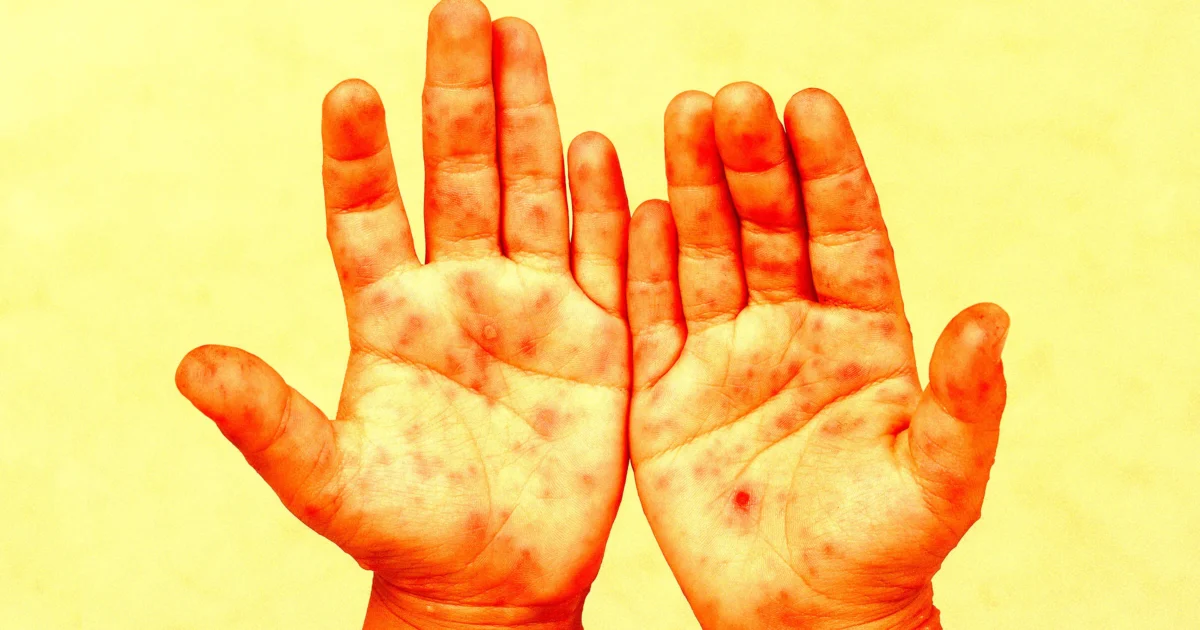
In an unprecedented move that has sent shockwaves through the public health community and ignited a fierce political firestorm, the Centers for Disease Control and Prevention (CDC) has publicly refused to acknowledge two measles-associated deaths reported by the Pennsylvania Department of Health. This extraordinary defiance of established protocol, first announced by the CDC on its website, marks a deeply troubling moment for an agency traditionally revered as the authoritative voice on disease surveillance and public health data in the United States. The controversy is not merely a bureaucratic dispute; it unravels against a backdrop of rising measles cases, escalating vaccine misinformation, and a direct political confrontation between the federal health secretary, Robert F. Kennedy Jr., and Pennsylvania’s Democratic Governor, Josh Shapiro, with profound implications for public trust and the integrity of scientific institutions.
The CDC’s announcement, stating, "This week’s measles outbreaks update will not include the two measles-associated deaths reported by the Pennsylvania Department of Health on Aug. 25," immediately drew sharp criticism and alarm. For decades, the CDC has maintained a long-standing procedure of accepting and collating health data shared by state health departments, serving as the nation’s central repository for epidemiological information. To overtly challenge a state’s reporting in such a public manner, particularly concerning fatalities from a preventable disease, is an action that The New York Times accurately characterized as "extraordinary," signaling a dangerous departure from standard scientific and governmental cooperation. This isn’t just a data disagreement; it’s an assertion of federal skepticism over state-level health intelligence, casting a shadow over the entire national public health infrastructure.
At the heart of this unprecedented refusal lies a bitter political showdown. Robert F. Kennedy Jr., notorious for his long history of promoting vaccine skepticism and conspiracy theories, now ironically serves as the Secretary of Health and Human Services (HHS), overseeing the CDC. His appointment, controversial from the outset, has fueled concerns among medical professionals and public health advocates who fear the politicization of scientific agencies. Pennsylvania Governor Josh Shapiro, a Democrat, directly confronted Kennedy on this issue during a news conference last week. Shapiro announced the tragic deaths of the two unvaccinated children from measles and unequivocally condemned Kennedy for "spreading vaccine misinformation," emphasizing that "there’s real life consequences for spreading misinformation." This direct challenge from a state governor to a federal cabinet secretary, particularly one with a history of controversial views on public health, underscored the gravity of the situation and the perceived threat to public safety.
Kennedy’s response was swift and inflammatory, delivered via social media. He accused Governor Shapiro of taking "giddy delight" in the children’s deaths, and astonishingly, even suggested that Shapiro might have "fabricated" the fatalities. This rhetoric, coming from the nation’s top health official, further deepened the crisis of trust and introduced a level of partisan acrimony rarely seen in public health discourse. Just days after this public spat, the CDC, under Kennedy’s purview, made its official announcement that it would not be counting the deaths as measles-related, creating an undeniable link between the political dispute and the agency’s scientific decision-making. The timing and nature of the CDC’s intervention have led many to suspect political interference rather than purely scientific skepticism.
The measles outbreak itself is centered in Lancaster County, Pennsylvania, a region that has seen a concerning surge in cases. According to the Pennsylvania Department of Health, 242 people have been infected with measles in the county, making it the epicenter of the state’s largest outbreak. Both deceased children were unvaccinated and had tested positive for measles, as reported by the Pennsylvania Health Department. One of the victims was a newborn, and the other a child of unknown age, further highlighting the vulnerability of infants and young children to this highly contagious and potentially fatal disease, especially in populations with low vaccination rates.
The most detailed information available concerns the newborn. According to the state’s health department, its death was due to measles. However, Lancaster County coroner Stephen Diamantoni, a Republican, offered a conflicting account. Diamantoni stated that his office’s pathologist determined the newborn died of a ruptured spleen, not directly from measles. The newborn, he noted, was born infected with the virus, having inherited it from its mother, suggesting a congenital measles infection. This distinction between a direct measles fatality and a complication-related death became the focal point of the medical controversy.
However, top medical experts have strongly pushed back against Diamantoni’s narrow interpretation. Dr. Paul Offit, a renowned vaccine and pediatric infectious disease expert at the Children’s Hospital of Philadelphia and a highly respected voice in infectious disease, articulated this counter-argument in a widely reported essay on Substack. Offit explained that measles, particularly in severe cases or in immunocompromised individuals like newborns, can indeed cause the spleen to enlarge significantly, a condition known as splenomegaly. This enlarged and fragile spleen becomes highly prone to rupture, especially during the physical stress of birth. Once the spleen ruptures, he noted, it becomes incredibly difficult for a pathologist to determine its size or condition prior to the rupture. Offit unequivocally called on Diamantoni to provide more comprehensive details surrounding the newborn’s death. He argued that if measles was not the cause, an alternative explanation for the ruptured spleen must be offered. Ruptured spleens in newborns are exceedingly rare and typically only result from a handful of specific disorders or infections. If none of these other conditions were identified in the child, Offit concluded, "then the only obvious cause left would be measles," indicating that the ruptured spleen was a direct, albeit indirect, consequence of the measles infection. This medical clarification highlights that complications arising from an infection are still directly attributable to the infection itself, a standard principle in medical causality.
Compounding the confusion and controversy is the fact that the CDC’s blanket refusal to count the deaths also extends to the second child, about whom very few details have been released to the public. The lack of specific information regarding this child’s age, symptoms, and precise cause of death makes the CDC’s denial even more opaque and difficult to scrutinize. Without transparent data on both cases, the CDC’s decision appears less like a rigorous scientific re-evaluation and more like a broad rejection of state-reported data, further fueling suspicions of political motivation.
The Department of Health and Human Services (HHS), which oversees the CDC, issued a statement defending its decision, further exacerbating concerns about political interference in public health. The statement read: "The two measles-associated deaths announced by Pennsylvania have not been confirmed based on the information currently available to CDC. The information currently posted reflects the best available information and our commitment to transparency and telling the American people the truth — a foundational principle of the Trump administration." The explicit mention of "a foundational principle of the Trump administration" in a statement from an agency dealing with scientific data under a new presidential administration is highly unusual and deeply troubling. It suggests that the CDC’s scientific determinations are being framed through a political lens, undermining its independence and credibility. This politicization of health data threatens to erode public trust in institutions that are vital for managing disease outbreaks and ensuring public safety.
This incident also takes place in a broader context of a global resurgence of measles, largely driven by declining vaccination rates and the proliferation of vaccine misinformation. Measles, once nearly eradicated in many developed nations thanks to widespread vaccination programs, has seen a disturbing comeback. It is a highly contagious viral disease that can lead to severe complications, including pneumonia, encephalitis (brain inflammation), and even death, especially in young children and those with compromised immune systems. The World Health Organization (WHO) and other global health bodies have repeatedly warned about the dangers of vaccine hesitancy, emphasizing that robust vaccination coverage is essential for achieving herd immunity and protecting vulnerable populations. The political rhetoric surrounding this specific outbreak, coupled with the CDC’s unprecedented stance, risks further fueling vaccine skepticism and jeopardizing public health efforts to contain preventable diseases.
The implications of the CDC’s actions are far-reaching. By publicly denying state-reported measles deaths, the agency risks not only undermining its own scientific integrity but also fracturing the crucial federal-state partnership that forms the backbone of the nation’s public health surveillance system. It sets a dangerous precedent where epidemiological data, traditionally accepted as factual and essential for guiding public health policy, can be challenged or dismissed based on what appears to be political directives. In an era already marked by deep distrust in institutions and rampant misinformation, this move by the CDC could inflict lasting damage on the public’s confidence in science and government, making future public health crises even more challenging to navigate. The unfolding scandal surrounding these two tragic deaths in Pennsylvania represents a critical juncture for American public health, where scientific integrity battles political expediency, and the consequences could be measured in human lives.