Imroatul Nasiyah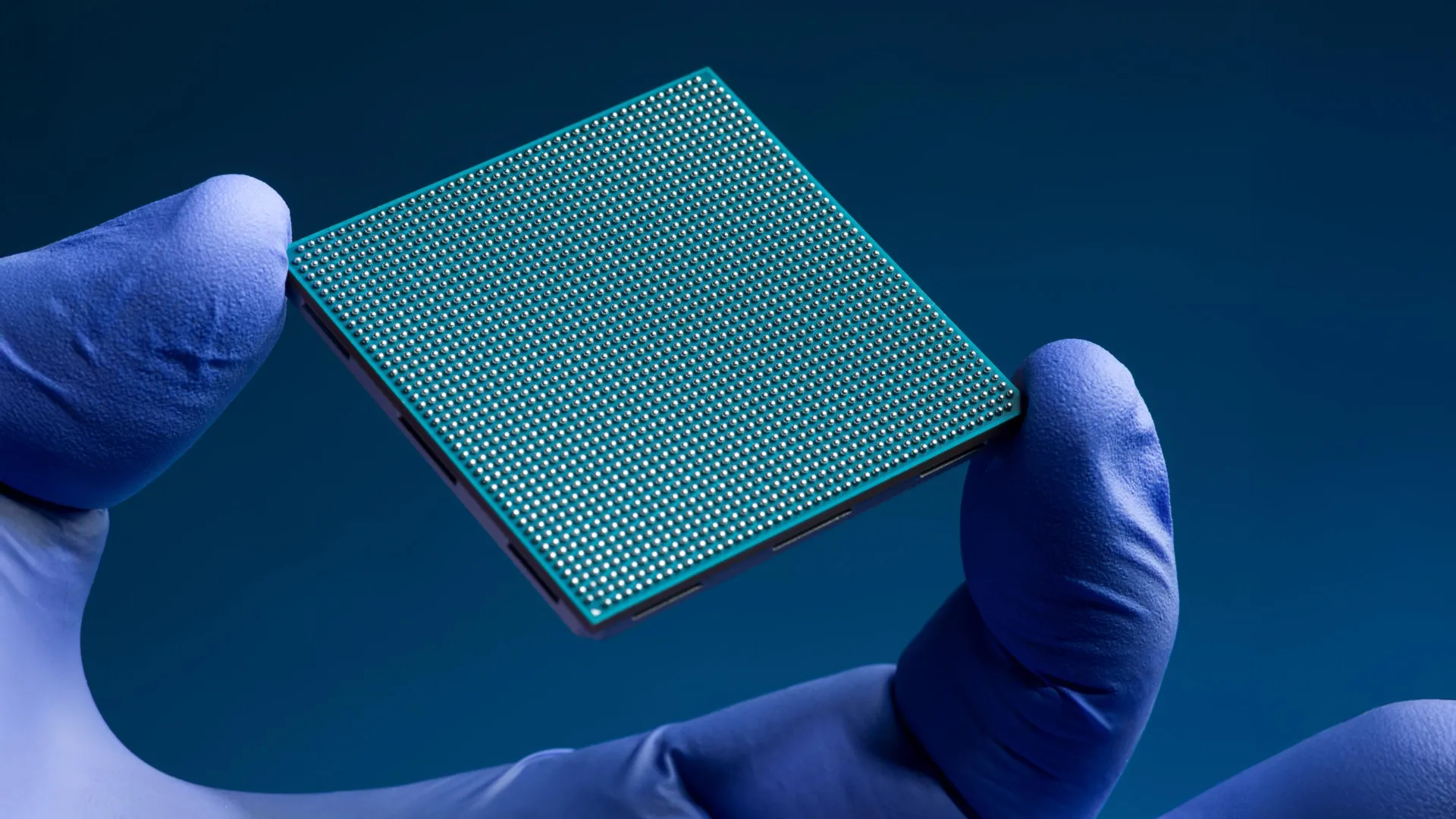
NASA is forging ahead with the development of a revolutionary computer chip poised to dramatically elevate the intelligence and operational capabilities of future spacecraft. Through a strategic commercial partnership, this ambitious project is cultivating advanced processing technology designed to empower spacecraft with unprecedented autonomy, especially for missions venturing far beyond Earth where communication delays render direct human control impractical. This groundbreaking development signifies a monumental leap in spaceflight computing, paving the way for more complex scientific investigations, faster data analysis, and enhanced support for human explorers venturing to the Moon and Mars.
At the heart of this transformative initiative lies NASA’s High Performance Spaceflight Computing (HPSC) project, a focused effort to significantly augment the computational power available to spacecraft undertaking daring space exploration endeavors. The current generation of spacecraft predominantly relies on older, yet remarkably resilient, processors. These chips have earned their place in orbit due to their proven ability to withstand the unforgiving conditions of space, characterized by extreme temperatures, vacuum, and pervasive radiation. While their dependability is unquestionable, these legacy processors inherently lack the raw processing power and advanced capabilities necessary to support the increasingly sophisticated demands of modern and future space missions. The agency’s vision for autonomous spacecraft, the imperative for rapid, onboard scientific analysis of newly acquired data, and the critical need to provide robust support for astronauts on extended missions to lunar and Martian surfaces all underscore the urgent necessity for newer, far more capable processors.
Eugene Schwanbeck, program element manager within NASA’s Game Changing Development program at the agency’s Langley Research Center in Hampton, Virginia, articulated the significance of this advancement. "Building on the legacy of previous space processors, this new multicore system is fault-tolerant, flexible, and extremely high-performing," he stated, highlighting the project’s impressive technical achievements and the collaborative spirit that has driven its progress. "NASA’s commitment to advancing spaceflight computing is a triumph of technical achievement and collaboration." This sentiment encapsulates the multifaceted nature of the project, which not only pushes the boundaries of technological innovation but also exemplifies successful synergy between government research and private industry.
The linchpin of this ambitious project is a novel radiation-hardened processor, meticulously engineered to deliver a computational punch up to 100 times more potent than the processors currently powering spaceflight. Crucially, this enhanced performance is achieved without compromising its resilience in the harsh and unforgiving environment of space. Engineers at NASA’s Jet Propulsion Laboratory (JPL) in Southern California are currently subjecting these advanced chips to an exhaustive battery of tests designed to meticulously simulate the extreme conditions they will encounter. Jim Butler, High Performance Space Computing project manager at JPL, elaborated on the rigorous testing regimen. "We are putting these new chips through the wringer by carrying out radiation, thermal, and shock tests while also evaluating their performance through a rigorous functional test campaign," he explained. This comprehensive testing protocol is essential to ensure the processor’s reliability and longevity in the vacuum of space.
For any electronic component to qualify for spaceflight, it must demonstrably endure intense electromagnetic radiation, which can disrupt or damage sensitive circuitry, and dramatic temperature fluctuations, which can cause materials to expand and contract, leading to structural failures. Furthermore, high-energy particles originating from the Sun and the depths of interstellar space pose a constant threat, capable of triggering errors within computer systems. Such errors can force spacecraft into a critical "safe mode," a state where nonessential systems are temporarily deactivated to prevent further damage, until ground control engineers can diagnose and resolve the issue. This new processor is designed to mitigate these risks through its inherent radiation hardening and robust design.
Beyond the standard environmental resilience tests, NASA is also evaluating the chip’s performance under the unique and demanding challenges associated with planetary landings. Butler emphasized the realism of these tests. "To simulate real-world performance, we are using high-fidelity landing scenarios from real NASA missions that would typically require power-intensive hardware to process huge volumes of landing-sensor data," he stated. "This is an exciting time for us to be working on hardware that will enable NASA’s next giant leaps." The ability to process complex sensor data in real-time during critical landing sequences is paramount for future robotic and human exploration missions to celestial bodies with dynamic surface conditions.
The intensive testing phase at JPL commenced in February and is slated to continue for several months. The initial results, as reported by NASA, have been overwhelmingly encouraging. The processor is reportedly functioning precisely as intended, and its performance levels have already demonstrated a remarkable output roughly 500 times greater than the radiation-hardened chips currently deployed in spacecraft. This substantial performance increase is a testament to the advancements in semiconductor technology and NASA’s targeted research and development efforts. To commemorate the commencement of these critical tests, the team engaged in a symbolic gesture by sending an email titled "Hello Universe," a poignant nod to the foundational "Hello, World!" programs that marked the earliest milestones in computer programming.
The development of this advanced processor is a collaborative endeavor, spearheaded by JPL and undertaken in partnership with Microchip Technology Inc., a prominent semiconductor manufacturer based in Chandler, Arizona. This commercial partnership is a cornerstone of NASA’s strategy to accelerate the development and deployment of cutting-edge technologies. Sample chips have already been disseminated to defense and commercial aerospace partners, fostering broader adoption and further innovation across the industry. The integration of onboard artificial intelligence, powered by this new chip, is expected to revolutionize the operation of autonomous spacecraft. In scenarios where communication delays are significant, such as during deep space missions, spacecraft equipped with this AI capability could autonomously respond to unforeseen events and anomalies in real-time, without requiring immediate human intervention. This inherent intelligence will also significantly enhance the efficiency of deep space missions, enabling them to process, store, and transmit the colossal volumes of scientific data collected back to Earth with unprecedented speed and accuracy. NASA anticipates that this processor will eventually play a vital role in supporting crewed missions to the Moon and Mars, enhancing the safety and effectiveness of human exploration.
The device itself is classified as a system-on-a-chip (SoC), a highly integrated design that consolidates all the essential components of a computer – including central processing units (CPUs), computational accelerators, advanced networking interfaces, memory, and input/output controllers – onto a single, compact silicon die. This miniaturization and integration are hallmarks of modern electronic design, mirroring the SoCs found in ubiquitous consumer devices like smartphones and tablets, where compactness and energy efficiency are paramount. However, NASA’s iteration of the SoC is specifically engineered to endure the extreme rigors of deep space for extended periods, potentially traveling millions, and even billions, of miles from Earth without the possibility of physical maintenance or repairs. This level of ruggedness and longevity is a critical differentiator for space-grade hardware. Once the processor successfully completes its rigorous certification process for spaceflight applications, NASA intends to integrate it across a diverse spectrum of missions. This includes Earth-observing satellites, planetary rovers exploring distant worlds, deep space probes venturing into the outer solar system and beyond, and even future crewed habitats on the Moon and Mars. The technological advancements inherent in this processor are not confined to space exploration; Microchip Technology plans to adapt this robust SoC technology for applications within demanding terrestrial industries, such as aviation and automotive manufacturing, promising enhanced performance and reliability in these sectors as well.
The successful realization of this project is a testament to the synergistic collaboration between NASA and its industry partners, managed under the auspices of the Space Technology Mission Directorate’s Game Changing Development (GCD) program at NASA Langley. The GCD program, in conjunction with JPL, which is managed by the California Institute of Technology (Caltech), has meticulously overseen every phase of the development process, from the initial conceptualization and mission planning through extensive industry studies and the final delivery of the advanced processor. NASA JPL’s strategic selection of Microchip Technology as a partner in 2022 was a pivotal moment, enabling the company to leverage its own considerable resources for research and development efforts on the processor, thereby accelerating its advancement and ensuring its commercial viability. This public-private partnership model is proving to be exceptionally effective in driving innovation and bringing transformative technologies to fruition for both scientific exploration and broader societal benefit.