Imroatul Nasiyah
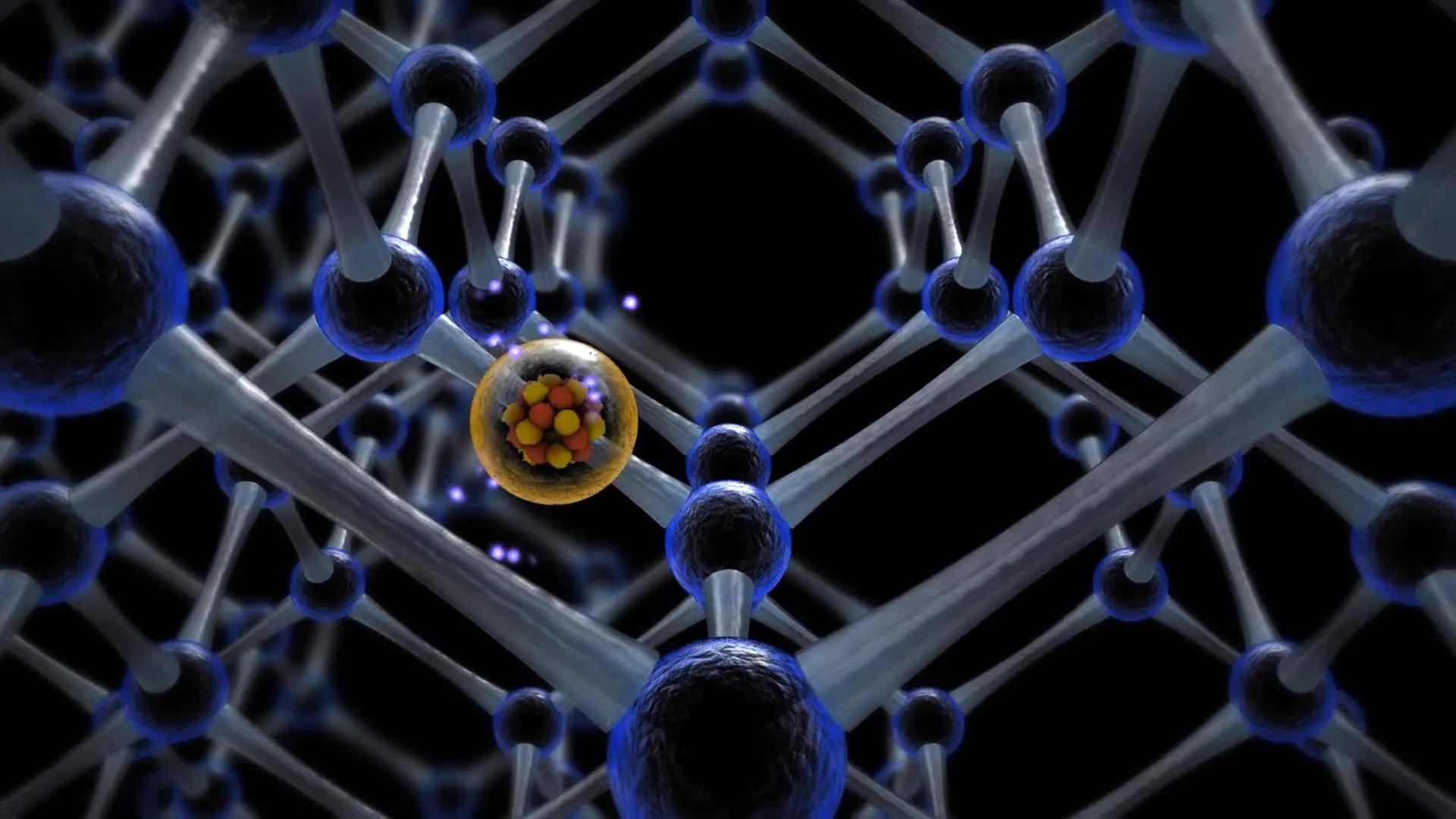
The crux of the challenge lay in the intricate simulation of hundreds of interacting ‘qubits’ – the quantum analogue of the bits that form the bedrock of classical computing. These qubits were meticulously arranged into various lattice structures, including squares, cubes, and diamond shapes. Unlike classical bits, which are confined to representing either a 0 or a 1, qubits possess the remarkable ability to exist in a superposition of multiple states simultaneously. This inherent quantum property, while endowing quantum systems with their extraordinary potential, also renders their behavior exceedingly difficult to replicate on classical architectures. This difficulty was underscored by a concurrent development in March 2025, also reported in Science, where another research team utilized a quantum computer to meticulously calculate the dynamics of an exceptionally complex qubit system. Their assertion was that such a feat would be insurmountable for any classical computer.
Joseph Tindall, an associate research scientist at the CCQ and the lead author of the new Science paper, expressed a healthy skepticism towards such pronouncements. "Whenever we [at the CCQ] see these kinds of claims, we’re always a bit skeptical," Tindall remarked. "Like, ‘Did you try this? Did you try that?’" This skepticism served as a powerful motivator for the CCQ researchers, presenting an ideal opportunity to rigorously test the boundaries of their own computational techniques. Miles Stoudenmire, a co-author and research scientist at the CCQ, echoed this sentiment, describing the problem as a chance to "take our tools out for a test drive." He further elaborated, "We could have picked some more arbitrary target. But it was like ‘Why not pick this one that has a big claim attached to it?’" This intellectual bravado propelled them to confront a problem that had been deemed a quantum exclusive.
A primary impediment to simulating quantum systems classically is the phenomenon of quantum entanglement. When qubits become entangled, their properties become inextricably linked, irrespective of the physical distance separating them. This interconnectedness prevents researchers from modeling each qubit in isolation. Instead, the entire entangled system must be described holistically, necessitating the development and application of sophisticated algorithms. Tindall eloquently described the situation: "When you have lots of particles that interact by quantum physics, you have this wave function that describes the state of the system. It’s this huge object that rapidly gets bigger and bigger the more particles there are." This wave function, which encapsulates all the necessary information to characterize the quantum system, grows exponentially in size with each additional particle.
The exponential expansion of the wave function poses a significant hurdle, as Tindall explained, "I just can’t directly store it on my computer." The challenge of managing these colossal wave functions is a recurring and critical issue in quantum physics, particularly for predicting the behavior of quantum materials like superconductors. However, the CCQ team devised an ingenious solution by developing and implementing novel tools based on tensor networks. These mathematical structures serve as a powerful compression mechanism, effectively condensing the information contained within a wave function into a more manageable and computationally tractable form. Tindall likened this process to "a zip file for the wave function where you’ve taken all this information, and you’ve compressed it into this mathematical data structure full of these small tables of numbers that are interconnected to each other."
This remarkable compression technique rendered the simulation feasible on classical computers. Tindall personally conducted many of the initial calculations on his laptop, leveraging ITensor, a high-performance tensor network software library developed at the CCQ. The innovative simulations also showcased the evolving capabilities of the ITensor team in adapting tensor techniques to new problem domains. In this specific instance, the researchers successfully modeled three-dimensional quantum dynamics utilizing a three-dimensional tensor network. Tindall acknowledged the complexity of these mathematical constructs, noting, "It’s this very powerful compression that can be very effective, but it’s a pretty complex mathematical object." He emphasized the pioneering nature of this work, stating, "This really is a bit of a frontier, because working with these objects — especially in three dimensions — is very untrodden. You need sophisticated codes and algorithms to deal with them; it’s a software engineering challenge in itself."
Intriguingly, many of the simulations required surprisingly modest computing resources. For the early stages of computation, Tindall employed belief propagation, an algorithm originally developed in the 1980s that has recently been ingeniously adapted for quantum systems. Stoudenmire highlighted the trade-offs, explaining, "It’s a little more approximate than some of the other methods, but it’s way cheaper, and we can run it much more directly on lots of harder problems." He contrasted this with older, more intricate methods within their field, which "wouldn’t be able to even start going for some of these three-dimensional problems, because they’re so big." Despite the relatively modest hardware, the accuracy of the results achieved state-of-the-art levels. The simulations yielded solutions that not only aligned with theoretical predictions but also performed exceptionally well on smaller, verifiable problems. Crucially, the results mirrored those previously obtained using a quantum computer, but without the necessity of quantum hardware.
This development injects fresh perspective into the ongoing discourse surrounding the demarcation between classical computing capabilities and the emergence of quantum advantage. However, Tindall and Stoudenmire are keen to emphasize that these two fields are not locked in a zero-sum competition. Classical simulations play a vital role in illuminating the potential applications of quantum computers, while advancements in quantum hardware, in turn, inspire the development of novel classical computational methods. Tindall articulated this synergistic relationship: "The good side of the classical versus quantum computing debate is that there’s a lot of synergy between the kind of simulations we’re interested in and the codes we write and what can be realized on these quantum computers." He further elaborated on the mutual benefits: "That can help guide us, and it can also help guide quantum computing researchers, because, obviously, the barrier for entry for us to simulate certain things is a lot easier than for them, because we don’t have to build a quantum computer. I can just write some code and press ‘run’ on my personal computer."
Looking ahead, the researchers are actively developing methodologies that extend beyond systems composed solely of qubits. Their immediate objective is to model electrons capable of transitioning between different sites, a significantly more complex simulation task that holds direct relevance for understanding real-world quantum materials. Stoudenmire acknowledged the increased difficulty, stating, "They’re really, quantitatively, a lot harder problems. So that’s one of our next big bars that we want to clear." This pursuit signifies the relentless drive to push the boundaries of computational physics, demonstrating that innovation in classical computing continues to offer powerful solutions to previously intractable problems.