Imroatul Nasiyah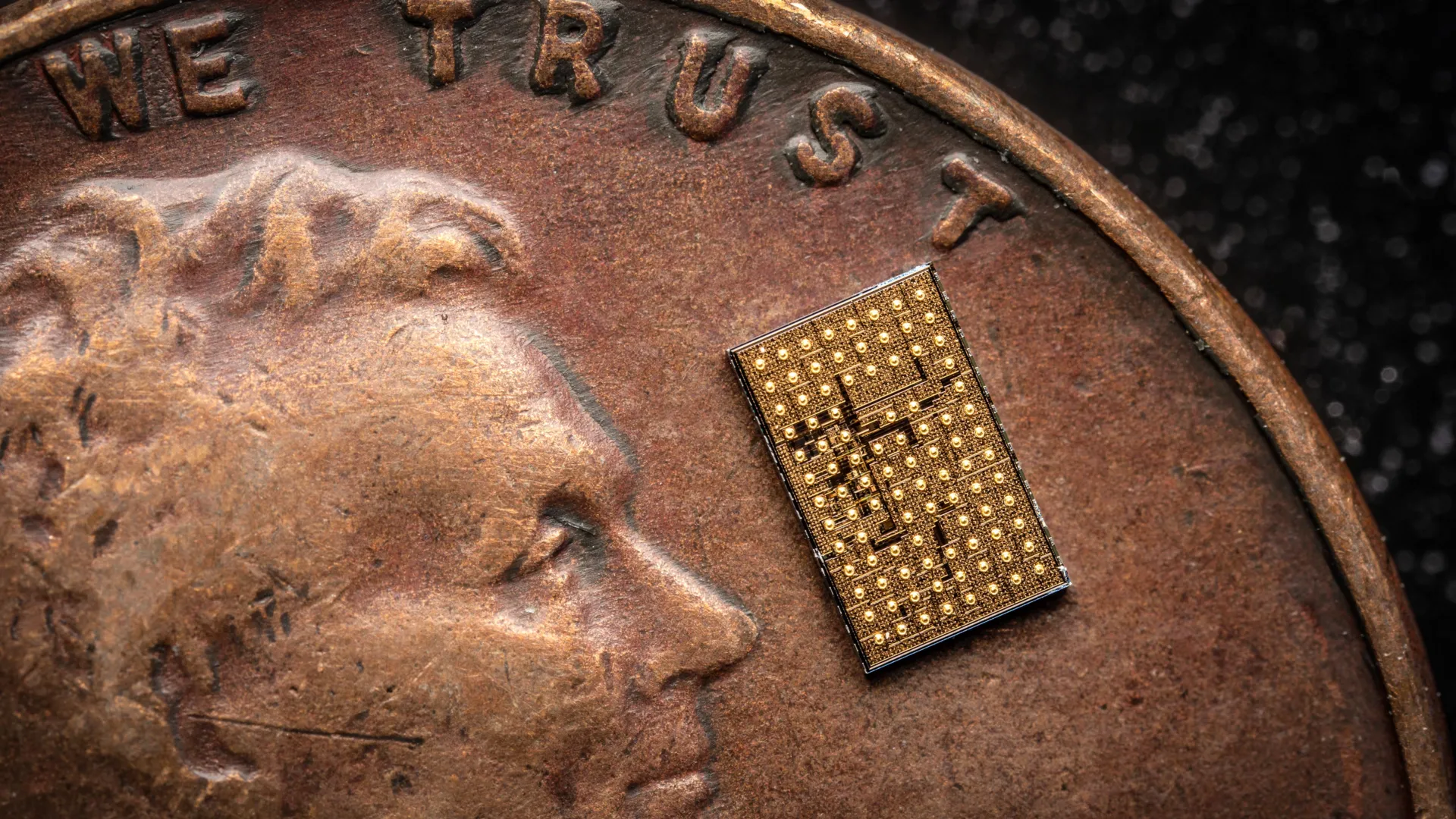
In a significant stride towards a more energy-efficient digital future, engineers at the University of California San Diego have unveiled a groundbreaking chip design poised to revolutionize how data centers power their increasingly demanding operations, particularly their graphics processing units (GPUs). This innovative approach tackles a fundamental challenge in electronics: the efficient conversion of high voltages to the much lower levels required by sensitive computing hardware. Preliminary laboratory testing of a prototype chip has demonstrated exceptional performance, achieving high efficiency under conditions that mirror those prevalent in today’s massive data centers. The implications of this research, detailed in the esteemed journal Nature Communications, are far-reaching, hinting at the potential for developing not only smaller but also substantially more energy-efficient systems for advanced computing environments.
At the heart of this novel design lies a significantly enhanced iteration of a ubiquitous electronic component: the DC-DC step-down converter. These essential devices are integral to virtually every electronic gadget, acting as a vital intermediary that steps down high incoming voltages to precise, safe operating levels for delicate circuits. Within the colossal infrastructure of data centers, electricity is typically distributed at a voltage of 48 volts. However, the high-performance GPUs that drive modern AI, scientific simulations, and complex rendering tasks often demand significantly lower voltages, typically in the range of 1 to 5 volts. The efficient management of this substantial voltage differential has become an escalating hurdle as computing systems become ever more powerful and physically compact.
Traditional step-down converter technologies, while having served us well for decades, begin to falter when faced with increasingly large discrepancies between input and output voltages. As this voltage gap widens, their efficiency plummets, making it progressively more difficult to supply the requisite amount of current. The vast majority of existing converter designs rely heavily on magnetic components, primarily inductors. While these magnetic elements have undergone continuous refinement over many years, they are now approaching their inherent physical limitations, making further significant improvements exceedingly challenging. Professor Patrick Mercier, a senior author on the study and a distinguished professor in the Department of Electrical and Computer Engineering at the UC San Diego Jacobs School of Engineering, articulates this predicament: "We’ve gotten so good at designing inductive converters that there’s not really much room left to improve them to meet future needs."
Driven by the need to transcend these established boundaries, Mercier and his dedicated team, which includes Jae-Young Ko, a lead electrical and computer engineering Ph.D. student at UC San Diego, turned their attention to an alternative paradigm: piezoelectric resonators. These compact devices operate on a fundamentally different principle, storing and transferring energy not through magnetic fields, but via precisely controlled mechanical vibrations. Converters engineered with piezoelectric components hold the promise of several compelling advantages. They possess the potential to be significantly smaller, exhibit greater energy density, achieve higher levels of efficiency, and be more amenable to cost-effective, large-scale manufacturing. Mercier enthusiastically elaborates on their potential: "They have a lot of room to grow and have the potential to deliver better performance than anything that’s come before them."
However, earlier attempts at developing piezoelectric converters were hampered by difficulties in maintaining consistent efficiency and delivering sufficient power when confronted with substantial voltage conversion ratios. To surmount these specific challenges, the UC San Diego researchers devised an innovative hybrid converter. This novel design ingeniously integrates a piezoelectric resonator with a carefully arranged configuration of small, readily available commercial capacitors. This synergistic arrangement allows the system to handle larger voltage conversions with considerably greater effectiveness.
The team meticulously incorporated this hybrid design into a functional prototype chip and subjected it to rigorous testing. The results were highly encouraging: the device successfully converted a substantial 48-volt input down to 4.8 volts – a voltage level commonly utilized within data center environments – while achieving a remarkable peak efficiency of 96.2 percent. Crucially, it also managed to deliver approximately four times the output current compared to previous piezoelectric-based designs, a significant leap in power delivery capability. This hybrid architecture confers multiple benefits, including the creation of redundant energy pathways that distribute the workload, a reduction in overall power wastage, and a diminished strain on the piezoelectric resonator itself. Collectively, these enhancements contribute to substantial improvements in both energy efficiency and power output, with only a marginal increase in the chip’s overall dimensions.
Despite the immense promise demonstrated by this technology, it is important to acknowledge that it remains in its nascent stages of development. The researchers view this achievement as a pivotal milestone in their ongoing quest to overcome the inherent limitations of existing power conversion systems. Future research endeavors will be strategically focused on refining the materials used, optimizing intricate circuit designs, and developing more advanced packaging methodologies to facilitate seamless integration into electronic systems.
One of the practical challenges that must be addressed is the inherent mechanical vibration of piezoelectric resonators. This physical characteristic precludes their attachment to conventional circuit boards using standard soldering techniques. Consequently, novel integration strategies will be indispensable for their successful incorporation into the broader electronic ecosystem, as explained by Professor Mercier. He cautiously notes, "Piezoelectric-based converters aren’t quite ready to replace existing power converter technologies yet. But they offer a trajectory for improvement. We need to continue to improve on multiple areas — materials, circuits and packaging — to make this technology ready for data center applications." This pioneering project received vital support from the Power Management Integration Center (PMIC), a collaborative Industry-University Cooperative Research Center (IUCRC) generously funded by the National Science Foundation under award number 2052809, underscoring the national significance of this research in addressing critical energy challenges within the digital infrastructure.