anjir abdul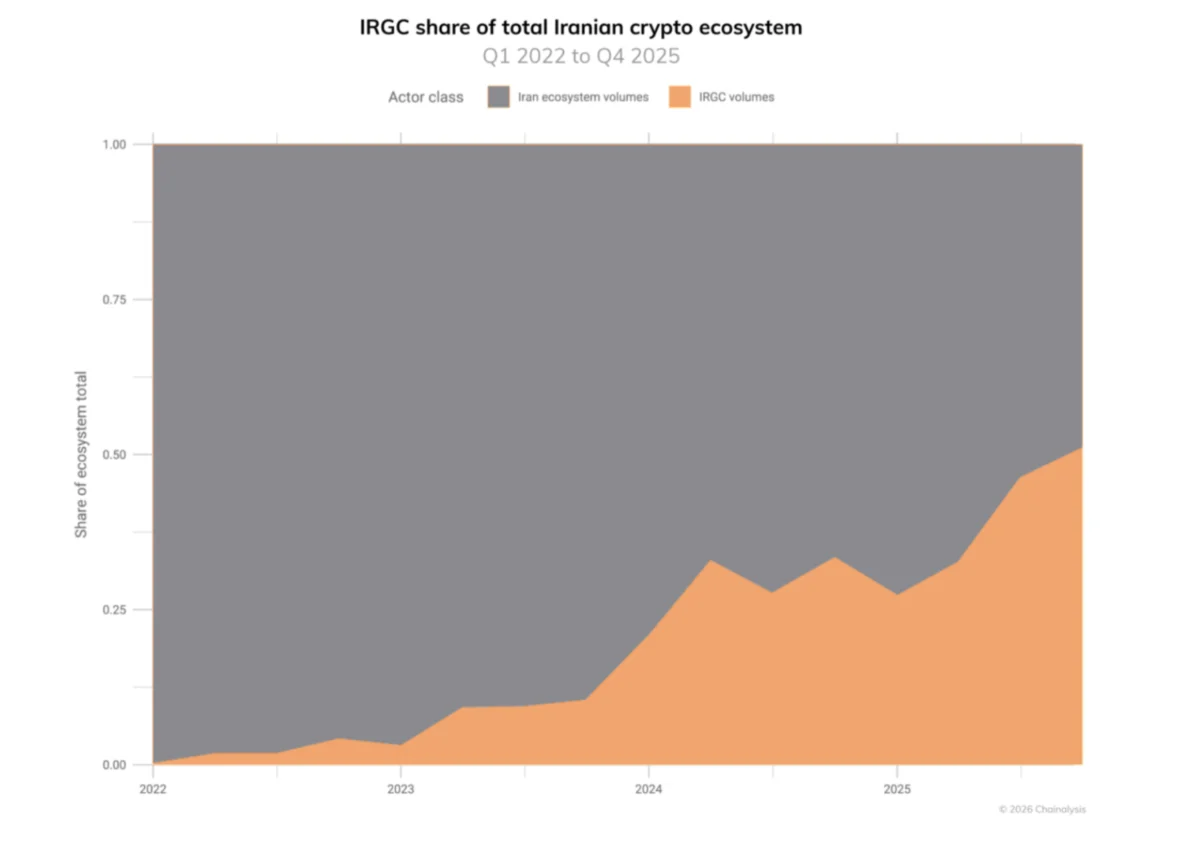
The initial revelation that Iran was opening its financial doors to Bitcoin, alongside Chinese yuan and stablecoins, for passage tolls through one of the world’s most vital maritime chokepoints sent ripples through both the cryptocurrency and geopolitical spheres. Sam Lyman, head of research at the digital asset advocacy organization Bitcoin Policy Institute (BPI), underscored the profound significance of this move, characterizing Bitcoin as a "neutral, strategic asset." He articulated to Cointelegraph that Iran’s rationale for embracing BTC stemmed directly from its inherently censorship-resistant properties. "This is one of the most significant situations where Bitcoin is very clearly a strategic asset," Lyman stated. "The reason why Iran wants to use Bitcoin for these transactions is that no one can freeze Bitcoin. No one can shut down the Bitcoin network." This perspective highlights Bitcoin’s utility as a tool for nation-states seeking to circumvent traditional financial systems, particularly those under stringent international sanctions.
The Strait of Hormuz, a narrow waterway connecting the Persian Gulf to the open sea, is an indispensable conduit for global oil shipments. Approximately one-fifth of the world’s oil supply, including nearly all oil exports from Saudi Arabia, Iran, Iraq, Kuwait, and the UAE, passes through this strategic bottleneck. For Iran, which has long grappled with economic sanctions imposed primarily by the United States, finding alternative payment mechanisms for such a critical revenue stream is a paramount national security and economic objective. The inclusion of Bitcoin in its payment roster, therefore, is not merely a technological adoption but a strategic geopolitical maneuver aimed at insulating its economy from external pressures and the reach of traditional financial oversight.
However, the aspirational policy announcement contrasts sharply with the current transactional reality. Lyman revealed that while the option exists, there is "no onchain evidence" of any BTC toll payment having been executed so far. He further elaborated that the "majority" of Iran’s existing crypto transactions are, in fact, denominated in US dollar stablecoins, primarily USDt (Tether). This observation points to a nuanced digital asset strategy within Iran, where pragmatic considerations often override the theoretical advantages of a fully decentralized currency like Bitcoin.
The continued reliance on stablecoins, despite their inherent vulnerabilities to centralized control, offers a fascinating glimpse into Iran’s risk assessment and operational priorities. USDt, issued by Tether, is a stablecoin pegged to the US dollar, and like other centralized stablecoin issuers, Tether has the technical capability to freeze wallets and transactions in response to regulatory mandates or law enforcement requests. This capability has been demonstrated in various instances, including freezes related to illicit activities or sanctioned entities. Lyman acknowledged this risk, stating, "I think they’re rolling the dice." Yet, Iran’s continued engagement with USDt suggests a calculated approach where the perceived benefits outweigh the risks of potential asset confiscation.

Elaborating on this calculus, Lyman provided compelling statistics. He noted that Iran has been actively pursuing a digital asset strategy for several years, dating back to around 2018, with the bulk of these transactions occurring in USDt. Since 2022, the Iranian government has managed to shift approximately $3 billion in cryptocurrencies. Crucially, while the US Treasury Department was able to freeze about $600 million of these assets, a substantial $2.4 billion successfully moved through the system. "They were able to move $3 billion, and only have $600 million frozen. They were still able to move about $2.4 billion. So, I think that’s why stablecoins are still a go-to for the regime," Lyman explained. This cost-benefit analysis indicates that for Iran, the risk of a percentage of their stablecoin holdings being frozen is deemed an acceptable "cost of doing business" when compared to the overall volume they can successfully transact outside the traditional financial system. The liquidity, widespread acceptance, and relative ease of use of USDt within certain dark market or sanctioned ecosystems might also contribute to its continued preference over Bitcoin for large-scale, routine transactions.
The BPI’s analysis extends beyond merely observing Iran’s crypto activities; it also serves as a critical message to US lawmakers. Lyman stressed that the Iranian government’s embrace of Bitcoin as a strategic asset should compel the United States to re-evaluate its own approach to digital assets. Rather than maintaining a hostile regulatory stance or dismissing digital assets altogether, US policymakers should recognize Bitcoin’s growing role in global geopolitics and treat it as a strategic asset. This aligns with a broader narrative emerging within national security circles, where figures like former Deputy CIA Director Michael Morell have also highlighted Bitcoin’s potential importance for national security, urging for a more nuanced understanding rather than outright rejection. The argument posits that if adversaries can leverage Bitcoin to bypass sanctions and project financial power, then understanding and potentially integrating Bitcoin into a national strategy becomes crucial for maintaining competitive advantage and managing risks.
The broader implications of Iran’s strategy resonate with the concept of the "Cantillon Effect," an economic theory that describes how money creation disproportionately benefits those closest to the source of new money. For nations like Iran, cut off from the global financial arteries and subject to the whims of reserve currency powers, Bitcoin represents a potential escape hatch from this effect. By providing a neutral, borderless, and permissionless monetary network, Bitcoin theoretically allows states to engage in commerce without the intermediation of traditional financial institutions that can be weaponized through sanctions. This vision of Bitcoin as a hedge against monetary control and financial censorship is a powerful driver for its adoption in geopolitically fraught regions.
Looking ahead, the question remains whether Bitcoin will eventually assume a more prominent role in Iran’s strategic transactions, particularly for oil tolls. While the censorship resistance of Bitcoin is a clear advantage over stablecoins, several factors might be hindering its immediate uptake for such large-scale payments. These could include Bitcoin’s price volatility, which can introduce significant exchange rate risk for large, time-sensitive transactions. The liquidity depth for converting large sums of BTC into other assets or local currencies in a sanctioned environment might also be a challenge. Furthermore, the technical infrastructure and counterparty willingness for direct BTC payments for oil tolls might still be nascent compared to the more established, albeit risky, stablecoin channels.
Nevertheless, Iran’s official endorsement of Bitcoin as a payment option is a symbolic, if not yet practically realized, milestone. It signifies a growing recognition among nation-states of Bitcoin’s unique properties as a financial tool beyond the reach of traditional state control. As global geopolitical tensions continue to simmer and the push for de-dollarization gains momentum in various parts of the world, the strategic utility of decentralized cryptocurrencies like Bitcoin will likely continue to be explored and debated. For now, however, the pragmatic realities of liquidity, operational ease, and a calculated risk assessment keep USDt firmly in the driver’s seat for Iran’s crypto-enabled financial maneuvers, with Bitcoin waiting in the wings as a declared, but not yet dominant, strategic alternative.