Imroatul Nasiyah
The revolutionary findings, meticulously detailed in the prestigious journal Science Advances, herald a new era for simulating the intricate dynamics of fluids, encompassing both liquids and gases. This advancement is of paramount importance, as fluid dynamics underpins crucial predictive capabilities in a diverse array of fields, including the critical domains of climate science, efficient transportation networks, advanced medical treatments, and sustainable energy production. The implications are far-reaching, promising to enhance our understanding and management of Earth’s climate, optimize the flow of goods and people, develop more effective medical interventions, and design more efficient energy systems.
The dramatic leap in predictive accuracy is attributed to the fundamentally different way quantum computers process information. Unlike their classical counterparts, which rely on binary bits that can only represent a definitive ‘0’ or ‘1’, quantum computers harness the power of qubits. These quantum bits possess the remarkable ability to exist in a superposition of states, simultaneously representing ‘0’, ‘1’, or any value in between. Furthermore, qubits exhibit a phenomenon known as entanglement, where the state of one qubit can instantaneously influence the state of another, regardless of their physical separation. This interconnectedness allows a relatively small number of qubits to encode and explore an astronomically vast number of potential states, granting quantum computers an exponential advantage in computational power for certain problems.
Professor Peter Coveney, a senior author on the study and a distinguished figure in UCL Chemistry and the Advanced Research Computing Centre, eloquently articulated the long-standing challenge faced by scientists. "To make predictions about complex systems, we can either run a full simulation, which might take weeks — often too long to be useful — or we can use an AI model which is quicker but more unreliable over longer time scales," he explained. This dichotomy has historically forced a trade-off between speed and accuracy when dealing with the inherent complexity of real-world phenomena. The development of a "quantum-informed AI model," as described by Professor Coveney, offers a compelling solution, promising "more accurate predictions quickly." He emphasized the fundamental nature of predicting fluid flow and turbulence, noting its "many applications" beyond pure scientific curiosity. The practical utility of their novel method extends to "climate forecasting, in modeling blood flow and the interaction of molecules, or to better design wind farms so they generate more energy." This highlights the tangible benefits this research can bring to pressing global challenges.
The innovative hybrid quantum-AI method operates by strategically integrating quantum computing into a specific, yet crucial, phase of the AI training process. While the promise of quantum computing surpassing classical machines in raw power is widely anticipated, its practical, real-world applications have remained somewhat nascent. This new approach cleverly circumvents some of these limitations by leveraging the unique strengths of quantum computation to enhance a classical AI framework.
Typically, AI models acquire their predictive prowess by learning from extensive datasets, which are often generated through either meticulous simulations or real-world observations. In this novel methodology, however, the data undergoes an initial processing stage by a quantum computer. This quantum pre-processing step is designed to meticulously identify and extract key statistical patterns within the data that exhibit remarkable stability over extended periods. These enduring statistical characteristics, termed "invariant statistical properties," are then crucially employed to guide and refine the training of a sophisticated AI model that runs on a conventional supercomputer. This synergistic approach ensures that the AI is trained on the most fundamental and enduring aspects of the system’s behavior, leading to more robust and reliable predictions.
The impact of this quantum-informed AI system on predictive accuracy is substantial, reporting an impressive "about 20 percent greater accuracy compared to standard AI models that did not use quantum-derived patterns." Crucially, this enhanced accuracy was not confined to short time scales; the system demonstrably maintained "stable predictions over longer periods, even when modeling chaotic systems." The ability to reliably predict the behavior of chaotic systems, which are inherently prone to unpredictable divergence, is a significant scientific achievement.
Beyond its accuracy gains, the quantum-informed approach boasts another major advantage: unparalleled efficiency. The study highlights that the method "required hundreds of times less memory," a factor that dramatically increases its practicality and scalability for tackling the massive datasets typically associated with large-scale simulations. This memory reduction is a direct consequence of the quantum computer’s ability to encode and process information in a far more compact and efficient manner.
The underlying quantum phenomena responsible for this remarkable performance boost are the defining features of quantum computation: entanglement and superposition. Entanglement, as previously mentioned, allows qubits to remain interconnected and influence each other instantaneously, irrespective of distance. Superposition, on the other hand, grants qubits the ability to exist in multiple states simultaneously until a measurement is performed. The synergistic interplay of these properties enables quantum systems to process and represent vast quantities of information within a remarkably compact informational framework. This inherent data compression is what allows the quantum computer to identify and extract the most salient statistical features, which then serve as an efficient guide for the classical AI.
Maida Wang, the first author of the study and affiliated with the UCL Centre for Computational Science, expressed optimism about the practical demonstration of "quantum advantage." She stated, "Our new method appears to demonstrate ‘quantum advantage’ in a practical way — that is, the quantum computer outperforms what is possible through classical computing alone." Wang further elaborated that these findings could "inspire the development of novel classical approaches that achieve even higher accuracy, though they would likely lack the remarkable data compression and parameter efficiency offered by our method." She outlined the critical "next steps," which include "to scale up the method using larger datasets and to apply it to real-world situations which typically involve even more complexity." Additionally, the researchers aim to develop "a provable theoretical framework" to solidify the understanding and application of their method.
Co-first author Xiao Xue, from Advanced Research Computing at UCL, underscored the pioneering nature of this work. "In this work, we demonstrate for the first time that quantum computing can be meaningfully integrated with classical machine learning methods to tackle complex dynamical systems, including fluid mechanics," Xue remarked. The significance of this achievement lies in the practical realization of a "quantum-informed’ approach moving towards practical use." This signifies a tangible shift from theoretical exploration to applied science, opening doors for real-world problem-solving.
The researchers posit that quantum computers are intrinsically well-suited for modeling complex systems because of their inherent capacity to "compactly represent their underlying physics." Many complex systems, particularly in fluid dynamics, exhibit behaviors that bear a striking resemblance to quantum effects. For instance, changes or perturbations in one region of a fluid system can influence distant parts of the system in a manner analogous to quantum entanglement, where a localized event has non-local consequences. This intrinsic parallelism between the physics of complex classical systems and the principles of quantum mechanics makes quantum computers a natural fit for their simulation.
A significant hurdle in the current landscape of quantum computing has been the inherent challenges posed by "noise, errors, and interference" in nascent quantum hardware. These imperfections often necessitate a large number of measurements to extract meaningful data. The novel method developed by the UCL team ingeniously "avoids these issues by using the quantum computer only once during the workflow, rather than repeatedly exchanging data between quantum and classical systems." This streamlined approach minimizes the exposure to noisy quantum operations, thereby enhancing the reliability and efficiency of the overall process.
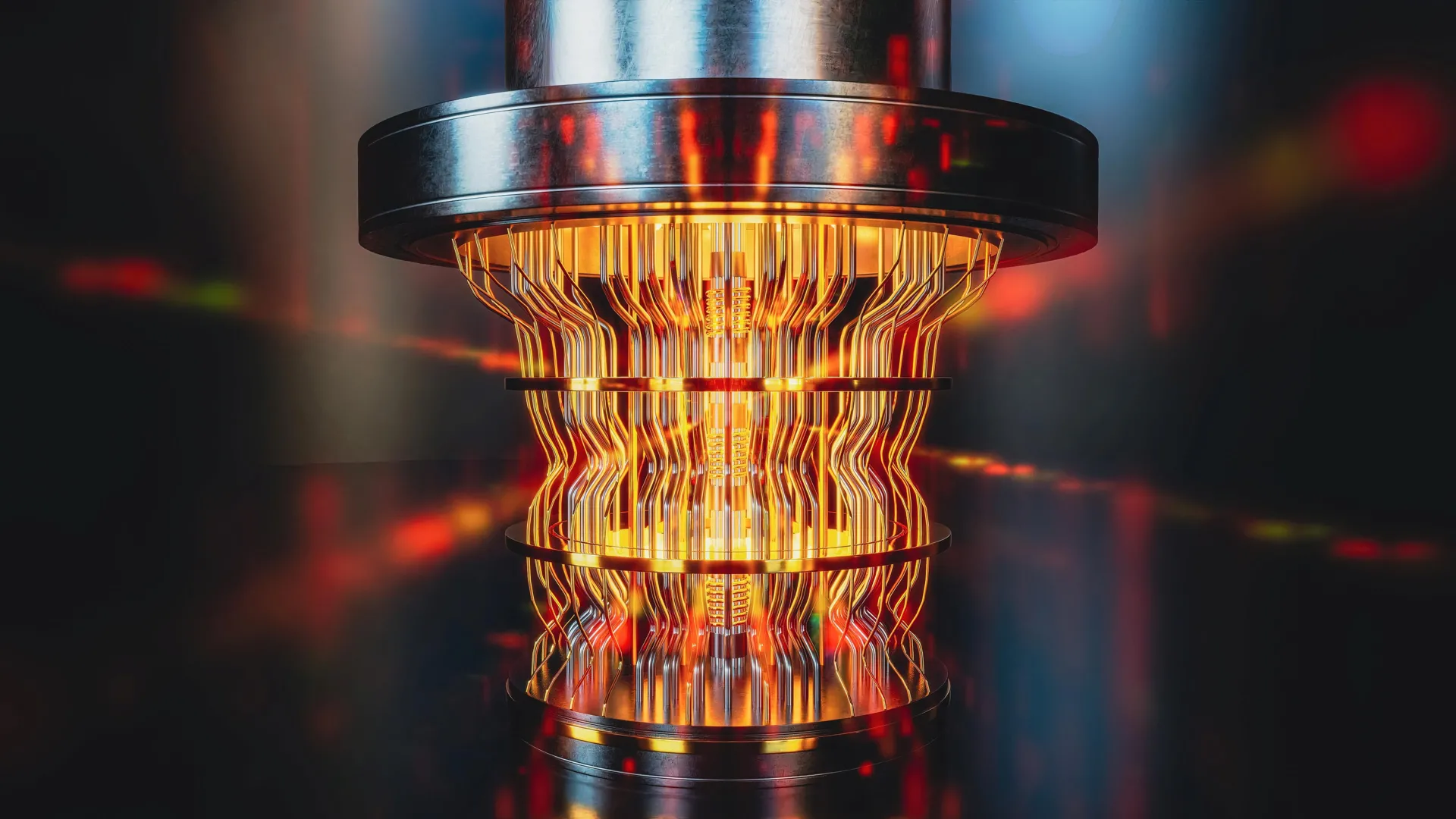
The experimental validation of this groundbreaking research was conducted using a 20-qubit IQM quantum computer. This quantum processor was seamlessly integrated with powerful classical computing resources provided by the Leibniz Supercomputing Centre, located in Germany. This sophisticated infrastructure highlights the collaborative and resource-intensive nature of cutting-edge quantum computing research. The extreme environmental requirements of quantum computers were also noted; they must operate at "extremely low temperatures, around minus 273C (close to absolute zero, colder than anything in space)," underscoring the technological sophistication involved.
The research received crucial funding from UCL and the UK’s Engineering and Physical Sciences Research Council (EPSRC), with additional invaluable support from IQM Quantum Computers and the Leibniz Supercomputing Centre in Munich. This multi-faceted financial backing underscores the recognized importance and potential of this research.
As the scientific community continues to refine and "scale up this approach," the implications for future advancements are profound. This work "could open the door to more accurate and efficient predictions across a wide range of scientific and engineering applications," promising to accelerate discovery and innovation in fields as diverse as meteorology, aerospace engineering, drug discovery, and materials science. The ability to predict chaotic systems with greater fidelity and efficiency marks a significant milestone in our quest to understand and harness the complexities of the universe.