Imroatul Nasiyah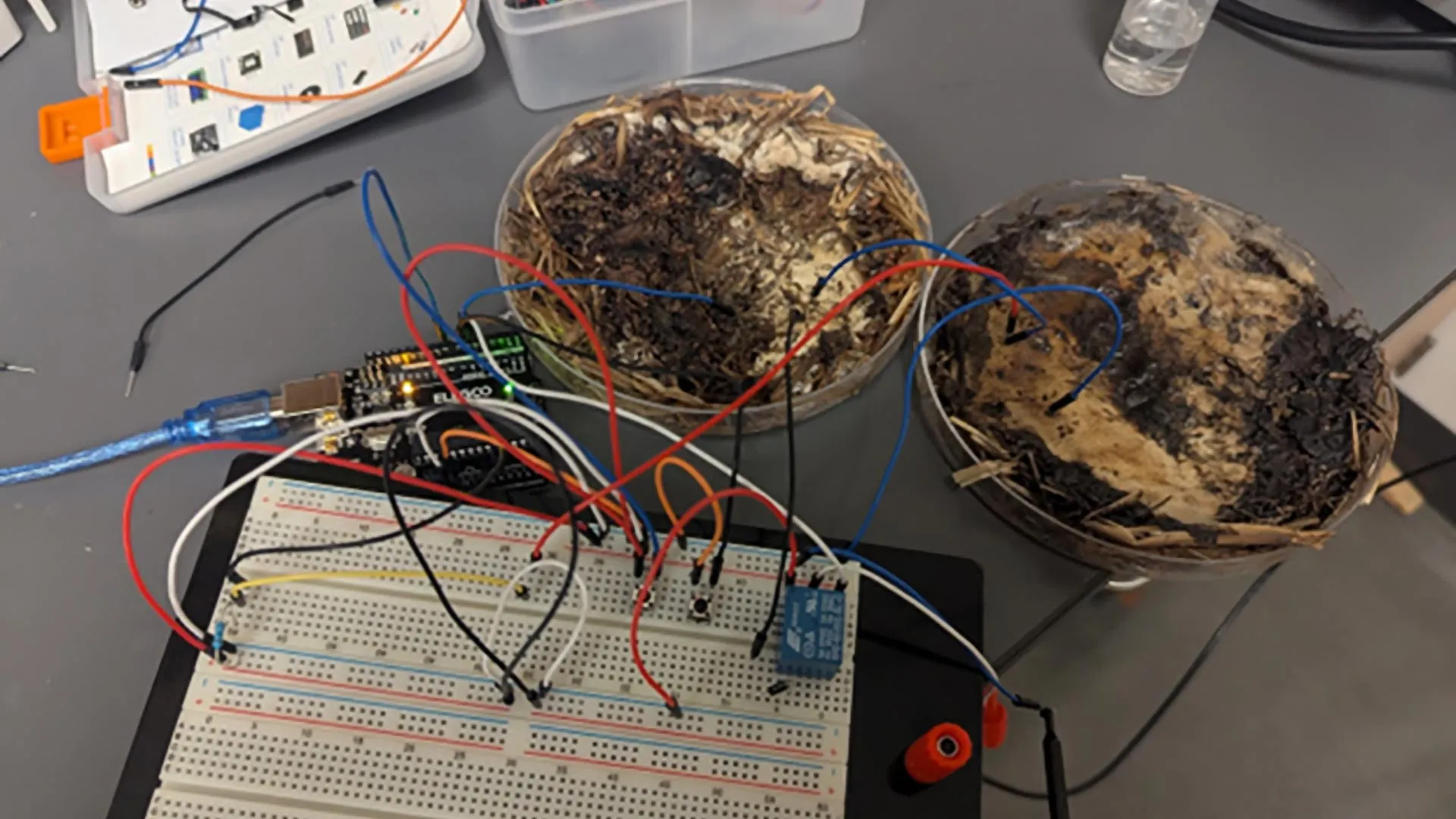
Mushrooms, often underestimated for their resilience and complex biological architecture, are proving to be remarkably adept at interfacing with electrical currents. Their inherent toughness and unique cellular structures make them ideal candidates for the burgeoning field of bioelectronics, which seeks to integrate biological systems with technological applications. This research moves beyond theoretical concepts, demonstrating tangible progress in transforming these humble fungi into functional components for advanced computing. The Ohio State team has successfully cultivated and manipulated edible fungi to exhibit memristive properties, meaning they can retain information about their past electrical states, much like semiconductor chips currently do.
The experiments conducted by the researchers revealed that these mushroom-based devices can effectively replicate the memory behavior observed in conventional memristors. This opens the door to the creation of a new generation of computing tools that are not only environmentally conscious but also possess an uncanny ability to mimic neural activity. Dr. John LaRocco, the lead author of the study and a research scientist in psychiatry at Ohio State’s College of Medicine, highlighted the significant advantages of this approach. "Being able to develop microchips that mimic actual neural activity means you don’t need a lot of power for standby or when the machine isn’t being used," he explained. "That’s something that can be a huge potential computational and economic advantage." The prospect of low-power, brain-like computing is particularly exciting, promising to reduce energy consumption and costs associated with our ever-increasing reliance on technology.
The concept of fungal electronics, while not entirely novel, is gaining significant traction due to its profound implications for sustainable computing. Fungal materials offer a compelling alternative to traditional semiconductor materials, which often rely on rare earth minerals and demanding manufacturing processes that consume vast amounts of energy and contribute to electronic waste. In stark contrast, fungal components are biodegradable, inexpensive to produce, and can be grown using readily available resources. This inherent sustainability is a key driver for the adoption of fungal electronics in an era acutely aware of the need for environmental stewardship. Dr. LaRocco further elaborated on the progress made, stating, "Mycelium as a computing substrate has been explored before in less intuitive setups, but our work tries to push one of these memristive systems to its limits." This indicates a concerted effort to optimize and enhance the performance of fungal-based computing elements.
The methodology employed in this study provides a clear illustration of how scientists are coaxing these biological marvels into performing computational tasks. Researchers meticulously grew samples of shiitake and button mushrooms, carefully dehydrating them to preserve their structure and electrical properties. These prepared samples were then integrated into custom-designed electronic circuits. The crucial step involved exposing the mushrooms to controlled electrical currents, varying the voltages and frequencies to observe their responses. "We would connect electrical wires and probes at different points on the mushrooms because distinct parts of it have different electrical properties," Dr. LaRocco explained. "Depending on the voltage and connectivity, we were seeing different performances." This intricate manipulation of electrical stimuli allowed them to map and understand the electrical behavior of the fungal material.
The results of these rigorous tests, spanning a period of two months, were nothing short of remarkable. The mushroom-based memristors demonstrated an impressive ability to switch between electrical states an astonishing 5,850 times per second, achieving an accuracy of approximately 90%. While performance did show a decline at higher electrical frequencies, an unexpected and highly significant observation emerged: connecting multiple mushrooms together helped restore stability. This emergent property closely mirrors the interconnected nature of neural networks in the human brain, where the collective action of multiple neurons enhances overall functionality and resilience. This finding is particularly significant, suggesting that fungal computing systems could inherently possess a degree of self-organization and fault tolerance.
Qudsia Tahmina, a co-author of the study and an associate professor of electrical and computer engineering at Ohio State, emphasized the inherent adaptability of mushrooms for computing applications. "Society has become increasingly aware of the need to protect our environment and ensure that we preserve it for future generations," Tahmina stated. "So that could be one of the driving factors behind new bio-friendly ideas like these." This underscores the growing societal imperative to develop technologies that are not only innovative but also environmentally responsible. The flexibility offered by mushrooms also points towards exciting possibilities for scaling up fungal computing. Tahmina suggested that larger mushroom-based systems could find applications in areas such as edge computing, where data processing occurs closer to the source of generation, and in the challenging environment of aerospace exploration. Conversely, smaller fungal components could be instrumental in enhancing the performance of autonomous systems and wearable devices, paving the way for more integrated and intelligent technologies.
The path forward for fungal computing is one of refinement and innovation. While organic memristors are still in their nascent stages of development, scientists are actively working on improving cultivation methods and miniaturizing device sizes. Achieving smaller, more efficient fungal components is paramount to their viability as a genuine alternative to traditional microchips. Dr. LaRocco envisions a spectrum of possibilities for implementing this technology, from humble beginnings to large-scale industrial applications. "Everything you’d need to start exploring fungi and computing could be as small as a compost heap and some homemade electronics, or as big as a culturing factory with pre-made templates," he remarked. "All of them are viable with the resources we have in front of us now." This statement highlights the accessibility and scalability of fungal computing, suggesting that it could be integrated into various levels of technological development, from individual experimentation to advanced industrial production. The research, supported by the Honda Research Institute, also involved contributions from Ruben Petreaca, John Simonis, and Justin Hill from Ohio State, underscoring a collaborative effort to unlock the full potential of these extraordinary living computers.