Imroatul Nasiyah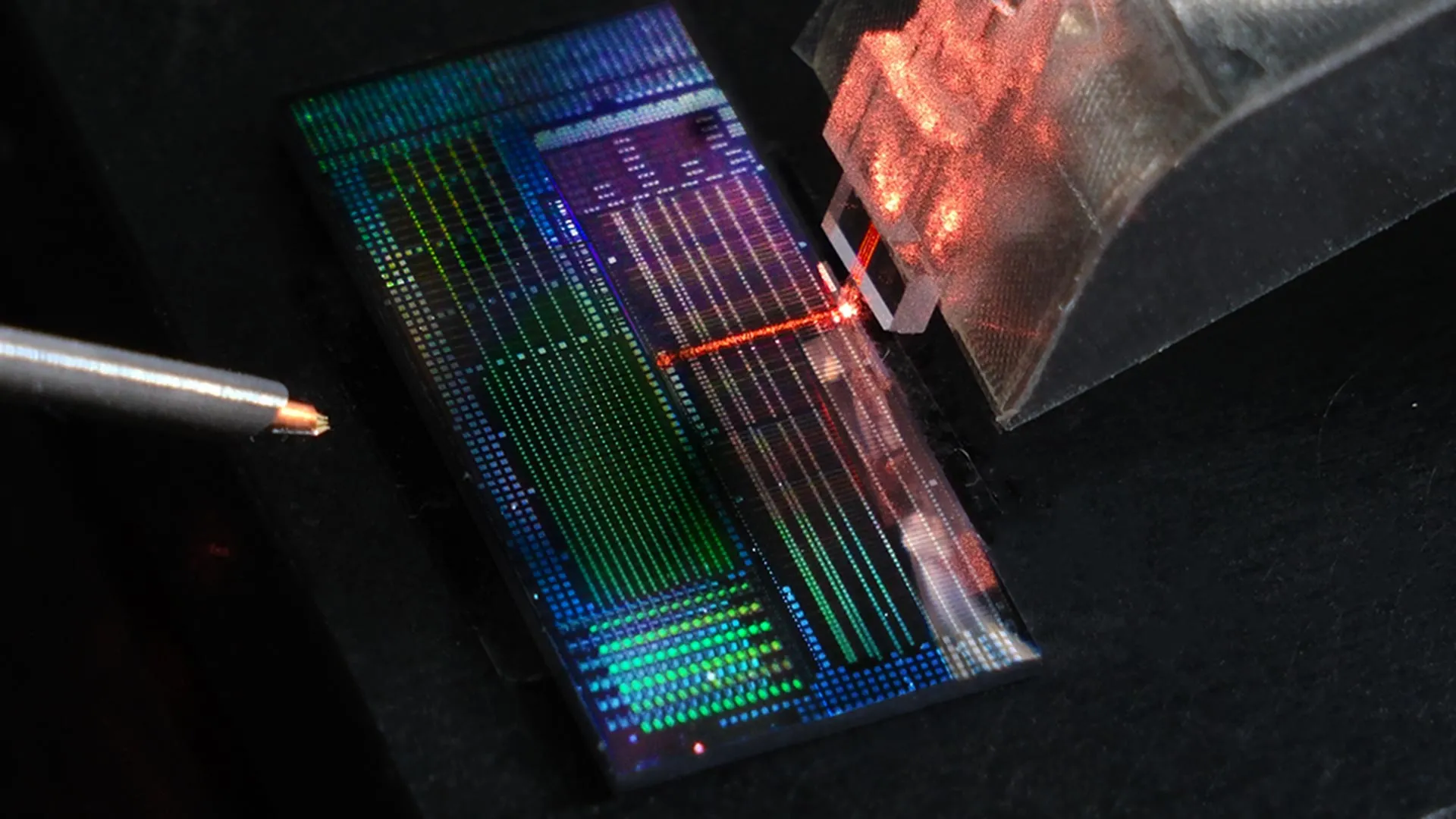
At the core of this innovation lies a sophisticated interplay of microwave-frequency vibrations, oscillating at speeds that defy comprehension, billions of times per second. These high-frequency oscillations imbue the chip with the remarkable ability to manipulate laser light with an almost unimaginable degree of precision. By directly influencing the phase of a laser beam, the device can artfully generate new laser frequencies. These newly generated frequencies are not only remarkably stable, ensuring the reliability of quantum operations, but also highly efficient, minimizing energy waste. This exquisite level of control over laser light is a fundamental prerequisite, not solely for the ambitious pursuit of quantum computing, but also for the burgeoning and exciting fields of quantum sensing and quantum networking, areas poised to redefine our interaction with the physical world and the flow of information.
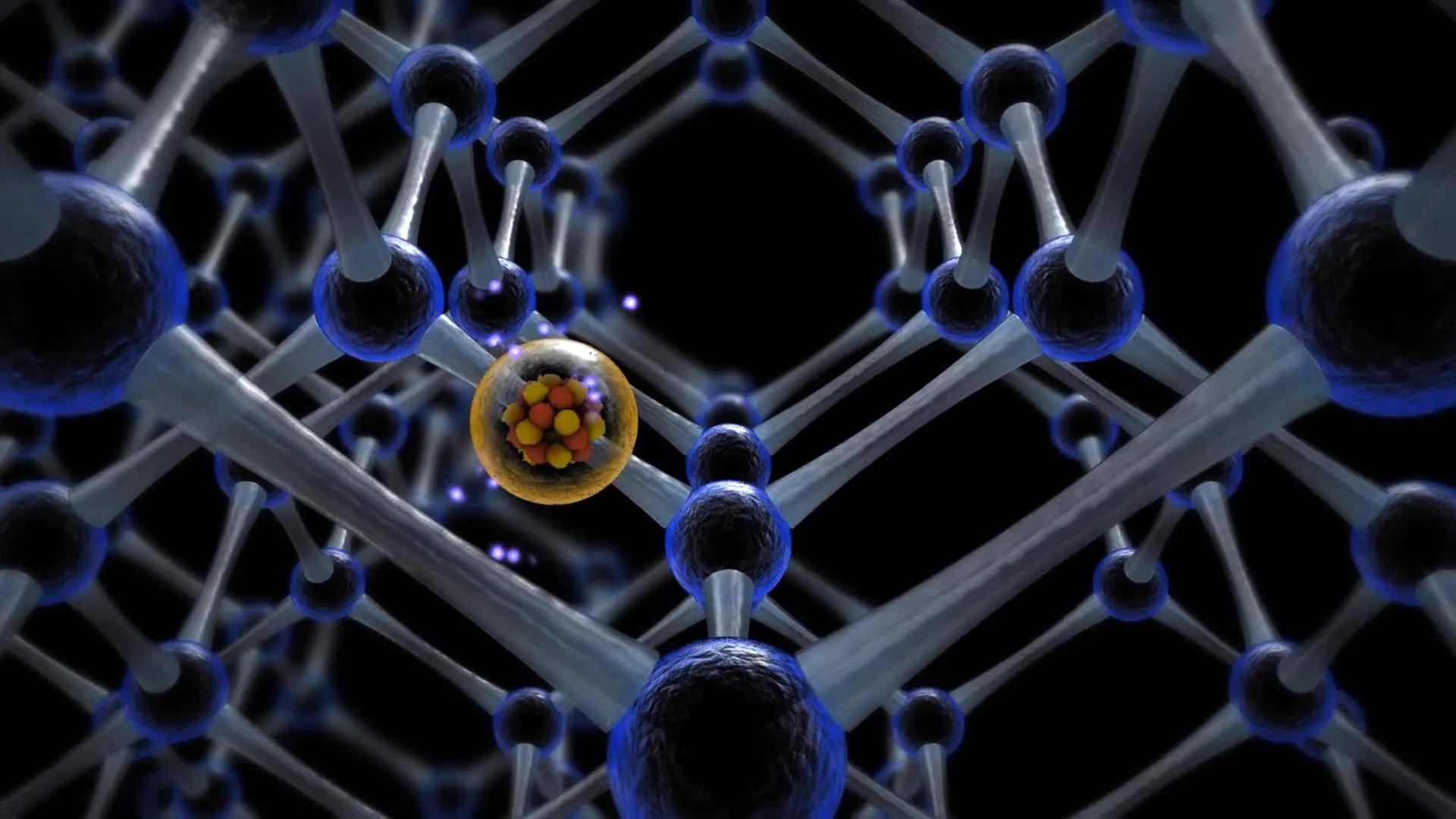
The necessity of ultra-precise lasers in quantum computing is intrinsically linked to the most promising architectures for building these powerful machines. Many of these designs leverage the unique properties of trapped ions or trapped neutral atoms to encode and store quantum information. In such systems, each individual atom serves as a qubit, a quantum bit capable of existing in multiple states simultaneously. To perform calculations, researchers must interact with these atomic qubits by directing carefully tuned laser beams at them. These lasers act as precise instructions, guiding the atoms through complex quantum algorithms. For this intricate dance of quantum information to occur accurately, each laser beam must be adjusted with an almost unfathomable level of precision, often requiring adjustments to within billionths of a percent of the desired frequency. Jake Freedman, an incoming PhD student in the Department of Electrical, Computer and Energy Engineering, who led this research alongside Matt Eichenfield, professor and Karl Gustafson Endowed Chair in Quantum Engineering, emphasized this point: "Creating new copies of a laser with very exact differences in frequency is one of the most important tools for working with atom- and ion-based quantum computers. But to do that at scale, you need technology that can efficiently generate those new frequencies."
The current methods for achieving these precise frequency shifts are often cumbersome and resource-intensive. They typically involve large, table-top devices that necessitate substantial microwave power. While these systems may suffice for small-scale experimental setups, they are fundamentally impractical for the colossal number of optical channels that will be indispensable for future quantum computers, which will require the control of potentially millions of qubits. Professor Eichenfield articulated this challenge vividly: "You’re not going to build a quantum computer with 100,000 bulk electro-optic modulators sitting in a warehouse full of optical tables. You need some much more scalable ways to manufacture them that don’t have to be hand-assembled and with long optical paths. While you’re at it, if you can make them all fit on a few small microchips and produce 100 times less heat, you’re much more likely to make it work."
This is precisely where the new device shines, offering a paradigm shift in efficiency and miniaturization. The novel modulator generates laser frequency shifts through highly efficient phase modulation, while astonishingly consuming approximately 80 times less microwave power compared to many existing commercial modulators. This drastic reduction in power consumption translates directly into significantly less heat generation. The implication of reduced heat is profound: it allows for a much greater density of optical channels to be packed closely together, potentially even onto a single microchip. When these advantages are considered collectively, the chip transforms from a specialized laboratory tool into a truly scalable system, capable of orchestrating the precise interactions that atoms require to perform complex quantum calculations, paving the way for the construction of much larger and more powerful quantum processors.
One of the most significant accomplishments of this project is the fact that the device was manufactured entirely within a fabrication facility, or "fab" – the very same sophisticated environment used for producing advanced microelectronics that power our daily lives. Professor Eichenfield highlighted the immense significance of this manufacturing approach: "CMOS fabrication is the most scalable technology humans have ever invented. Every microelectronic chip in every cell phone or computer has billions of essentially identical transistors on it. So, by using CMOS fabrication, in the future, we can produce thousands or even millions of identical versions of our photonic devices, which is exactly what quantum computing will need." Nils Otterstrom, a co-senior author from Sandia National Laboratories, echoed this sentiment, explaining that the team successfully redesigned modulator technologies that were once bulky, expensive, and power-intensive, transforming them into components that are not only smaller and more energy-efficient but also far easier to integrate into complex systems. Otterstrom further elaborated on this transformative shift, stating, "We’re helping to push optics into its own ‘transistor revolution,’ moving away from the optical equivalent of vacuum tubes and towards scalable integrated photonic technologies."
The vision of the researchers extends beyond this single, albeit crucial, component. They are actively engaged in developing fully integrated photonic circuits. These advanced circuits will consolidate multiple essential functions, including frequency generation, filtering, and pulse shaping, all onto a single chip. This ambitious endeavor brings the field significantly closer to realizing a complete, self-contained, and operational quantum photonic platform – a critical infrastructure for future quantum technologies. The team’s immediate next steps involve forging partnerships with leading quantum computing companies. These collaborations will enable them to rigorously test these cutting-edge chips within advanced trapped-ion and trapped-neutral-atom quantum computers, bringing real-world validation to their groundbreaking work. Jake Freedman expressed palpable optimism about the project’s trajectory: "This device is one of the final pieces of the puzzle. We’re getting close to a truly scalable photonic platform capable of controlling very large numbers of qubits." The groundbreaking research and development that led to this transformative chip received crucial support from the U.S. Department of Energy through the Quantum Systems Accelerator program, a distinguished National Quantum Initiative Science Research Center, underscoring the national importance and potential impact of this work.