Imroatul Nasiyah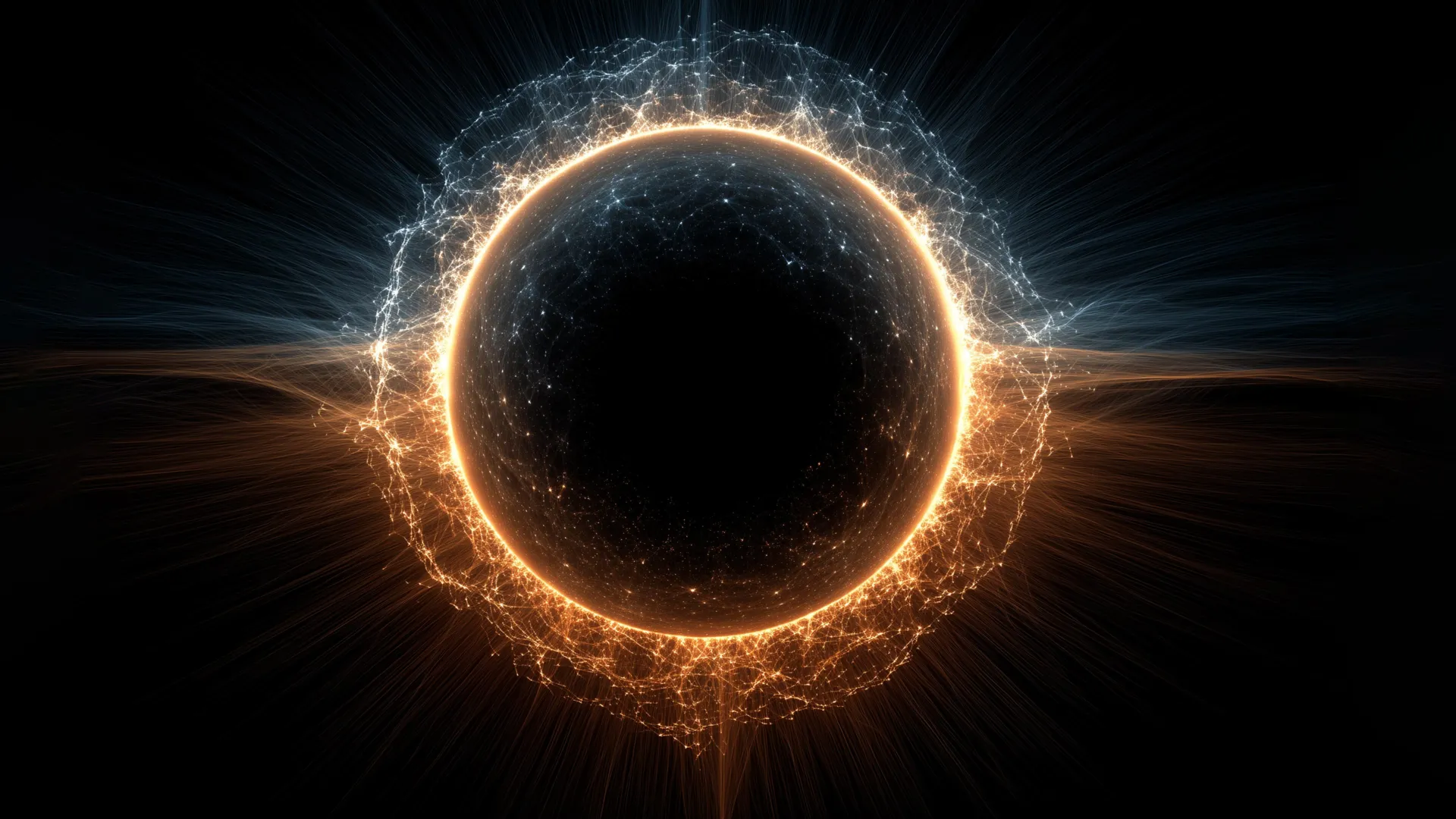
The theoretical framework of SIDM posits a unique form of dark matter where its constituent particles possess the ability to collide with one another. Crucially, these particles remain aloof from baryonic matter – the familiar building blocks of stars, planets, and ourselves, composed of protons, neutrons, and electrons. These inter-dark matter collisions are not dissipative; instead, they conserve energy through a process known as elastic self-interaction. This distinct characteristic has profound implications for the structure and dynamics of dark matter halos, the immense, invisible reservoirs of dark matter that envelop galaxies, acting as gravitational anchors and guiding their developmental trajectories. As James Gurian, a postdoctoral fellow at the Perimeter Institute and co-author of the study, explains, "Dark matter forms relatively diffuse clumps which are still much denser than the average density of the universe. The Milky Way and other galaxies live in these dark matter halos." These halos, far from being static entities, are dynamic environments whose evolution is intricately linked to the properties of the dark matter that constitutes them.
The self-interacting nature of SIDM can trigger a fascinating and counterintuitive phenomenon within these halos: gravothermal collapse. This process is rooted in a peculiar aspect of gravitational systems. In systems dominated by gravity, such as dark matter halos, energy loss does not lead to cooling; rather, it results in heating. Gurian elaborates on this complex dynamic: "You have this self-interacting dark matter which transports energy, and it tends to transport energy outwards in these halos. This leads to the inner core getting really hot and dense as energy is transported outwards." Over extended cosmic timescales, this continuous outward energy transport can drive the central region of the dark matter halo towards a dramatic and potentially catastrophic collapse. The very fabric of these cosmic structures, built upon the gravitational scaffolding of dark matter, can be fundamentally altered by these internal interactions.
The challenge of accurately simulating the intricate structures formed by SIDM has long been a significant hurdle for cosmologists. Traditional simulation methodologies often operate effectively only under specific, narrowly defined conditions. Some computational approaches excel when dark matter is sparsely distributed and collisions are infrequent, mirroring the behavior of non-interacting dark matter. Conversely, other methods are adept at modeling extremely dense dark matter environments where interactions are highly probable. However, a critical gap existed for simulating the intermediate regimes, the vast range of densities where interactions occur with a moderate frequency. As Gurian articulates this crucial limitation, "One approach is an N-body simulation approach that works really well when dark matter is not very dense and collisions are infrequent. The other approach is a fluid approach — and this works when dark matter is very dense and collisions are frequent. But for the in-between, there wasn’t a good method. You need an intermediate range approach to correctly go between the low-density and high-density parts. That was the origin of this project." This identified deficiency highlighted the urgent need for a new computational paradigm that could bridge this simulation gap.
In response to this pressing need, Gurian, in collaboration with Simon May, a former postdoctoral researcher at Perimeter and now an ERC Preparative Fellow at Bielefeld University, has developed a novel computational code named KISS-SIDM. This innovative software is meticulously designed to bridge the aforementioned gap between existing simulation methods. By doing so, KISS-SIDM not only delivers enhanced accuracy in modeling SIDM dynamics but also demands significantly less computational power, making complex simulations more accessible. Furthermore, the code has been made publicly available, fostering a collaborative environment for the wider scientific community. Gurian emphasizes the practical implications of this breakthrough: "Before, if you wanted to check different parameters for self-interacting dark matter, you needed to either use this really simplified fluid model, or go to a cluster, which is computationally expensive. This code is faster, and you can run it on your laptop." This democratization of advanced simulation capabilities has the potential to accelerate discovery across the field of dark matter research.
The burgeoning interest in interacting dark matter models, including SIDM, has been significantly fueled in recent years by perplexing observational anomalies detected in the structures and behaviors of galaxies. These discrepancies, which do not readily align with predictions from standard, non-interacting dark matter models, suggest the necessity for new physics within the dark sector. Neal Dalal, a distinguished member of the Perimeter Institute research faculty, underscores the importance of this shift in focus: "There has been considerable interest recently in interacting dark matter models, due to possible anomalies detected in observations of galaxies that may require new physics in the dark sector." He further elaborates on the impact of the new computational tool: "Previously, it was not possible to perform accurate calculations of cosmic structure formation in these sorts of models, but the method developed by James and Simon provides a solution that finally allows us to simulate the evolution of dark matter in models with significant interactions. Their paper should enable a broad spectrum of studies that previously were intractable." The ability to accurately simulate SIDM opens up a vast landscape of theoretical possibilities that were previously out of reach.
The potential implications of the collapse of dark matter cores are particularly profound, extending beyond the realm of galaxy formation to tantalizing connections with the enigmatic origins of black holes. The dense, superheated cores formed during gravothermal collapse could, under certain conditions, provide the necessary seed for the formation of supermassive black holes. However, the ultimate fate of this dramatic collapse remains an open and captivating question. Gurian articulates the next frontier in this research: "The fundamental question is, what’s the final endpoint of this collapse? That’s what we’d really like to do — study the phase after you form a black hole." By providing an unprecedented ability to delve into these extreme astrophysical conditions with high fidelity, the KISS-SIDM code represents a crucial stride forward in humanity’s quest to comprehend the fundamental nature of dark matter and the intricate processes that have sculpted the universe into its present form. This advancement promises to illuminate some of the most profound mysteries at the heart of cosmology.