Faris Adani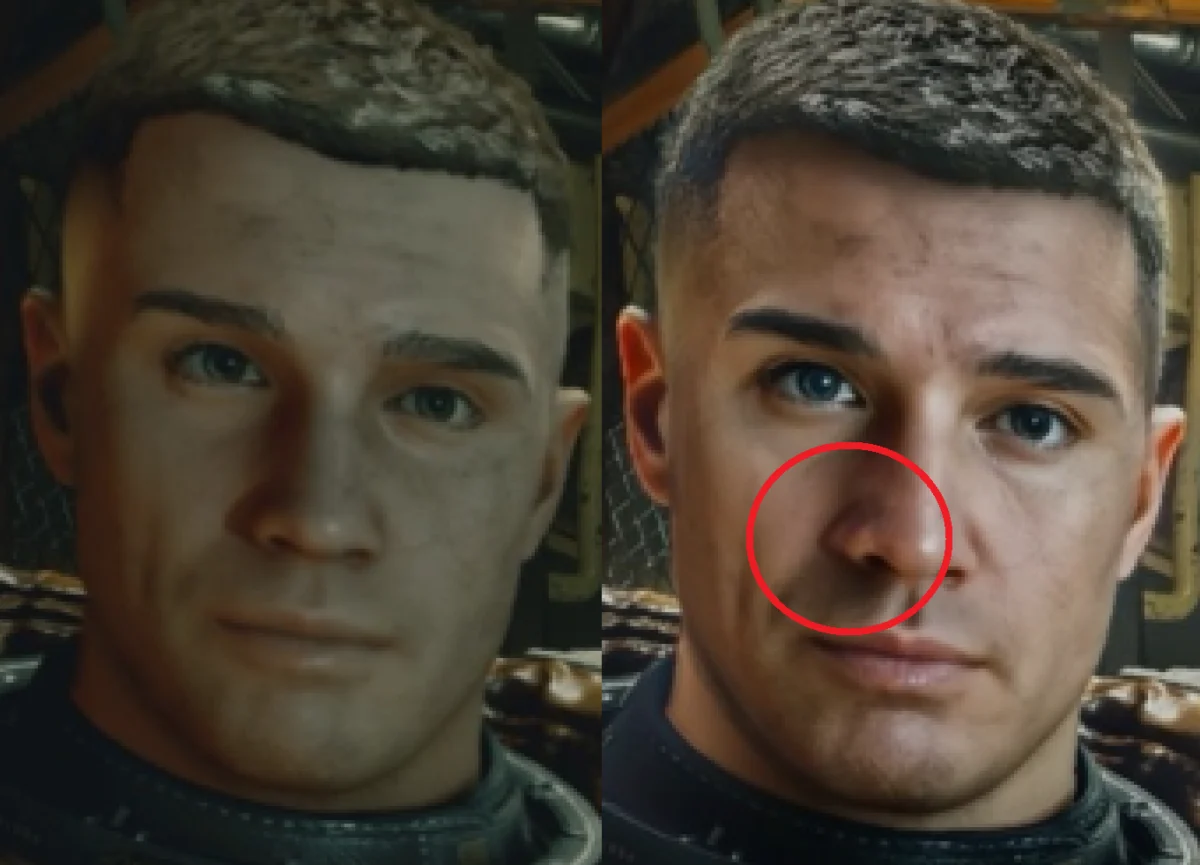
The gaming community has been thrown into a maelstrom of ridicule and outrage following the announcement of Nvidia’s latest Deep Learning Super Sampling (DLSS) iteration, DLSS 5, a feature that has been unflatteringly dubbed "yassification" for its tendency to apply uncanny and often undesirable generative AI-driven aesthetic alterations to video game visuals. While earlier versions of DLSS were lauded for their ability to intelligently upscale lower-resolution images to higher resolutions, significantly boosting frame rates without compromising much on visual fidelity, DLSS 5 appears to veer sharply into uncharted and controversial territory. Instead of merely enhancing performance through intelligent upscaling, this new version leverages a generative AI model to "infuse" scenes with what Nvidia describes as "photoreal lighting and materials," a process that, in practice, frequently results in character faces looking as if they’ve undergone a digital "Facetune" treatment, conforming to a bland, hyperreal beauty standard that actively erodes a game’s original artistic vision. The collective groan from gamers was amplified exponentially when a particularly glaring visual glitch, prominently featured in Nvidia’s own promotional material, transformed a character’s facial shadow in the highly anticipated game Starfield into a monstrous, disfiguring "giga-nostril," solidifying the community’s immediate and almost unanimous rejection of the feature.
The infamous "giga-nostril" incident quickly became the poster child for everything gamers found wrong with DLSS 5. A screenshot, circulated widely across platforms like Reddit’s r/pcmasterrace, showcased the grotesque alteration, sparking a firestorm of hilarious yet pointed criticism. In Nvidia’s official presentation of DLSS 5, a side-by-side comparison of a Starfield character was meant to highlight the AI’s enhancements. Instead, eagle-eyed observers pointed out that a subtle facial shadow on the character’s nose had been erroneously interpreted and rendered by the AI as an absurdly enlarged, deep-set nostril. This wasn’t merely a minor graphical artifact; it was a glaring, almost comically bad misinterpretation that fundamentally distorted the character’s face. The fact that this specific image was chosen by Nvidia itself for its official announcement only added fuel to the fire, turning what could have been an obscure bug into a symbol of the technology’s perceived flaws.
Gamers, known for their sharp wit and even sharper criticism when it comes to beloved titles and hardware, wasted no time in dissecting the visual carnage. "That’s a nostril big enough to inhale the required amount of copium to believe that DLSS 5 will be useful," quipped one Reddit user, perfectly encapsulating the blend of humor and exasperation. Another joked, "The artist couldn’t express how huge this nostril is, DLSS helped," highlighting the AI’s unintended "creative" input. Beyond the monstrous nostril, many also observed subtle but equally disturbing discrepancies, such as slightly mismatched eye colors, further demonstrating the AI’s tendency to introduce uncanny alterations rather than seamless enhancements. These glitches weren’t isolated incidents; they were illustrative of a broader pattern of AI-driven "improvements" that felt less like an evolution in rendering and more like a superficial, often detrimental, overlay.
The "yassification" label, drawn from internet meme culture where photos are exaggeratedly edited to appear glamorous or "fierce," perfectly encapsulates the core aesthetic criticism leveled against DLSS 5. Characters, meticulously designed by artists to convey specific emotions, personalities, and styles, were being homogenized by the AI into generic, often expressionless versions of themselves. Nvidia’s promotional material itself provided further examples that drew ire, such as the character Grace Ashcroft from Resident Evil, who reportedly received an AI makeover that included hollower cheeks and poutier lips, erasing her original, distinctive features in favor of a universally applied, almost plastic aesthetic. This fundamental alteration of artistic intent became the bedrock of the controversy, with many arguing that DLSS 5 wasn’t just boosting performance; it was actively undermining the creative vision of game developers and artists.
In the face of this volcanic eruption of outrage, Nvidia CEO Jensen Huang quickly stepped in to defend the new feature, but his response only seemed to deepen the chasm between Nvidia’s vision and the gaming community’s expectations. Huang famously declared that gamers were "completely wrong" in their assessment, asserting that "the customer isn’t always right" in this instance. His defense leaned heavily on technical jargon, claiming that DLSS 5 "fuses controllability of the geometry and textures and everything about the game with generative AI," and insisting it’s "not post-processing at the frame level," but rather "generative control at the geometry level." He even went so far as to coin a new term, "content-control generative AI," attempting to differentiate DLSS 5 from what he perceived as simplistic "AI filters." Huang’s rhetoric aimed to portray DLSS 5 as a sophisticated, deeply integrated technology that worked hand-in-hand with developers, offering unprecedented control rather than imposing superficial changes.
However, the very technical explanations provided by Nvidia and its representatives seemed to contradict Huang’s assertions. Nvidia’s official announcement describes DLSS 5 as taking a "game’s color and motion vectors for each frame as input, and uses an AI model to infuse the scene with photoreal lighting and materials that are anchored to source 3D content." This description, while hinting at integration, still raised questions about the AI’s actual depth of understanding of the game’s underlying 3D structure. The critical nail in the coffin for Huang’s "not a filter" argument came from PC gaming YouTuber Daniel Owen. Owen released a video detailing an email exchange he had with Nvidia’s Jacob Freeman, a prominent figure in the company’s GeForce marketing. In this exchange, Freeman candidly admitted that "DLSS 5 takes a 2D frame plus motion vectors as input." This admission was a crucial revelation, as it confirmed that the AI, despite Huang’s claims of "geometry level" control, was essentially processing real-time, flat screenshots, along with information about how pixels are moving. This means the AI isn’t truly "seeing" the game’s intricate 3D models, textures, and lighting in the way a game engine does; instead, it’s making inferences and applying generative enhancements to 2D representations, effectively acting very much like a sophisticated, real-time filter. The discrepancy between the CEO’s lofty claims of deep integration and the technical reality of 2D frame input highlighted a significant transparency issue and further fueled skepticism about Nvidia’s intentions and the true capabilities of DLSS 5.
The broader implications of DLSS 5 extend beyond a single giga-nostril or a few "yassified" characters. This technology represents a significant philosophical shift in how AI is integrated into real-time rendering, moving from performance enhancement to aesthetic alteration. The tension between boosting frame rates and preserving artistic integrity has always existed, but DLSS 5 intensifies this debate. If generative AI is allowed to arbitrarily alter the visual style of games, it raises fundamental questions about developer control, copyright, and the very definition of a finished artistic product. Will future games be designed with the expectation that an AI will "fix" or "enhance" their visuals? Will this lead to a homogenization of game aesthetics, where every character eventually conforms to a bland, AI-generated ideal?
While generative AI holds immense promise for game development in areas like procedural content generation, asset creation, and intelligent NPC behavior, its application as a real-time aesthetic filter on existing art, particularly when it produces jarring results like the "giga-nostril," is proving to be a highly contentious path. The initial backlash against DLSS 5 underscores the gaming community’s fierce guardianship of artistic intent and their resistance to technologies that impose a generic, AI-driven aesthetic over original creative visions. Nvidia, a company often at the forefront of technological innovation, now faces the challenge of either refining DLSS 5 to truly respect and enhance existing game art, or risk alienating a significant portion of its dedicated user base who prioritize authenticity and artistic integrity over AI-driven "improvements." The debate continues, with the infamous "giga-nostril" serving as a stark reminder of the potential pitfalls when cutting-edge AI meets the nuanced world of digital art.