Faris Adani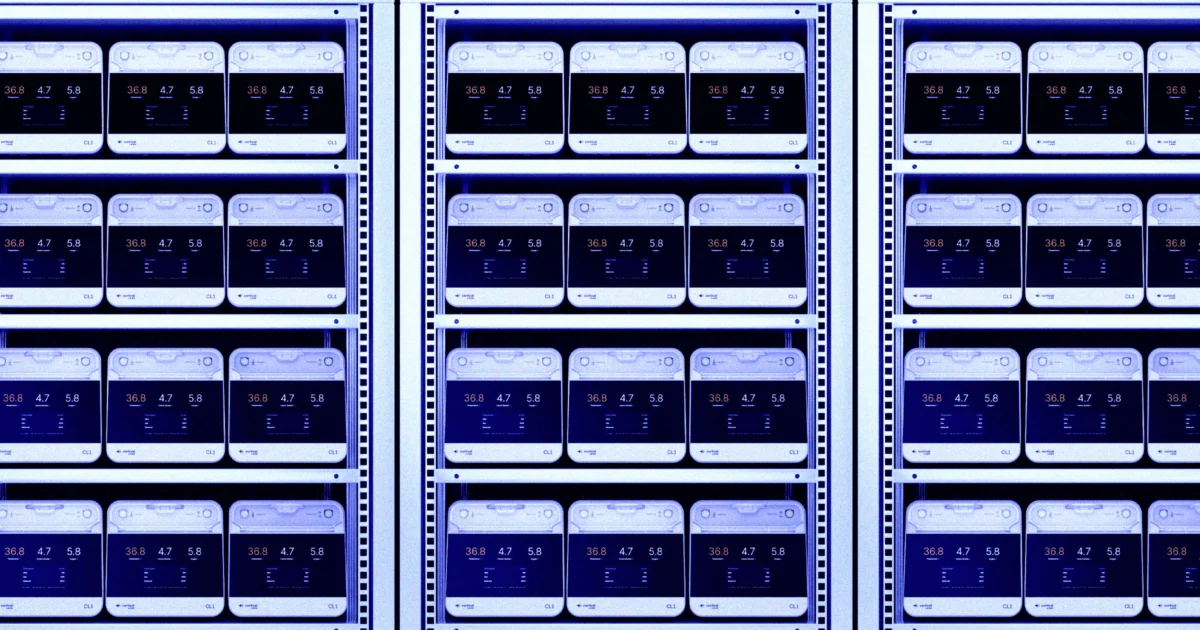

Cortical Labs
Sign up to see the future, today
Can’t-miss innovations from the bleeding edge of science and tech
Biological Brain-Powered Data Centers Set to Revolutionize AI, Starting in Melbourne and Singapore.
In a bold move that could redefine the landscape of artificial intelligence and computing, Australian biotech pioneer Cortical Labs is forging ahead with plans to establish “biological data centers” in Melbourne and Singapore. This audacious initiative marks a significant leap from their already groundbreaking work, which saw researchers demonstrate the world’s first code-deployable biological computer, the CL1, last year. Comprising an intricate network of 200,000 living human neurons, the CL1 has evolved from merely playing Pong in 2022 to mastering the complex, seminal video game Doom by February of this year – a testament to the rapid advancements in bio-computing capabilities. Now, Cortical Labs is ready to scale this fascinating technology, proposing an alternative to the power-hungry silicon chips that currently dominate the AI industry.
The core of Cortical Labs’ vision is “wetware,” a term coined to describe their unique blend of biology and computing, distinguishing it from traditional hardware and software. At its heart, the CL1 operates by sending electrical signals to neurons derived from human blood stem cells. These living cells, cultivated in vitro, respond to these signals, and embedded chips precisely record their reactions, translating biological activity into computational output. This bio-electronic interface represents a fundamental departure from conventional digital processing, aiming to harness the inherent parallelism and energy efficiency of biological neural networks. The implications are profound: a future where data centers might look less like vast warehouses of gleaming metal and more like sophisticated bioreactors.
Cortical Labs has partnered with DayOne Data Centers to bring these futuristic facilities to fruition. The initial phase will see a biological data center in Melbourne housing 120 CL1 units. However, the ambition doesn’t stop there; DayOne Data Centers is planning a far more extensive deployment in Singapore, with as many as 1,000 CL1 units. This scale-up necessitates not only the development of robust bio-computing units but also an entirely new infrastructure capable of sustaining living neural networks. Imagine specialized racks designed not just for cooling electronic components but for maintaining precise environmental conditions – temperature, pH, nutrient supply – essential for the survival and optimal function of brain cells. Waste removal and sterile conditions become paramount, transforming the traditional data center into a cutting-edge biological laboratory. This fusion of biotech and IT presents a novel set of engineering challenges, from ensuring long-term cellular viability and preventing contamination to developing robust interfaces for consistent data input and output from biological systems.
The driving force behind this paradigm shift is a compelling promise: vastly reduced power consumption. Cortical Labs claims that future biological data centers will consume merely “a fraction of the power used by conventional AI processors.” CEO Hon Weng Chong highlights this staggering efficiency, stating that each CL1 node requires less power than a handheld calculator to operate. This figure stands in stark contrast to the enormous energy demands of modern graphical processing units (GPUs), which are the workhorses of contemporary AI. A high-end GPU can consume hundreds of watts, and a data center housing thousands of these units can draw megawatts of power, equivalent to a small town. The biological approach, leveraging the brain’s own highly efficient processing mechanisms, could offer orders of magnitude greater energy efficiency, fundamentally altering the economic and environmental footprint of AI. This efficiency stems from the intrinsic way biological neurons process information through electrochemical signals and parallel distributed processing, a stark difference from the sequential, binary operations of silicon chips.
Despite the tantalizing promise, substantial questions and challenges remain. Most critically, the practical utility and computational prowess of these biological units are still under scrutiny. Cortical Labs has yet to definitively demonstrate that its “wetware” computers can remotely keep pace with the sheer computational power of the current generation of top-of-the-line data center chips for complex, general-purpose AI tasks. While playing Doom is an impressive feat of learning and adaptation, it doesn’t equate to the massive data crunching, intricate model training, or rapid inference required for large language models or advanced scientific simulations. The scalability of biological systems, their long-term stability, and the precision of their output remain key areas for further research and validation. Furthermore, ethical considerations surrounding the use of human brain cells, even in vitro, will undoubtedly become a more prominent discussion point as this technology matures and integrates into mainstream computing. Issues of consciousness, sentience, and the definition of life itself may need to be carefully navigated by researchers and policymakers.
Nevertheless, if Cortical Labs’ approach proves viable and scalable, it would offer an elegant and timely solution to the burgeoning environmental crisis precipitated by conventional AI data centers. The proliferation of AI has brought with it a host of ecological concerns: vast server farms generate copious amounts of noise, disrupting local communities; they consume staggering amounts of water for cooling, leading to concerns about resource depletion, as exemplified by the draining of resources like the Great Lakes; and their insatiable appetite for electricity can strain local grids and even raise electricity prices for residents. Elon Musk famously referred to one such AI facility as “Mordor,” highlighting its overwhelming environmental impact. The ability to perform complex computations with a fraction of the energy and water would not only make AI more sustainable but could also democratize access to high-performance computing by reducing operational costs. This shift could usher in an era where AI development is no longer confined to regions with abundant energy and water, opening doors for innovation globally.
Cortical Labs’ venture into biological data centers represents more than just a technological advancement; it signifies a potential paradigm shift in how we conceive of and build computational infrastructure. By drawing inspiration from the ultimate biological computer – the human brain – they are not merely optimizing existing technology but creating an entirely new category of computing. While the road ahead is undoubtedly fraught with scientific, engineering, and ethical hurdles, the vision of powerful, energy-efficient data centers humming with the quiet activity of living neurons offers a compelling glimpse into a future where computing is intrinsically linked to biology, offering a sustainable and profoundly innovative path forward for artificial intelligence and beyond.
More on Cortical Labs: Researchers Get Human Brain Cells Running Doom