Faris Adani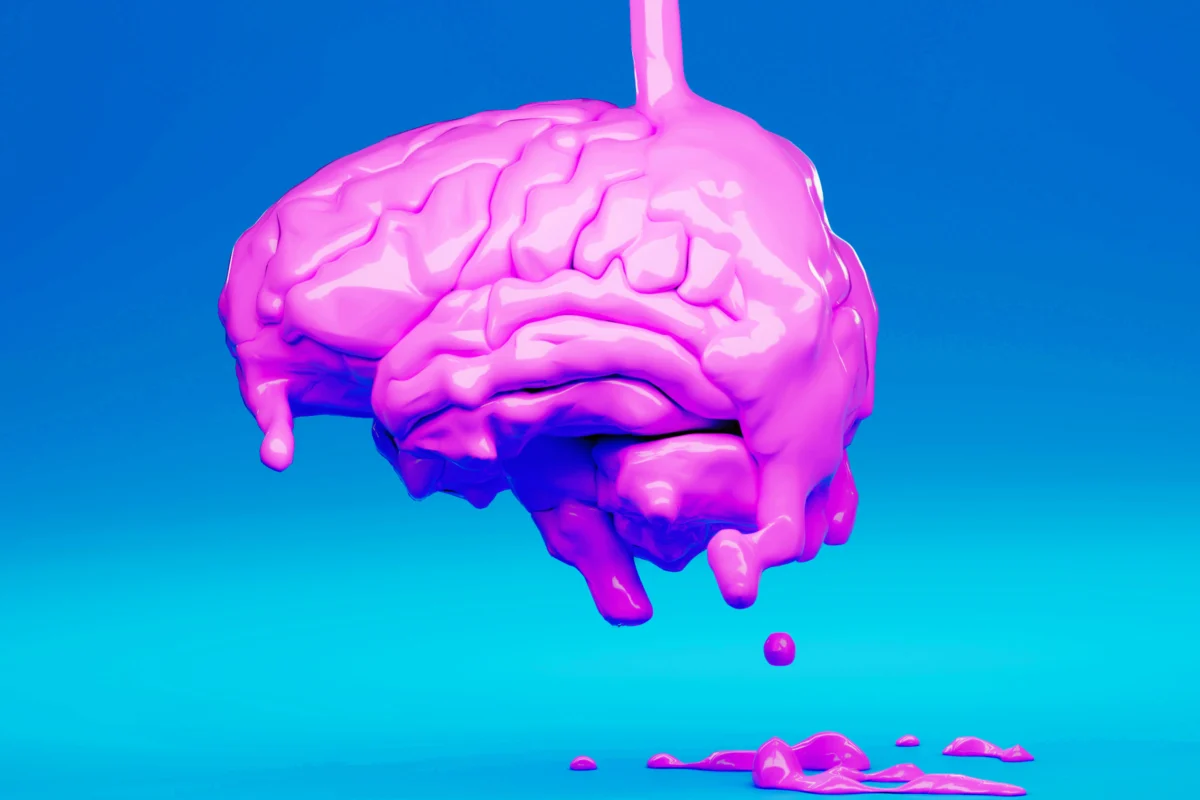
"We remove the fluid every 24 hours," Hong Weng Chong, the visionary CEO and founder of Cortical Labs, candidly disclosed to The Register, pulling back the curtain on an unprecedented venture. This daily ritual is not merely a maintenance task but a critical life-support function for the hundreds of thousands of living brain cells that comprise each of the Australian biotech startup’s groundbreaking "CL1" machines. These biological units, far from the sterile, inert components of conventional electronics, are living entities, consuming oxygen and glucose from their surrounding liquid medium, much like neurons within a human skull. Consequently, at the dawn of each day, a dedicated employee undertakes the meticulous process of topping up this vital "biological sludge" – a cerebrospinal fluid analog – ensuring the sustained viability and computational integrity of the neural networks.
The operational intricacies of Cortical Labs’ facilities often evoke images more aligned with a greenhouse or a sophisticated medical laboratory than a typical server farm. Chong elaborated on the precise environmental controls necessary to maintain these unique computers. Technicians diligently manage the gaseous mixture enveloping the CL1 units, introducing specific ratios of nitrogen and carbon dioxide to achieve an atmosphere composed of just five percent oxygen. This carefully calibrated hypoxic environment, a mere quarter of Earth’s natural atmospheric oxygen concentration, has been identified as the optimal condition for these computerized neurons to function efficiently and sustainably. Such rigorous environmental engineering highlights the delicate balance required when merging advanced computational goals with the inherent fragility and specific needs of living biological systems.
Cortical Labs first captured global attention in 2022, not with a data center, but with a scientific breakthrough that seemed straight out of a science fiction novel. Researchers affiliated with the company successfully demonstrated that neurons cultivated in a petri dish could be taught to play the classic, minimalist video game Pong. This early achievement, dubbed "DishBrain," was more than a mere novelty; it provided compelling proof of concept for the intrinsic learning capabilities of isolated neural networks, even outside a complete organism. It suggested that fundamental intelligence, in its most basic form, could be harnessed and directed towards problem-solving tasks, laying the groundwork for more complex biological computation.
The CL1, however, represents an exponential leap from those initial petri dish experiments. Heralded by Cortical Labs as the "world’s first code deployable biological computer," each unit houses upwards of 200,000 living neurons. This substantial increase in neural density and organizational complexity has allowed the company to achieve feats previously unimaginable. They recently showcased the CL1’s ability to play the iconic 1993 first-person shooter Doom. This demonstration is magnitudes more complex than Pong, demanding the biological computer to navigate and explore a dynamic 3D environment, process real-time visual information, control multiple intricate game mechanics (movement, shooting, inventory management), and effectively engage with adversarial entities. The successful execution of such a task hints at a burgeoning capacity for sophisticated spatial reasoning, strategic decision-making, and adaptive learning within these organic processors.
Beyond the compelling and often amusing demonstrations, Cortical Labs champions a profound advantage over traditional silicon-based computing: a dramatically smaller energy footprint. In an era where the energy demands of data centers and advanced AI models are skyrocketing, posing significant environmental and infrastructural challenges, biological computers offer a tantalizing alternative. To Bloomberg, Chong boldly asserted that each CL1 unit requires less power than a handheld calculator. This claim, if widely scalable and practically implementable, could revolutionize the computing landscape, offering a pathway to highly efficient, sustainable artificial intelligence. Furthermore, Chong ventured to predict that these biological machines will eventually surpass the speed of traditional computers, hinting at a fundamentally different, potentially superior, computational paradigm rooted in the parallel processing power of neural networks.
However, the practical capabilities and widespread viability of these biological machines remain subject to rigorous scrutiny. The Doom stunt, while undeniably impressive and a powerful proof of concept, is still a carefully orchestrated demonstration. The journey from such a stunt to robust, scalable, and commercially viable computing infrastructure is fraught with significant challenges. The setup process itself is notably intricate and time-consuming. The Register reported that it takes Cortical Labs approximately a week to prepare its CL1 machines for each specific job. This extensive lead time is necessitated by the need to cultivate and integrate specific types of cells tailored to a customer’s particular computational requirements, along with the corresponding meticulous configuration of a physical environment optimized for those neurons. Such bespoke engineering, while showcasing the flexibility of biological systems, presents a stark contrast to the plug-and-play simplicity of conventional computing.
Despite these experimental nuances and operational complexities, Cortical Labs is aggressively pursuing expansion and commercialization. The company is actively "working on scaling up operations," forging strategic partnerships to construct new data center facilities in key global locations: Melbourne, Australia, and Singapore. The Singapore facility, in particular, is envisioned as a substantial hub, designed to accommodate an impressive array of up to 1,000 CL1 units. This ambitious expansion signifies a clear intent to transition from laboratory curiosity to a foundational technology. Moreover, Cortical Labs has already taken the bold step of launching a cloud computing service. As reported by The Register, this service operates on a foundational stack of 120 CL1 units, offering customers API access through which they can deploy and execute their code. This move democratizes access to biological computing, allowing researchers, developers, and businesses to experiment with this novel paradigm without the immense investment in building their own bio-hardware.
The advent of biological computing, particularly with Cortical Labs’ advancements, opens a Pandora’s box of scientific, engineering, and philosophical considerations. The daily replenishment of cerebrospinal fluid, while a necessity, is a stark reminder of the delicate line between machine and organism. It forces a re-evaluation of definitions – what exactly is a computer when its core processing units require feeding and specific atmospheric conditions to survive? The implications extend beyond mere engineering; they touch upon ethics, the nature of consciousness (though these neurons are not considered conscious, the potential for future complexity raises questions), and the very essence of intelligence.
The potential applications of such technology are vast, from ultra-efficient AI for complex problem-solving in areas like drug discovery and materials science, to novel forms of neuromorphic computing that could mimic human brain functions more closely than any silicon chip. The energy efficiency alone could fundamentally alter the sustainability profile of the digital world. Imagine data centers that consume negligible power compared to today’s behemoths, reducing carbon footprints and operational costs dramatically. However, the path to fully realizing these potentials is long and arduous. Research will need to address the challenges of stability, long-term viability, and the development of more automated and less intrusive maintenance protocols.
As the scientific community watches Cortical Labs’ progress, the fundamental questions remain: Can the "biological sludge" be made self-sustaining or require less frequent intervention? How will the custom cell cultivation scale to meet industrial demand? And what are the broader societal implications of computers that blur the lines between life and machine? While the jury is still out on how capable or practical these machines will ultimately become, Cortical Labs’ daring venture into human neuron-powered data centers marks a pivotal moment. It is a bold, perhaps even audacious, step into a future where the bleeding edge of science and technology is literally alive, reshaping our understanding of computation and intelligence. This journey, from petri dish Pong to Doom-playing data centers, is not just about building faster or more efficient computers; it’s about fundamentally redefining what computing can be, driven by the most complex biological processor known: the human brain.