Imroatul Nasiyah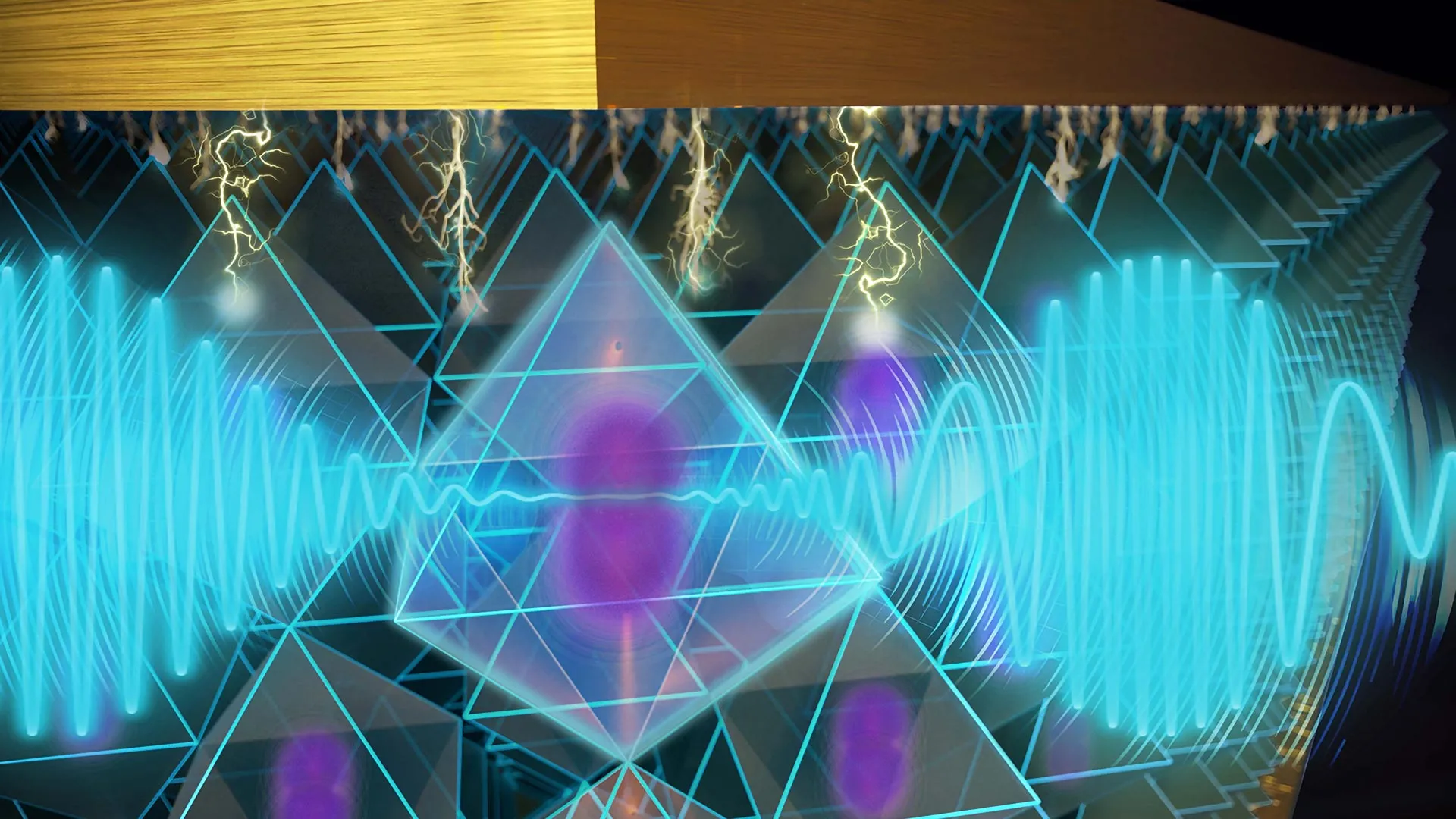
The recognition of superconductivity and quantum computing as burgeoning fields of real-world innovation, underscored by the 2025 Nobel Prize in Physics awarded for breakthroughs in superconducting quantum circuits, highlights the intense global pursuit of ultra-powerful computing capabilities. However, a significant hurdle has consistently been the requirement for these advanced technologies to function at cryogenic temperatures, often approaching absolute zero. At these extreme conditions, the defining properties of most materials diminish, making their practical application a formidable scientific challenge. The Stanford team’s work with strontium titanate directly confronts this limitation, offering a material solution that thrives, rather than falters, in the cold.
Jelena Vuckovic, the senior author of the study and a professor of electrical engineering at Stanford, elaborated on the significance of STO’s properties. She stated, "Strontium titanate has electro-optic effects 40 times stronger than the most-used electro-optic material today. But it also works at cryogenic temperatures, which is beneficial for building quantum transducers and switches that are current bottlenecks in quantum technologies." This substantial enhancement in electro-optic effects, coupled with its cryogenic resilience, positions STO as a game-changer for quantum technology development. Quantum transducers are crucial for converting quantum information into a form that can be manipulated and measured, while quantum switches are essential for directing and controlling quantum bits (qubits), the fundamental units of quantum information. The current limitations in the performance and operating temperature of these components have been a major impediment to scaling up quantum computers. STO’s superior performance at low temperatures directly addresses these limitations, offering a pathway to more efficient and robust quantum systems.
The "non-linear" optical behavior of STO is a key characteristic that scientists are leveraging. This means that when an electric field is applied to the material, its optical and mechanical properties undergo significant and predictable shifts. This electro-optic effect allows for an unprecedented level of control over light, enabling adjustments to its frequency, intensity, phase, and direction in ways that are not possible with other materials. This inherent versatility opens up possibilities for designing entirely new types of low-temperature devices that can manipulate light with exceptional precision. Such capabilities are vital for applications ranging from advanced optical communication systems to highly sensitive scientific instruments operating in extreme environments.
Furthermore, STO’s piezoelectric nature, its ability to physically expand and contract in response to electric fields, makes it an ideal candidate for developing novel electromechanical components that maintain high efficiency even in extremely cold conditions. The researchers suggest that these capabilities could be particularly valuable for applications in the vacuum of space, where temperature fluctuations can be extreme, or in the cryogenic fuel systems of rockets, which require robust and reliable components that can withstand intense cold. Christopher Anderson, a co-first author of the study and now a faculty member at the University of Illinois, Urbana-Champaign, emphasized this dual advantage: "At low temperature, not only is strontium titanate the most electrically tunable optical material we know of, but it’s also the most piezoelectrically tunable material." This combined tunability offers a powerful toolkit for engineers designing next-generation devices.
Perhaps one of the most surprising aspects of this discovery is that strontium titanate is not a novel material. It has been studied for decades and is both inexpensive and abundant. "STO is not particularly special. It’s not rare. It’s not expensive," commented co-first author Giovanni Scuri, a postdoctoral scholar in Vuckovic’s lab. He further explained its common, albeit less glamorous, applications: "In fact, it has often been used as a diamond substitute in jewelry or as a substrate for growing other, more valuable materials. Despite being a ‘textbook’ material, it performs exceptionally well in a cryogenic context." This accessibility and affordability make the widespread adoption of STO in advanced technologies much more feasible. The researchers’ approach was guided by a deep understanding of the fundamental principles governing material tunability. "We knew what ingredients we needed to make a highly tunable material. We found those ingredients already existed in nature, and we simply used them in a new recipe. STO was the obvious choice," Anderson recalled. "When we tried it, surprisingly, it matched our expectations perfectly." Scuri added that the theoretical framework developed by the team could potentially be used to identify or enhance other nonlinear materials for a variety of operating conditions, suggesting that this discovery is part of a larger paradigm shift in material science.
The performance of STO at cryogenic temperatures reached astonishing levels, with tests conducted at 5 Kelvin (-450°F) revealing its exceptional capabilities. The material’s nonlinear optical response was found to be 20 times greater than that of lithium niobate, the current industry standard for nonlinear optical materials. Moreover, it nearly tripled the performance of barium titanate, which was previously considered the benchmark for cryogenic applications. This dramatic improvement highlights the transformative potential of STO.
In a further refinement to push STO’s properties even higher, the research team employed an innovative technique: replacing certain oxygen atoms within the crystal lattice with heavier isotopes. This subtle modification nudged STO closer to a state known as "quantum criticality," a region where materials exhibit highly unusual and sensitive quantum behaviors. The result was an even greater enhancement in tunability. "By adding just two neutrons to exactly 33 percent of the oxygen atoms in the material, the resulting tunability increased by a factor of four," Anderson revealed. "We precisely tuned our recipe to get the best possible performance." This level of precision engineering at the atomic scale demonstrates a sophisticated understanding of the material and its quantum mechanical properties.
Beyond its remarkable performance, STO offers practical advantages that are highly appealing to engineers. It can be synthesized, structurally modified, and fabricated at wafer scale using existing semiconductor manufacturing equipment. This compatibility with current industry infrastructure significantly reduces the barrier to entry for integrating STO into next-generation quantum devices. Such devices could include sophisticated laser-based switches that are critical for controlling and transmitting quantum information with unparalleled speed and accuracy.
The significance of this research is underscored by the fact that it received partial funding from major technology players actively involved in the quantum computing race, including Samsung Electronics and Google’s quantum computing division. Both companies are keenly interested in identifying and developing advanced materials to propel their quantum hardware initiatives. The Stanford team’s immediate next step is to translate these findings into fully functional cryogenic devices that leverage STO’s unique properties.
"We found this material on the shelf. We used it and it was amazing. We understood why it was good. Then the cherry on the top — we knew how to do better, added that special sauce, and we made the world’s best material for these applications," Anderson summarized, encapsulating the excitement and success of their endeavor. "It’s a great story." The research was further supported by prestigious grants, including a Vannevar Bush Faculty Fellowship from the U.S. Department of Defense and the Department of Energy’s Q-NEXT program, indicating broad governmental and institutional recognition of its potential impact. Collaborators on the study included researchers from the University of Michigan, Stanford’s E. L. Ginzton Laboratory, and the Stanford Nano Shared Facilities, highlighting a multidisciplinary effort that brought together expertise in materials science, electrical engineering, and quantum physics. The discovery of strontium titanate’s extraordinary cryogenic capabilities marks a pivotal moment, promising to accelerate progress in some of the most ambitious scientific and technological frontiers of our time.