Imroatul Nasiyah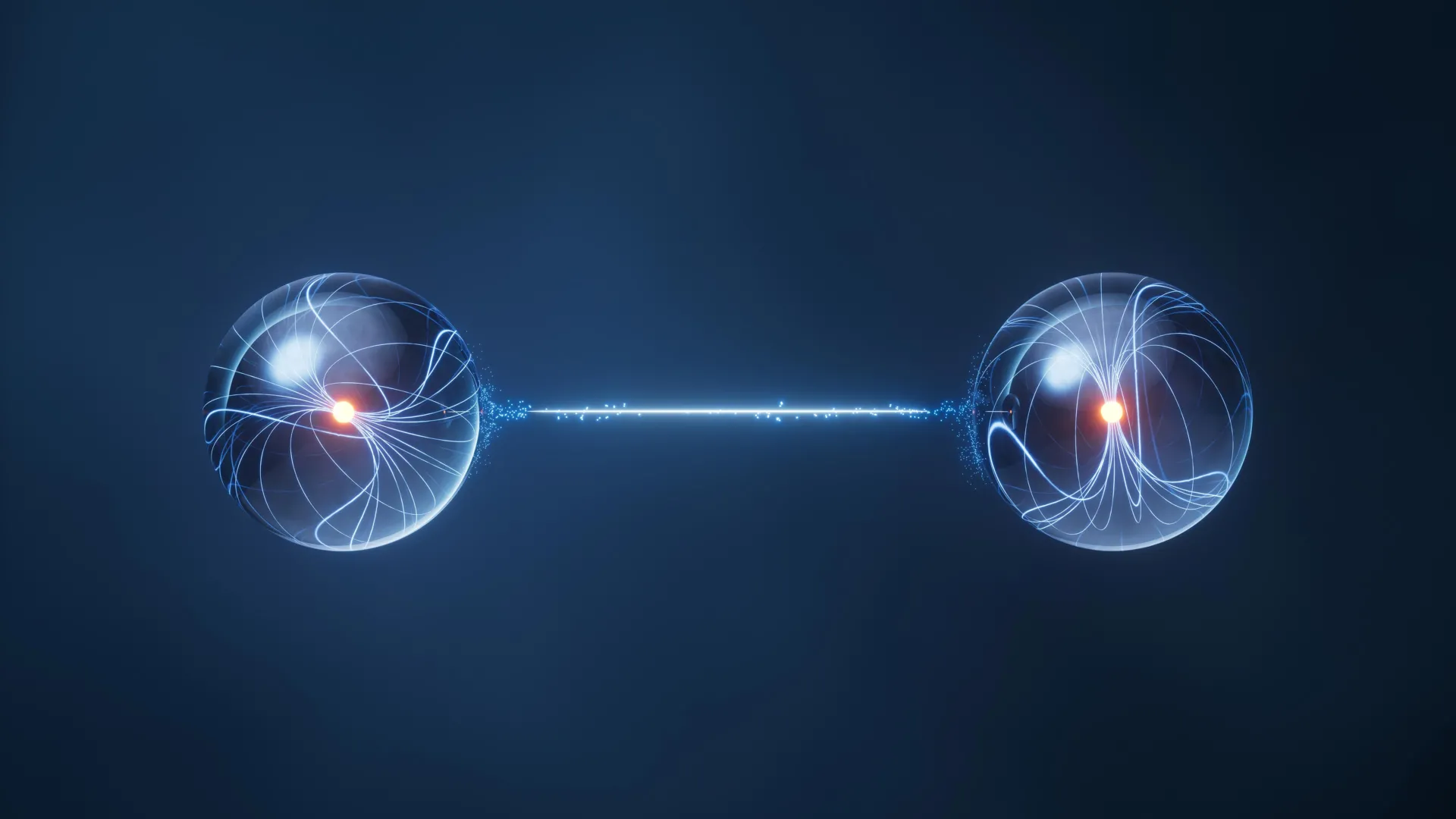
However, a groundbreaking study, published on November 6 in the prestigious journal Nature Communications, offers a revolutionary solution. Led by Assistant Professor Tian Zhong of the University of Chicago’s Pritzker School of Molecular Engineering (UChicago PME), the research team has demonstrated a theoretical leap that could extend the reach of quantum connections by an astonishing factor of 200, potentially spanning up to 2,000 kilometers (approximately 1,243 miles). This extraordinary advancement means that a quantum computer in Chicago, which previously struggled to reach a landmark building within the city, could theoretically establish a quantum link with a device as far away as Salt Lake City, Utah.
Professor Zhong, who has recently been honored with the esteemed Sturge Prize for his pivotal contributions to this field, expressed his profound optimism: "For the first time, the technology for building a global-scale quantum internet is within reach." This statement underscores the transformative potential of his team’s work, moving the concept of a quantum internet from the realm of science fiction to tangible engineering possibility.
The Crucial Role of Quantum Coherence
At the heart of creating high-performance quantum networks lies the delicate process of quantum entanglement. Entanglement, a phenomenon where two or more quantum particles become inextricably linked, regardless of the distance separating them, is the bedrock of quantum communication. For quantum computers to communicate, their entangled states must be maintained as signals traverse through fiber optic cables. The duration for which these entangled states remain coherent, a property known as quantum coherence, directly dictates how far apart the connected quantum computers can be. A longer coherence time translates to a greater potential communication range.
In their pivotal new study, Professor Zhong’s team achieved a remarkable breakthrough in extending this crucial coherence time. They successfully amplified the coherence time of individual erbium atoms, the key components for quantum entanglement in their system, from a mere 0.1 milliseconds to an impressive duration exceeding 10 milliseconds. In one particularly successful experiment, they even recorded a coherence time of 24 milliseconds. Under optimal theoretical conditions, this substantial improvement in coherence time could enable quantum communication between computers separated by an astounding distance of roughly 4,000 kilometers. This distance is comparable to the geographical span between the University of Chicago PME and the city of Ocaña in Colombia, highlighting the truly global implications of this research.
Innovating with Familiar Materials: A New Construction Paradigm
The ingenuity of Professor Zhong’s team lies not in the discovery of exotic new materials, but in a radical reimagining of how existing, well-understood materials are constructed. The rare-earth doped crystals essential for quantum entanglement are typically produced using the Czochralski method, a process that involves melting a mixture of ingredients at extremely high temperatures (exceeding 2,000 degrees Celsius) and then slowly cooling them to form a crystal. While effective, this method often results in material imperfections. Following this melting and cooling, researchers must then painstakingly carve the resulting crystal into the desired component using chemical processes, a method Professor Zhong likens to a sculptor meticulously chipping away at marble.
In stark contrast, the UChicago PME team adopted a method called molecular-beam epitaxy (MBE). This technique, more akin to atomic-scale 3D printing, constructs the crystal layer by atomic layer, precisely assembling the desired structure. "We start with nothing and then assemble this device atom by atom," explained Professor Zhong. This meticulous, bottom-up approach yields a material of exceptional purity and quality. "The quality or purity of this material is so high that the quantum coherence properties of these atoms become superb," he added.
While MBE has been a valuable tool in other areas of materials science, its application to rare-earth doped materials for quantum applications was unprecedented. To adapt this sophisticated technique, Professor Zhong collaborated with Shuolong Yang, an Assistant Professor and specialist in materials synthesis at UChicago PME. Together, they successfully tailored MBE to meet the stringent requirements of their quantum entanglement research.
The significance of this innovative approach has been recognized by external experts. Dr. Hugues de Riedmatten, a Professor at the Institute of Photonic Sciences and not involved in the study, lauded the research as a "major step forward." He commented, "The approach demonstrated in this paper is highly innovative. It shows that a bottom-up, well-controlled nanofabrication approach can lead to the realization of single rare-earth ion qubits with excellent optical and spin coherence properties, leading to a long-lived spin photon interface with emission at telecom wavelength, all in a fiber-compatible device architecture. This is a significant advance that offers an interesting scalable avenue for the production of many networkable qubits in a controlled fashion." His endorsement underscores the technical prowess and potential scalability of the MBE-driven fabrication method.
Paving the Way for Real-World Quantum Networks
With these promising theoretical and experimental results in hand, the next critical phase of the project involves transitioning from laboratory demonstrations to real-world testing. The team is eager to validate whether the dramatically improved coherence times can indeed sustain long-distance quantum communication beyond the confines of theoretical models.
"Before we actually deploy fiber from, let’s say, Chicago to New York, we’re going to test it just within my lab," Professor Zhong stated, outlining their cautious yet ambitious roadmap. To achieve this, the team plans to establish a simulated long-distance quantum link by connecting two qubits housed in separate, state-of-the-art dilution refrigerators within Zhong’s laboratory. This setup will utilize a substantial 1,000 kilometers of coiled fiber optic cable, effectively replicating the challenges of long-haul quantum communication. This controlled experiment will serve as a crucial verification step, allowing them to meticulously assess the system’s performance and behavior before scaling up to actual intercity or even international deployments.
"We’re now building the third fridge in my lab. When it’s all together, that will form a local network, and we will first do experiments locally in my lab to simulate what a future long-distance network will look like," Professor Zhong revealed. This phased approach, building a local quantum network to mirror future large-scale architectures, is a testament to the team’s commitment to rigorous scientific validation. "This is all part of the grand goal of creating a true quantum internet, and we’re achieving one more milestone towards that," he concluded, reiterating the profound significance of their ongoing research in the pursuit of a connected quantum future. The ability to transmit quantum information over vast distances is not just an incremental improvement; it is a fundamental enabler for a distributed quantum computing infrastructure, secure global communication, and a host of revolutionary scientific and technological applications yet to be imagined.