Imroatul Nasiyah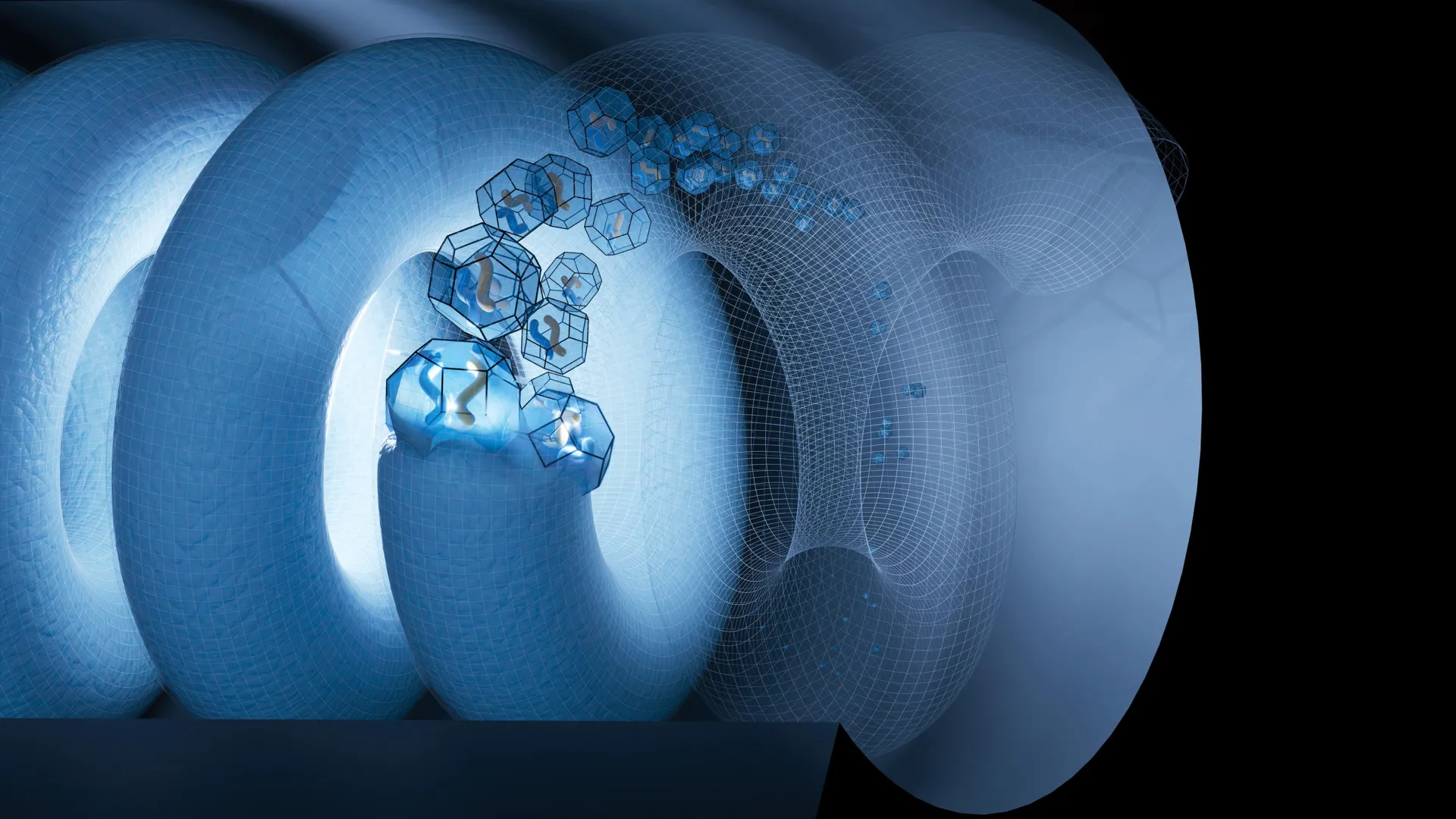
Spintronics, a field that has long held the promise of a technological leap, has been historically constrained by the challenge of reliably manipulating electron spin direction. Achieving this control, particularly at room temperature and without the need for complex cryogenic cooling or intricate magnetic circuitry, has been a central hurdle. However, the research published in the prestigious journal Science details a novel approach utilizing chiral magnetic materials to overcome this obstacle. The developed nanohelices exhibit an impressive spin polarization exceeding approximately 80%, a remarkable feat achieved solely through their unique geometry and inherent magnetic properties. This synergistic combination of structural chirality and intrinsic ferromagnetism represents a rare and powerful achievement, offering a new paradigm for engineering electron behavior through structural design rather than solely relying on external magnetic fields or electrical currents.
The research team’s ingenious fabrication process involved electrochemically controlling the metal crystallization process to produce both left- and right-handed chiral magnetic nanohelices. The key to this precise control lay in the introduction of trace amounts of chiral organic molecules, such as cinchonine or cinchonidine. These molecules acted as molecular architects, guiding the formation of helices with a specific and predetermined handedness – a level of control that has proven exceptionally elusive in the realm of inorganic material synthesis. The researchers then experimentally validated the spin-filtering capabilities of these nanohelices. They demonstrated that when a nanohelix exhibits a right-handed twist, it preferentially allows electrons with one spin direction to pass through, while effectively blocking electrons with the opposite spin. This discovery marks a significant milestone: the creation of a three-dimensional inorganic helical nanostructure capable of actively controlling electron spin.
Professor Ki Tae Nam eloquently highlighted the significance of this achievement, drawing a parallel to the well-established role of chirality in organic molecules. "Chirality is well-understood in organic molecules, where the handedness of a structure often determines its biological or chemical function," he explained. "But in metals and inorganic materials, controlling chirality during synthesis is extremely difficult, especially at the nanoscale." He further emphasized the breakthrough nature of their work: "The fact that we could program the direction of inorganic helices simply by adding chiral molecules is a breakthrough in materials chemistry." This ability to imbue inorganic materials with controllable nanoscale chirality opens up entirely new avenues for designing functional materials with tailored properties.
To rigorously confirm the chirality of the fabricated nanohelices, the researchers developed an innovative electromotive force (emf)-based evaluation method. This technique allowed them to measure the emf generated by the helices when subjected to rotating magnetic fields. The crucial finding was that left-handed and right-handed helices produced distinct, opposite emf signals. This quantitative verification of chirality is particularly valuable as it is effective even in materials that do not exhibit strong interactions with light, a common method for chirality detection. This emf-based approach provides a robust and versatile tool for characterizing chiral nanostructures.
Beyond their ability to filter spin, the research team also uncovered a remarkable property of the magnetic material itself: its inherent magnetization enables long-distance spin transport at room temperature. This phenomenon, sustained by strong exchange energy within the material, remained consistent regardless of the angle between the chiral axis and the direction of spin injection. This was a stark contrast to non-magnetic nanohelices of comparable scale, which did not exhibit this long-range spin transport. This groundbreaking observation represents the first instance of measuring asymmetric spin transport in a relatively macro-scaled chiral body. Further solidifying the practical potential of their discovery, the team successfully demonstrated a solid-state device that exhibited chirality-dependent conduction signals. This proof-of-concept device serves as a crucial stepping stone towards the realization of practical spintronic applications.
Professor Kim expressed his optimism regarding the future impact of this research, stating, "We believe this system could become a platform for chiral spintronics and architecture of chiral magnetic nanostructures." The presented work represents a powerful synergy between fundamental principles of geometry, magnetism, and spin transport, all built upon the foundation of scalable and readily available inorganic materials. The versatility of the electrochemical fabrication method, allowing for precise control over handedness (left/right) and even the number of strands in the helical structures (e.g., double or multiple helices), is expected to be a significant contributor to the development of novel applications across various technological domains. This breakthrough is not merely an incremental advancement but a fundamental shift in how we can design and control matter at the nanoscale, paving the way for a future where information processing is fundamentally more efficient, powerful, and integrated into the fabric of our daily lives. The implications extend beyond computing, potentially influencing fields like quantum computing, advanced sensing, and even novel forms of magnetic data storage that are orders of magnitude denser and faster than current technologies. The "tiny magnetic spirals" are, indeed, unlocking a universe of possibilities for the future of electronics.