Imroatul Nasiyah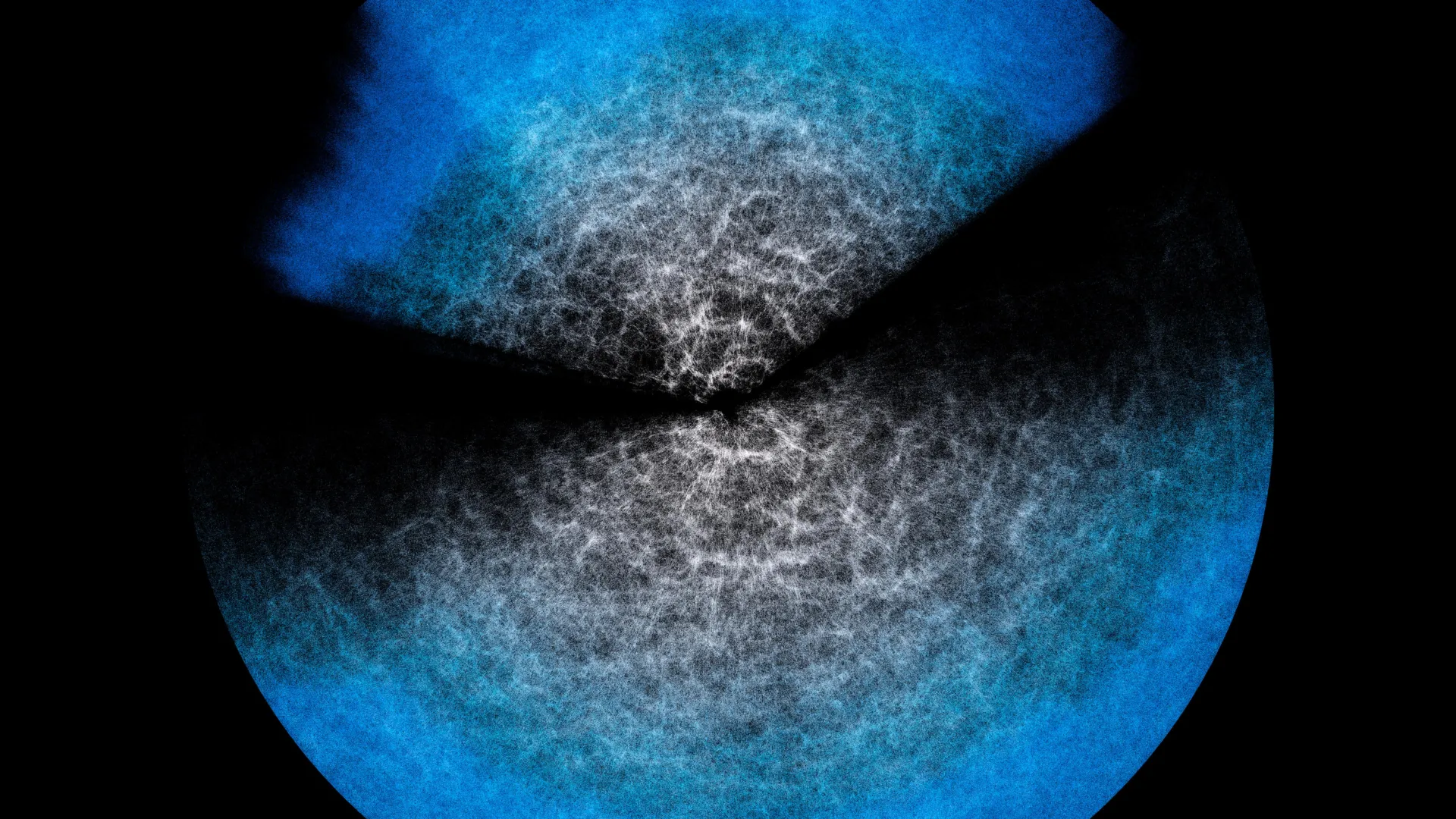
The universe, in its unfathomable immensity, presents a cosmic tapestry woven from galaxies, clusters, superclusters, filaments, and voids, forming an intricate, colossal 3D skeleton. Comprehending this vastness is a monumental challenge for scientists, who meticulously combine astrophysical laws with observational data from sophisticated instruments to construct theoretical models. One such powerful framework is the Effective Field Theory of Large-Scale Structure (EFTofLSS), which statistically characterizes the "cosmic web" and enables the estimation of its fundamental parameters. However, the computational demands of models like EFTofLSS are substantial, requiring significant time and processing power, especially as astronomical datasets grow at an exponential rate. This burgeoning data volume necessitates the development of methods to streamline analysis without compromising accuracy, leading to the creation of "emulators."
Emulators act as sophisticated digital proxies, mimicking the behavior of complex physical models with remarkable speed. They offer a computational shortcut, allowing researchers to explore a vast parameter space and generate predictions much faster than traditional simulation methods. The critical question that arises with such shortcuts is the potential trade-off in accuracy. Addressing this concern, an international collaboration, including researchers from INAF (Italy), the University of Parma (Italy), and the University of Waterloo (Canada), has published a groundbreaking study in the prestigious Journal of Cosmology and Astroparticle Physics (JCAP). Their research focuses on validating Effort.jl, a novel emulator they designed, demonstrating its ability to deliver results with essentially the same correctness as the underlying physical model, and in some instances, even revealing finer details. Crucially, Effort.jl achieves this feat while operating in mere minutes on a standard laptop, a stark contrast to the hours or days previously required on powerful supercomputers.
Marco Bonici, a researcher at the University of Waterloo and the lead author of the study, draws an insightful analogy to explain the concept behind effective field theories like EFTofLSS. "Imagine wanting to study the contents of a glass of water at the level of its microscopic components, the individual atoms, or even smaller: in theory you can. But if we wanted to describe in detail what happens when the water moves, the explosive growth of the required calculations makes it practically impossible," Bonici explains. "However, you can encode certain properties at the microscopic level and see their effect at the macroscopic level, namely the movement of the fluid in the glass. This is what an effective field theory does, that is, a model like EFTofLSS, where the water in my example is the Universe on very large scales and the microscopic components are small-scale physical processes." In essence, EFTofLSS abstracts away the overwhelming complexity of small-scale physics to focus on the emergent properties and statistical behavior of the universe at large scales.
The theoretical model, such as EFTofLSS, serves as a statistical interpreter of the cosmic structure that gives rise to the observed data. Astronomical observations are fed into the code, which then generates predictions about the universe’s large-scale structure. This process, however, is computationally intensive and time-consuming. With the current deluge of astronomical data, and the anticipation of even more from ongoing and upcoming surveys like DESI (which has already begun releasing data) and Euclid, performing exhaustive simulations for every analysis becomes impractical. The sheer volume of information necessitates more efficient analytical tools.
"This is why we now turn to emulators like ours, which can drastically cut time and resources," Bonici elaborates. The core of an emulator, such as Effort.jl, is a neural network. This network is meticulously trained on a vast dataset of pre-computed outputs from the original, computationally expensive model. Through this training, the neural network learns to associate specific input parameters with the corresponding model predictions. Once trained, the emulator can generalize its knowledge to predict the model’s response for novel combinations of parameters that it may not have explicitly encountered during training. It’s important to understand that the emulator doesn’t possess an intrinsic "understanding" of the underlying physics; rather, it has become exceptionally adept at predicting the behavior of the theoretical model.
The innovation behind Effort.jl lies in its sophisticated approach to reducing the training phase. Instead of relying solely on brute-force learning, the algorithm is imbued with pre-existing knowledge about how the model’s predictions change in response to alterations in its parameters. This allows the neural network to learn more efficiently, as it doesn’t have to "re-learn" these fundamental relationships. Furthermore, Effort.jl leverages the power of gradients. Gradients quantify "how much and in which direction" the model’s predictions shift when a parameter is subtly adjusted. By incorporating this gradient information from the outset, the emulator can learn from a significantly smaller number of examples, drastically reducing computational requirements and enabling its operation on less powerful hardware.
The utility and reliability of any emulator are contingent upon rigorous validation. If an emulator bypasses the direct physical computations, how can we be certain that its accelerated predictions are accurate and truly reflect the outcomes of the original model? The newly published study directly addresses this crucial question. It presents compelling evidence that Effort.jl exhibits remarkable accuracy, with its predictions closely aligning with those of the EFTofLSS model when tested against both simulated and real astronomical data. "And in some cases, where with the model you have to trim part of the analysis to speed things up, with Effort.jl we were able to include those missing pieces as well," Bonici adds, highlighting a significant advantage. This suggests that Effort.jl not only matches the accuracy of the full model but can, in certain scenarios, even offer a more complete analysis by accommodating aspects that would otherwise be computationally prohibitive.
Effort.jl therefore emerges as a powerful and invaluable tool for the scientific community, poised to play a pivotal role in the analysis of the immense datasets that will be generated by upcoming experiments like DESI and Euclid. These ambitious projects promise to significantly expand our understanding of the universe’s large-scale structure, and emulators like Effort.jl will be instrumental in unlocking the secrets held within their vast observational archives. The ability to perform complex cosmic simulations on accessible hardware democratizes access to cutting-edge research and accelerates the pace of discovery in cosmology.
The comprehensive findings of this pivotal research are detailed in the paper titled "Effort.jl: a fast and differentiable emulator for the Effective Field Theory of the Large Scale Structure of the Universe," authored by Marco Bonici, Guido D’Amico, Julien Bel, and Carmelita Carbone, and published in the esteemed Journal of Cosmology and Astroparticle Physics (JCAP). This publication marks a significant milestone in the ongoing quest to unravel the mysteries of our cosmos.