Imroatul Nasiyah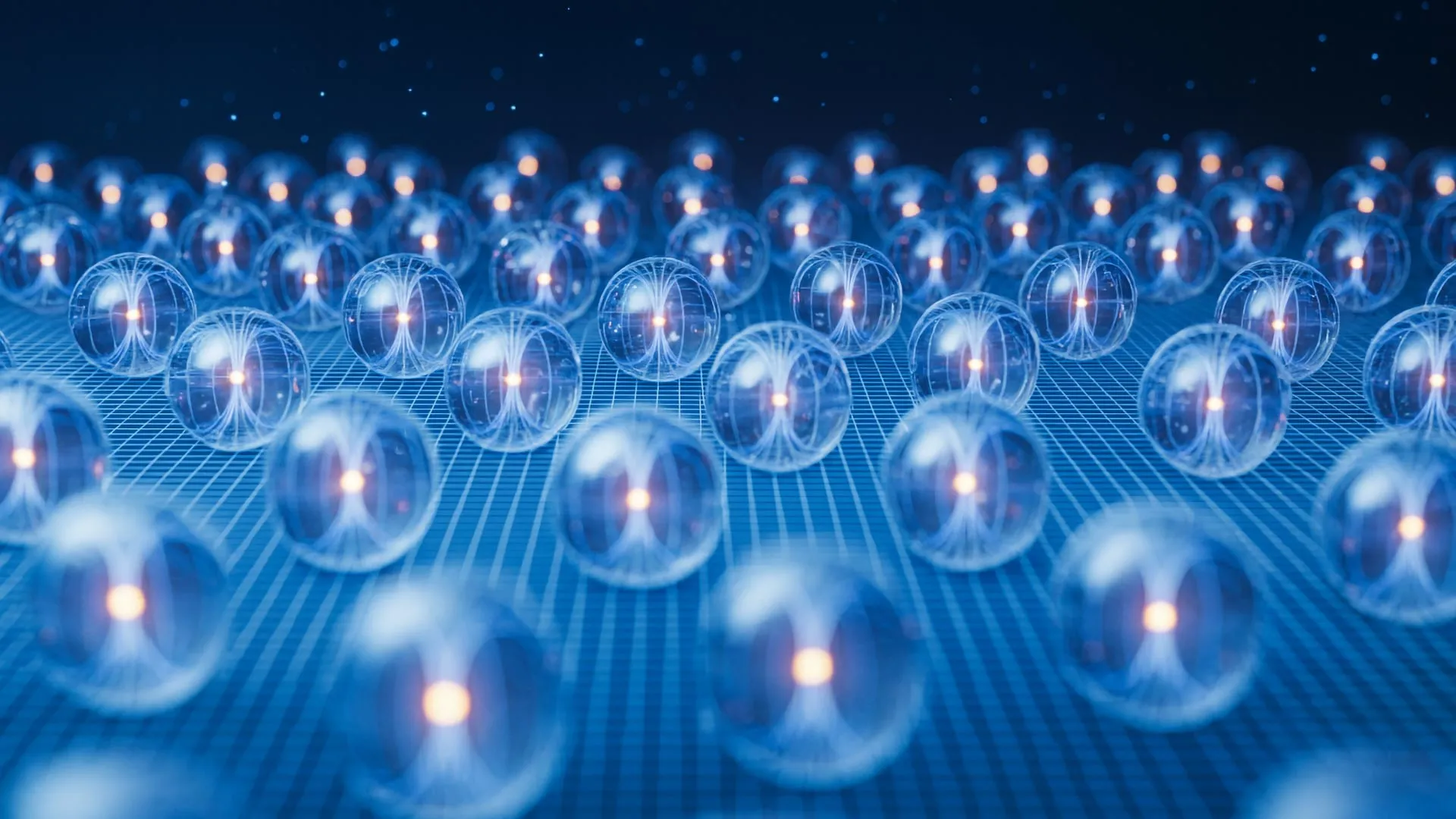
The fundamental challenge in building powerful quantum computers lies in the sheer number of qubits required. Unlike the binary bits of classical computers, which represent either a 0 or a 1, quantum bits, or qubits, can exist in a superposition of both states simultaneously. This quantum phenomenon, coupled with entanglement, grants quantum computers the extraordinary ability to explore vast computational spaces and tackle problems currently intractable for even the most powerful supercomputers, particularly in fields like materials science, drug discovery, fundamental physics, and artificial intelligence. However, the inherent fragility of qubits, susceptible to environmental noise and decoherence, necessitates a robust error correction strategy. To achieve this, researchers are developing architectures that incorporate a significant number of redundant physical qubits to detect and correct errors, envisioning future quantum computers with hundreds of thousands, if not millions, of qubits.
The Caltech team’s innovative approach utilizes neutral atoms, specifically cesium atoms, meticulously trapped and arranged by precisely focused laser beams, acting as optical tweezers. This technique allows for the creation of large, ordered arrays of qubits within a vacuum chamber. Previous neutral-atom qubit arrays, while impressive in their own right, were limited to hundreds of qubits. The Caltech breakthrough shatters this previous ceiling, demonstrating the feasibility of scaling up to over 6,000 qubits within a single, unified system.
"This is an exciting moment for neutral-atom quantum computing," stated Professor Manuel Endres, a leading figure in the research and a professor of physics at Caltech. "We can now see a pathway to large error-corrected quantum computers. The building blocks are in place." Endres, the principal investigator of the study, highlighted the collaborative effort, with three Caltech graduate students – Hannah Manetsch, Gyohei Nomura, and Elie Bataille – spearheading the experimental work.
The creation of this massive array involved splitting a single laser beam into an astonishing 12,000 optical tweezers, which collectively held 6,100 individual cesium atoms in a highly ordered grid. The visual representation of this quantum hardware is striking; as Manetsch described, "On the screen, we can actually see each qubit as a pinpoint of light. It’s a striking image of quantum hardware at a large scale." This ability to visualize and manipulate individual qubits at such a scale is a testament to the precision and control achieved by the research team.
A crucial aspect of this achievement is not just the scale, but the quality of the qubits maintained. Despite the unprecedented number of atoms in the array, the Caltech team successfully preserved their superposition state for approximately 13 seconds, a remarkable tenfold improvement over previous similar neutral-atom systems. Furthermore, they demonstrated the ability to manipulate individual qubits with an astonishing accuracy of 99.98 percent. "Large scale, with more atoms, is often thought to come at the expense of accuracy, but our results show that we can do both," explained Nomura. "Qubits aren’t useful without quality. Now we have quantity and quality." This dual achievement of high qubit numbers and high fidelity is critical for building practical quantum computers.
Adding to the significance of their work, the researchers demonstrated the dynamic control of their qubit array. They were able to move individual atoms across the array by hundreds of micrometers while crucially maintaining their delicate superposition states. This "shuttling" capability is a key advantage of neutral-atom quantum computers. Unlike superconducting qubit architectures, where qubits are fixed in place and connected by wires, neutral atoms can be dynamically rearranged. This flexibility allows for more efficient implementation of quantum error correction schemes, a vital component for robust quantum computation.
Manetsch eloquently illustrated the complexity of this dynamic control, comparing the task of moving atoms while preserving superposition to the delicate act of balancing a glass of water while running. "Trying to hold an atom while moving is like trying to not let the glass of water tip over," she said. "Trying to also keep the atom in a state of superposition is like being careful to not run so fast that water splashes over." This analogy underscores the intricate balance of forces and quantum states that the researchers must manage.
The next major hurdle for the field is the practical implementation of quantum error correction on a scale of thousands of physical qubits. The Caltech team’s success with their massive, high-quality array positions neutral atoms as a leading contender for achieving this critical milestone. "Quantum computers will have to encode information in a way that’s tolerant to errors, so we can actually do calculations of value," Bataille emphasized. "Unlike in classical computers, qubits can’t simply be copied due to the so-called no-cloning theorem, so error correction has to rely on more subtle strategies." This highlights the unique challenges and ingenious solutions required for quantum error correction.
Looking towards the future, the Caltech researchers plan to further advance their system by entangling the qubits within their array. Entanglement, a profound quantum phenomenon where particles become correlated and behave as a single entity regardless of distance, is essential for unlocking the full computational power of quantum computers. It is this interconnectedness that will enable quantum computers to move beyond mere information storage and perform complex quantum computations, simulating natural phenomena with unprecedented accuracy. The ultimate goal is to harness entanglement to drive scientific discovery, from uncovering novel phases of matter to designing advanced materials and modeling the fundamental quantum fields that govern the universe.
"It’s exciting that we are creating machines to help us learn about the universe in ways that only quantum mechanics can teach us," Manetsch concluded, expressing the profound scientific implications of their work.
The research, titled "A tweezer array with 6100 highly coherent atomic qubits," received substantial funding from a consortium of leading scientific institutions and foundations, including the Gordon and Betty Moore Foundation, the Weston Havens Foundation, the National Science Foundation (via its Graduate Research Fellowship Program and the Institute for Quantum Information and Matter at Caltech), the Army Research Office, the U.S. Department of Energy (including its Quantum Systems Accelerator), the Defense Advanced Research Projects Agency, the Air Force Office for Scientific Research, the Heising-Simons Foundation, and the AWS Quantum Postdoctoral Fellowship. The study also benefited from the contributions of Caltech’s Kon H. Leung, an AWS Quantum senior postdoctoral scholar research associate in physics, and former Caltech postdoctoral scholar Xudong Lv, now affiliated with the Chinese Academy of Sciences. This collaborative ecosystem of support underscores the national and international importance placed on advancing quantum computing capabilities.