Imroatul Nasiyah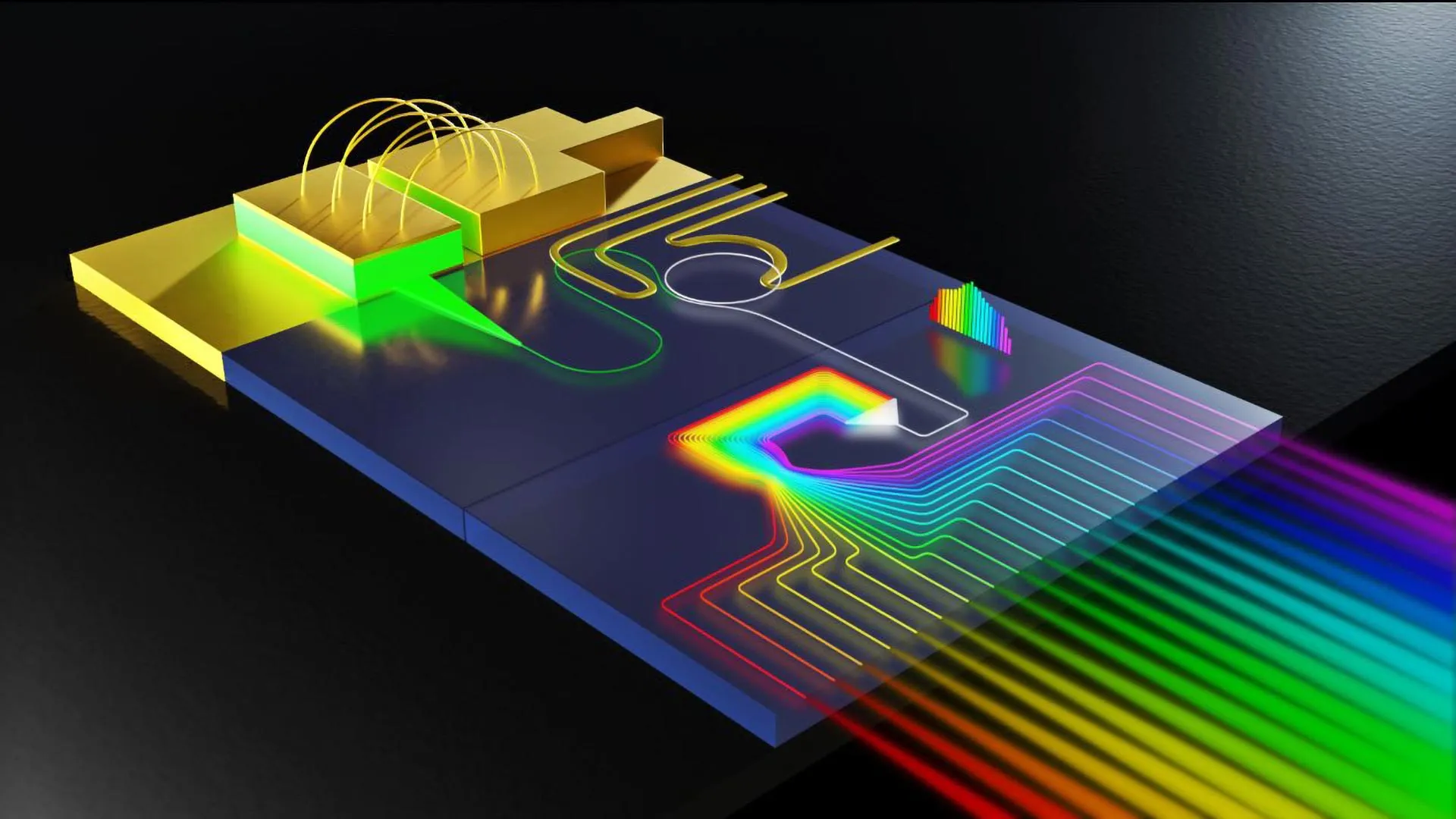
In a serendipitous turn of events within Professor Michal Lipson’s renowned laboratory, a scientific endeavor initially aimed at refining LiDAR technology—a sophisticated method for measuring distances using light waves—has culminated in an unexpected and potentially world-altering discovery: the accidental creation of a miniature "rainbow chip." This groundbreaking innovation, born from the pursuit of high-power chips capable of generating exceptionally intense light beams, promises to significantly enhance the capabilities of our digital infrastructure, particularly the internet and the ever-growing realm of digital content.
The genesis of this remarkable achievement traces back to the team’s persistent efforts to push the boundaries of light intensity generated by integrated circuits. "As we sent more and more power through the chip, we noticed that it was creating what we call a frequency comb," remarks Andres Gil-Molina, a former postdoctoral researcher in Lipson’s lab and a key figure in this discovery. This observation, initially an anomaly in their research, has since blossomed into a technological leap forward.
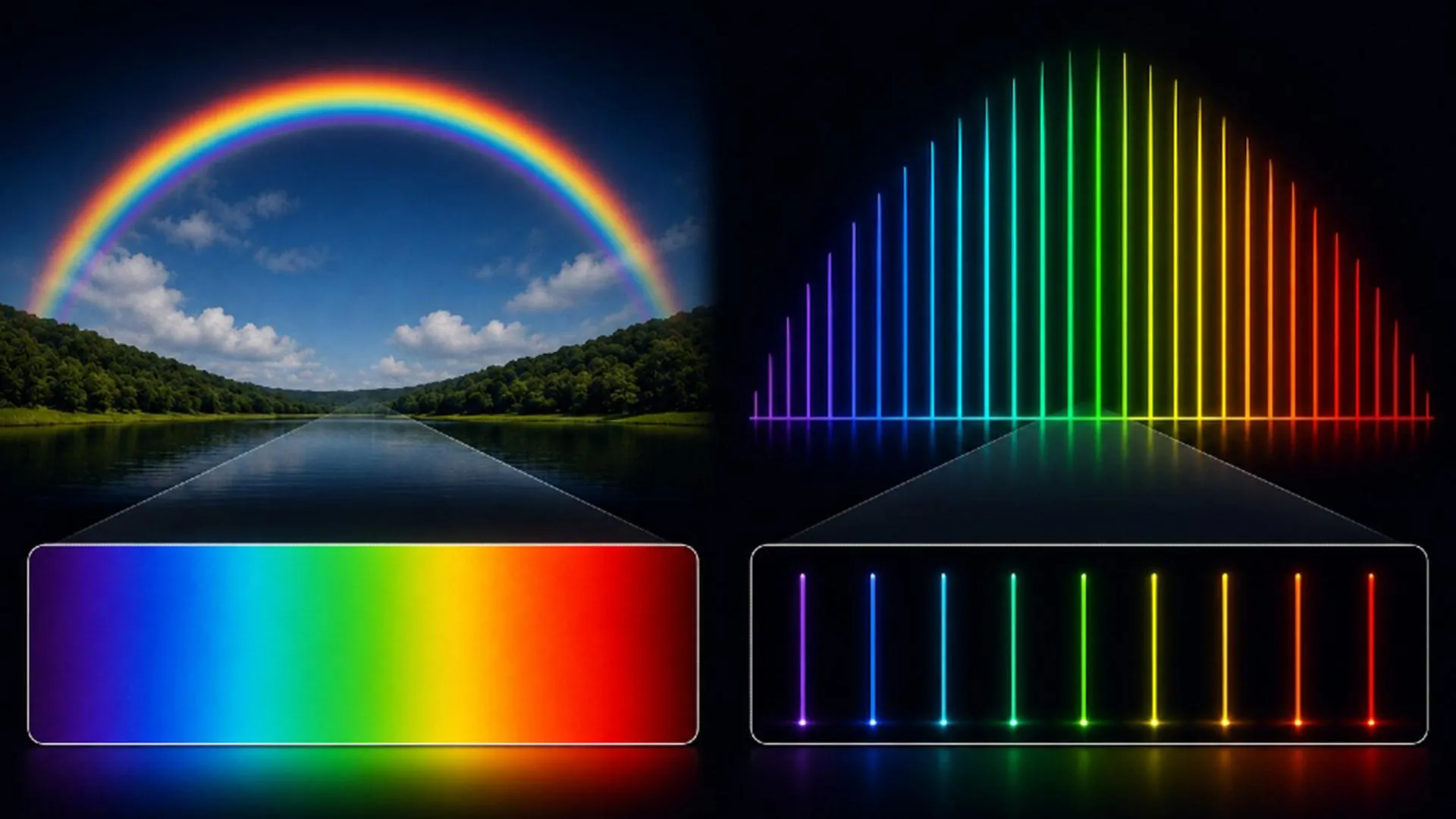
A frequency comb, in essence, is an extraordinary form of light characterized by an intricate and highly organized spectrum of numerous distinct colors, or frequencies, arranged side-by-side in a precise sequence. This celestial arrangement evokes the visual splendor of a rainbow, with each individual color radiating with intense brilliance while the intervals between them remain conspicuously dark. When visualized on a spectrogram, these luminous frequencies manifest as a series of evenly spaced spikes, strikingly reminiscent of the teeth on a comb. The inherent structure of a frequency comb is its ability to serve as a powerful conduit for data transmission. Its meticulously ordered spectrum allows for the simultaneous operation of dozens, if not hundreds, of independent data channels. The fundamental principle at play is that each distinct color of light can carry its own unique stream of information without any detrimental interference with the others, effectively multiplying the data-carrying capacity of a single optical pathway.
Historically, the generation of a robust and powerful frequency comb has been an endeavor fraught with complexity and expense. It typically necessitated the use of cumbersome and costly apparatus, including bulky laser systems and sophisticated amplifiers. However, the pioneering work detailed in a recent study published in the prestigious journal Nature Photonics by Professor Lipson, the Eugene Higgins Professor of Electrical Engineering and professor of Applied Physics, and her distinguished colleagues, unveils a paradigm shift. They have successfully demonstrated the capacity to achieve the same remarkable frequency comb effect, but now, critically, through the utilization of a single, compact microchip.
"Data centers have created tremendous demand for powerful and efficient sources of light that contain many wavelengths," Gil-Molina, who has since transitioned to a principal engineer role at Xscape Photonics, elaborates on the significance of this development. "The technology we’ve developed takes a very powerful laser and turns it into dozens of clean, high-power channels on a chip. That means you can replace racks of individual lasers with one compact device, cutting cost, saving space, and opening the door to much faster, more energy-efficient systems." This transition from bulky, energy-intensive equipment to a sleek, integrated solution represents a monumental step towards optimizing the performance and efficiency of the digital backbone that powers our modern world.
Professor Lipson further emphasizes the broader implications of their research, stating, "This research marks another milestone in our mission to advance silicon photonics. As this technology becomes increasingly central to critical infrastructure and our daily lives, this type of progress is essential to ensuring that data centers are as efficient as possible." Silicon photonics, the integration of optical components onto silicon chips, is rapidly emerging as a cornerstone technology for next-generation computing and communication systems. The ability to generate and manipulate light on a chip level holds the key to overcoming the limitations of traditional electronic systems.
The team’s breakthrough was not a matter of chance but rather the culmination of a focused inquiry: "How powerful a laser could they integrate onto a chip?" This fundamental question guided their experimental design and led them to explore the potential of a multimode laser diode. These types of lasers, while capable of generating immense quantities of light and finding applications in fields ranging from medicine to industrial cutting tools, are traditionally characterized by their chaotic or "messy" light beams. This inherent disorder renders them unsuitable for applications demanding precision and control.
The challenge then became integrating such a potent, yet unruly, laser source into the intricate architecture of a silicon photonics chip. These chips are engineered with microscopic pathways, often measuring only a few microns or even hundreds of nanometers in width, through which light must propagate. This delicate integration demanded a high degree of engineering finesse.
"We used something called a locking mechanism to purify this powerful but very noisy source of light," Gil-Molina explains. This innovative "locking mechanism" leverages the principles of silicon photonics to meticulously reshape and refine the laser’s output. The process effectively filters out the noise and disorder, resulting in a significantly cleaner, more stable beam—a property scientists refer to as high coherence. This purification step is crucial, transforming a raw, powerful light source into a precisely controlled instrument.
Once the light has been meticulously purified, the chip’s intrinsic nonlinear optical properties come into play. These properties enable the single, powerful, and coherent beam to be artfully dissected into dozens of evenly spaced colors, thereby generating the coveted frequency comb. The end product is a compact and remarkably efficient light source that harmoniously marries the raw power of an industrial-grade laser with the exquisite precision and unwavering stability demanded by advanced communication and sensing technologies.
The timing of this breakthrough is particularly opportune, coinciding with the exponential growth of artificial intelligence and the consequent strain on the infrastructure within data centers. The sheer volume of data that needs to be processed and transmitted, for instance, between processors and memory units, is pushing the limits of current technologies. While state-of-the-art data centers already employ fiber optic links for data transport, the majority of these still rely on less efficient single-wavelength lasers.
Frequency combs fundamentally alter this landscape. Instead of a single optical fiber transmitting a solitary data stream, the advanced capabilities of frequency combs enable dozens of distinct data streams to travel in parallel through the same fiber. This is the very principle that underpinned wavelength-division multiplexing (WDM), the transformative technology that propelled the internet into a global high-speed network during the late 1990s.
By miniaturizing the generation of high-power, multi-wavelength frequency combs to fit directly onto a chip, Professor Lipson’s team has democratized this powerful capability, making it accessible for integration into the most compact and cost-sensitive components of modern computing systems. The implications extend far beyond data centers; the same versatile chips hold the promise of enabling a new generation of portable spectrometers, ultra-precise optical clocks that could redefine timekeeping, compact quantum computing devices for groundbreaking research, and even more advanced and sophisticated LiDAR systems for autonomous vehicles and scientific exploration.
"This is about bringing lab-grade light sources into real-world devices," Gil-Molina concludes with optimism. "If you can make them powerful, efficient, and small enough, you can put them almost anywhere." This vision encapsulates the transformative potential of their accidental discovery—a tiny "rainbow chip" poised to paint a brighter, faster, and more efficient future for our increasingly digital world.