Imroatul Nasiyah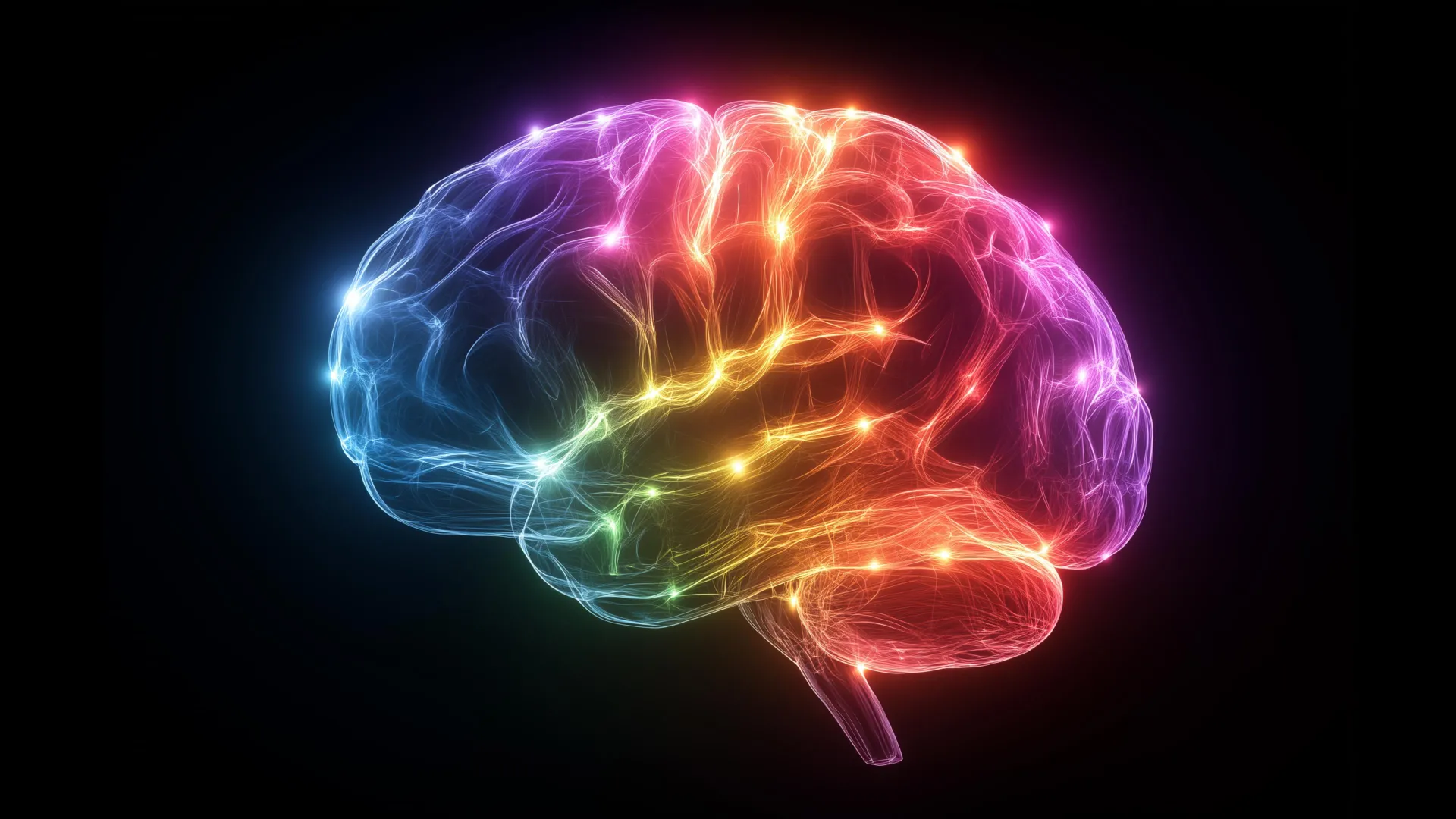
Researchers at Skoltech have unveiled a groundbreaking mathematical model that delves into the intricate workings of memory, yielding fascinating insights that could revolutionize our understanding of the human mind, enhance robotic systems, and propel the field of artificial intelligence forward. Published in the prestigious journal Scientific Reports, their findings propose a tantalizing hypothesis: there may exist an ideal number of senses for optimal cognitive function, and surprisingly, our commonly accepted five senses might not be sufficient to achieve this peak efficiency.
Professor Nikolay Brilliantov, a leading co-author from Skoltech AI, emphasized the speculative nature of this conclusion when applied directly to human senses, while acknowledging the potential for future evolutionary developments. "It could be that humans of the future would evolve a sense of radiation or magnetic field," he mused. "But in any case, our findings may be of practical importance for robotics and the theory of artificial intelligence." The core of their discovery lies in the observation that "when each concept retained in memory is characterized in terms of seven features—as opposed to, say, five or eight—the number of distinct objects held in memory is maximized." This suggests a fundamental numerical principle governing the brain’s information processing capabilities.
The Skoltech team’s research builds upon a rich scientific tradition dating back to the early 20th century, focusing on the fundamental building blocks of memory known as "engrams." An engram, in essence, is a distributed network of neurons across various brain regions that activate in unison. Each engram serves as a representation of a specific concept, articulated through a constellation of features. For instance, our understanding of a banana is not a singular entity but a composite of its visual appearance, its distinct aroma, its unique taste, and a myriad of other sensory attributes. Within this conceptual framework, the banana transforms into a five-dimensional object residing within the vast mental landscape that encompasses all our stored memories.
These engrams are not static entities; they are dynamic constructs that evolve over time. Their sharpness or diffusion is directly influenced by the frequency with which they are activated by external sensory input. This ongoing process is the very mechanism through which we learn, adapt, and, conversely, forget as we navigate and interact with our surroundings. "We have mathematically demonstrated that the engrams in the conceptual space tend to evolve toward a steady state," Professor Brilliantov explained. "This means that after an initial transitional period, a ‘mature’ distribution of engrams emerges, which then persists over time. As we consider the ultimate capacity of a conceptual space of a given number of dimensions, we somewhat surprisingly find that the number of distinct engrams stored in memory in the steady state is the greatest for a concept space of seven dimensions. Hence the seven senses claim."
To unpack this further, imagine that the myriad objects and phenomena in the external world can be meticulously described by a finite set of characteristics, which in turn correspond to the dimensions of an abstract conceptual space within our minds. The researchers’ objective was to maximize the capacity of this conceptual space, defined as the sheer number of distinct concepts that can be associated with these external objects. A greater capacity, they argue, directly translates to a more profound and nuanced understanding of the world. Their mathematical explorations revealed a striking outcome: this maximum capacity is achieved precisely when the conceptual space possesses seven dimensions. This mathematical optimum forms the bedrock of their hypothesis that seven is the ideal number of senses.
A crucial aspect of their findings is the robustness of the number seven. The researchers assert that this optimal dimension does not fluctuate based on the specific details of their model, such as the inherent properties of the conceptual space or the nature of the sensory stimuli themselves. Instead, seven appears to be an intrinsic and enduring characteristic of engrams as fundamental units of memory. However, they acknowledge a pertinent caveat: when multiple engrams of varying sizes cluster around a common central point, they are considered to represent similar concepts and are therefore counted as a single concept when calculating the overall memory capacity. This refinement acknowledges the hierarchical and associative nature of human memory.
The enigma of memory, in humans and indeed across the living world, is deeply intertwined with the multifaceted phenomenon of consciousness. Advancing theoretical models of memory, such as the one developed by the Skoltech team, holds immense promise for unlocking new insights into the complexities of the human mind. Furthermore, these advancements are pivotal for the ambitious endeavor of recreating humanlike memory capabilities in artificial intelligence agents, paving the way for more sophisticated and intelligent machines.
The implications of this research extend far beyond theoretical contemplation. In the realm of robotics, understanding the optimal dimensionality for sensory input could lead to the design of robots that are more adept at perceiving, processing, and responding to their environments. Instead of relying solely on visual, auditory, tactile, olfactory, and gustatory inputs, future robots might be engineered to incorporate additional sensory modalities, perhaps inspired by the concept of magnetic field detection or even the detection of subtle energy fluctuations. This would allow them to build richer and more accurate internal representations of the world, leading to more robust and adaptable performance.
For artificial intelligence, the findings offer a new paradigm for designing learning algorithms and memory architectures. Current AI systems often struggle with the nuanced understanding and contextualization that humans effortlessly achieve. By modeling memory systems based on a seven-dimensional conceptual space, AI could potentially develop a more profound grasp of complex relationships between concepts, leading to more sophisticated reasoning, problem-solving, and creative capabilities. Imagine an AI that doesn’t just recognize an object but understands its context, its potential uses, and its historical significance – a level of comprehension that might be facilitated by a richer sensory input framework.
The research also prompts a re-evaluation of our own sensory experience. While we are biologically hardwired with five primary senses, the Skoltech model suggests that our cognitive architecture might be designed to process information more efficiently with a greater number of distinct sensory inputs. This doesn’t necessarily imply a call for immediate human evolution, but rather a deeper appreciation for the potential limitations and untapped capacities of our current sensory apparatus. It opens avenues for exploring how we might augment our sensory experiences through technology or how individuals with enhanced sensory abilities (such as synesthesia, where senses are intertwined) might process information differently.
The mathematical elegance of the seven-dimensional optimum is particularly compelling. It suggests that this number is not arbitrary but arises from fundamental principles of information theory and the efficient organization of data. The transient period where engrams evolve towards a steady state mirrors the learning process, where initial confusion gradually gives way to a more stable and organized understanding. The "mature" distribution of engrams represents a state of well-consolidated knowledge, where concepts are clearly delineated and easily accessible.
In conclusion, the Skoltech researchers’ exploration of memory engrams and their mathematical modeling has provided a compelling, albeit speculative, argument for the potential superiority of a seven-sense system. While the direct application to human evolution remains a distant prospect, the practical implications for robotics and artificial intelligence are immediate and profound. This work invites us to look beyond our familiar five senses and consider the possibility that a richer tapestry of sensory input could unlock a deeper understanding of the world and pave the way for more sophisticated cognitive systems, both artificial and, perhaps in the distant future, biological. The quest to understand memory and consciousness is an ongoing journey, and this research represents a significant and exciting new waypoint.