Faris Adani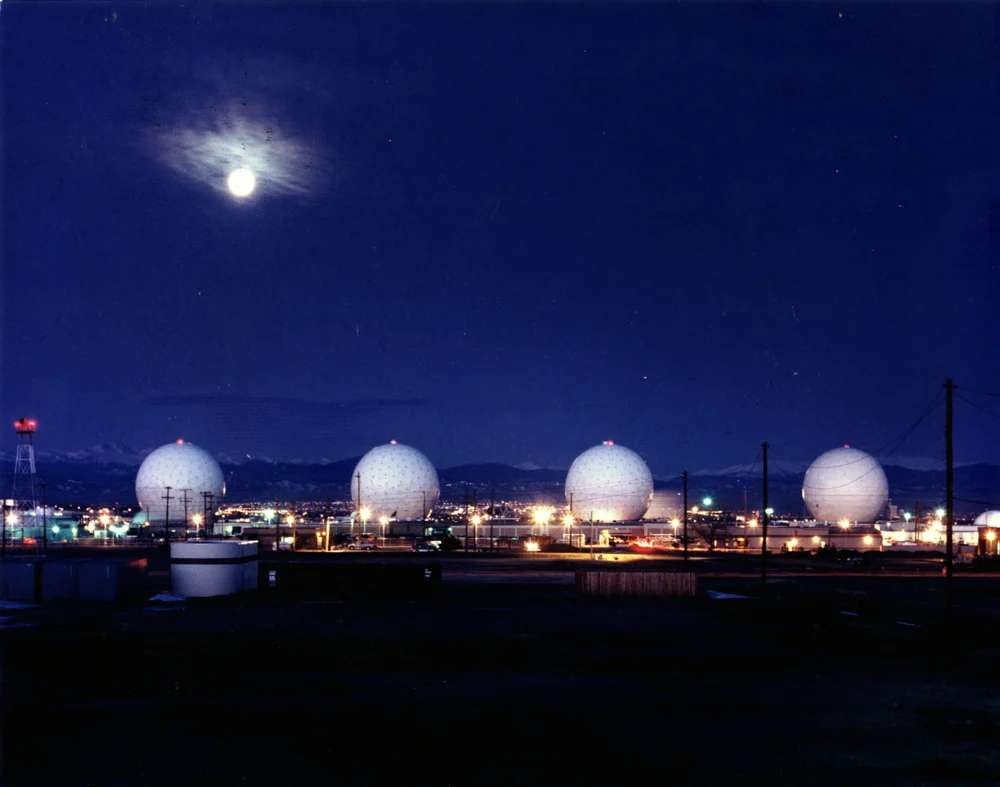
Emergency officials launched a rapid, multi-agency response to Buckley Space Force Base in Aurora, Colorado, on Monday, following a concerning report of possible explosives detected at a garage facility, a situation that, while ultimately resolved without incident, served as a stark reminder of the heightened security landscape surrounding critical national defense assets. The alarm was raised at approximately 10:25 am local time, triggering immediate and extensive protocols designed to neutralize potential threats and ensure the safety of personnel and the surrounding community. Local broadcaster KDVR initially broke the news, detailing the swift deployment of resources to the sprawling military installation. The report centered on suspicious materials identified within a large garage building, prompting authorities to establish a formidable 1,000-foot perimeter, effectively isolating the potential hazard zone. Concurrently, adjacent streets leading to and around the base were shut down, rerouting traffic and ensuring that civilian access was restricted during the investigation. Aerial footage captured by KDVR provided a clear visual of the epicenter of the emergency: a substantial two-bay garage, appearing to be a maintenance or storage facility, with various construction equipment and large trucks positioned both inside and outside its bays. This visual evidence underscored the industrial nature of the site and the potential scale of a hazardous incident had explosives indeed been present.
The response was a testament to the integrated security framework in place at U.S. military installations. Officials from Buckley Space Force Base confirmed the comprehensive involvement of their internal emergency services. This included the base’s dedicated fire department, highly trained security forces, and critically, its specialized Explosive Ordnance Disposal (EOD) crew. These EOD teams are the vanguard in dealing with potential explosive threats, equipped with advanced technology, protective gear, and extensive training to identify, disarm, or safely dispose of hazardous devices. Their methodical approach and expertise were paramount in the painstaking process of investigating the suspicious report. Fortunately, after hours of meticulous searching and assessment, base officials were able to issue a reassuring statement, declaring that “no threat was found.” The emergency situation was officially resolved by 2:15 pm, allowing the base to return to normal operations and the surrounding areas to reopen. While the incident concluded peacefully, the swift, decisive actions taken by all involved agencies highlighted the robust preparedness and protocols in place to safeguard the base.
Buckley Space Force Base itself holds significant strategic importance within the U.S. military infrastructure. Located just outside Denver, Colorado, it serves as a critical hub for space-based intelligence, surveillance, and reconnaissance operations, along with missile warning and space communications. It hosts elements from various branches, but its primary identity now aligns with the U.S. Space Force, the nation’s newest military branch. The base plays a vital role in providing crucial data and capabilities that underpin national security and military operations worldwide. Its mission scope extends from monitoring potential threats in space to supporting ground-based operations with satellite intelligence, making it an invaluable asset in the global defense posture.
The U.S. Space Force, established in December 2019, represents a pivotal evolution in American military strategy. Born out of the recognition that space has become a contested domain, its foundational purpose is to organize, train, and equip forces to protect U.S. and allied interests in space and provide space capabilities to the joint force. As the sixth and youngest branch of the U.S. armed forces, Space Force currently comprises approximately 9,400 active-duty personnel, known as Guardians. Their ranks are expected to grow significantly as the branch matures and expands its operational capabilities. Guardians are tasked with critical responsibilities, including developing space warfighting doctrine, acquiring space systems, and operating a global network of satellites and ground stations. Their work is often highly classified, involving cutting-edge technology and intricate orbital mechanics, all aimed at maintaining America’s competitive edge in the ultimate high ground.
The urgency and gravity of the response at Buckley Space Force Base are further amplified by the intensifying global "space race," a complex geopolitical competition primarily featuring the United States and China. This modern space race is not merely about lunar landings or scientific exploration; it encompasses the development and deployment of advanced satellite technologies, anti-satellite (ASAT) weapons, cyber warfare capabilities targeting space assets, and electronic warfare designed to disrupt satellite communications. Nations like Russia also remain significant players, contributing to an increasingly crowded and potentially hostile orbital environment. The militarization of space is an undeniable reality, with nations investing heavily in technologies that can either enhance their space capabilities or degrade those of their adversaries. This includes sophisticated reconnaissance satellites, precision navigation and timing systems (PNT) crucial for modern warfare, and even directed energy weapons that could blind or disable satellites.
In this volatile context, Space Force facilities like Buckley become prime targets for various forms of aggression, ranging from sophisticated espionage attempts to outright sabotage. Espionage could involve cyber infiltration of ground control systems, attempts to recruit personnel, or physical surveillance to gather intelligence on operational procedures and technological advancements. Sabotage, though less common, could entail physical attacks on critical infrastructure, electromagnetic interference designed to disrupt communications, or even coordinated cyberattacks aimed at disabling or degrading satellite networks. The very nature of Space Force’s mission, which often involves sensitive data, advanced research, and critical command and control functions, mandates the highest levels of security vigilance. Every anomalous report, every suspicious package, and every potential breach must be treated with the utmost seriousness, as even a minor incident could have cascading effects on national security.
This incident at Buckley also underscores the critical importance of stringent security protocols and comprehensive preparedness at all military installations. Bases like Buckley operate under a multi-layered security framework, incorporating physical barriers, advanced surveillance systems, access controls, and highly trained personnel. Rapid response protocols for suspicious items or potential threats are meticulously rehearsed and constantly refined. The coordinated effort between base security, fire department, and EOD teams showcased the efficacy of these integrated systems. Beyond the immediate physical threat, such alerts also carry a psychological weight, requiring personnel to maintain composure and execute procedures flawlessly under pressure. The EOD teams, in particular, undergo rigorous, specialized training to handle a vast array of explosive devices, from conventional munitions to improvised explosive devices (IEDs), making them indispensable assets in such scenarios.
False alarms, while inconvenient and resource-intensive, are an unavoidable and often necessary component of maintaining high security. The "better safe than sorry" approach is universally adopted by military and law enforcement agencies when it comes to potential explosives. The potential catastrophic consequences of overlooking a genuine threat far outweigh the costs associated with deploying emergency services for a benign object. Each such incident, even if a false alarm, serves as a valuable training exercise, allowing response teams to practice their coordination, communication, and procedural execution in a real-world setting. It reinforces the importance of meticulous reporting from personnel and contractors, as the initial call about "suspicious materials" is the first link in the chain of a protective response.
Looking ahead, incidents like the one at Buckley Space Force Base will likely become more frequent, not necessarily due to increased malicious intent, but due to heightened awareness and the evolving threat landscape. The expanding responsibilities of the Space Force, coupled with the escalating global competition in space, mean that vigilance must remain at an all-time high. The branch is projected to grow significantly in both personnel and technological sophistication, which will inevitably broaden its physical footprint and increase the complexity of its security requirements. This ongoing evolution demands continuous investment in advanced security technologies, comprehensive training for its Guardians and support staff, and a proactive approach to intelligence gathering and threat assessment. The incident at Buckley, though ultimately benign, served as a potent, real-world exercise, reinforcing the unwavering commitment of the U.S. Space Force and its partners to protect vital assets and maintain national security in the ever-critical domain of space. It highlighted not just the potential vulnerabilities, but more importantly, the robust and efficient mechanisms in place to counter them, ensuring that the nation’s eye in the sky remains secure.