Imroatul Nasiyah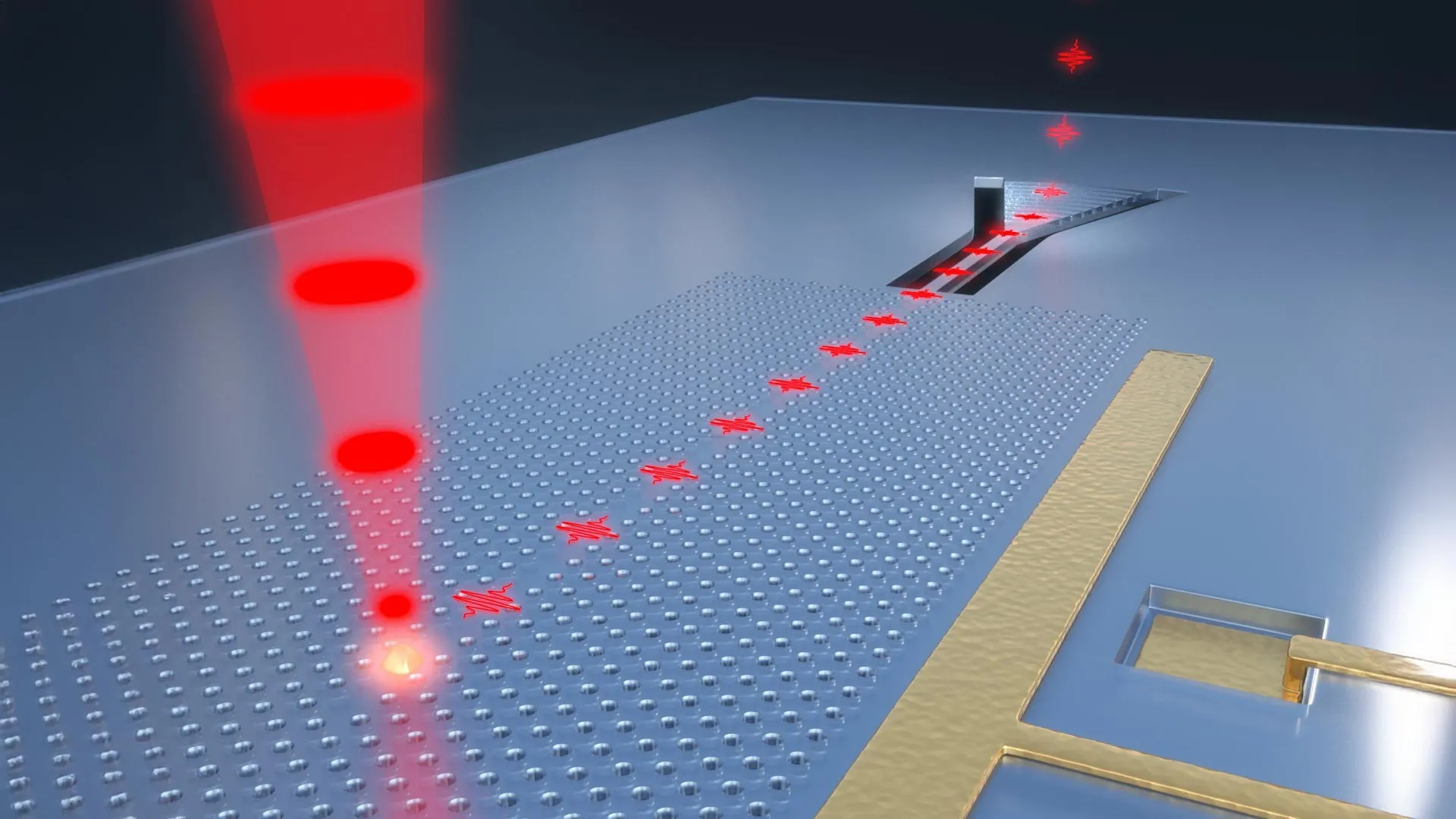
Researchers at the University of Iowa have identified a groundbreaking new way to "purify" photons, a development poised to significantly enhance both the performance and security of light-based quantum technologies. This innovative approach refines the process of generating single particles of light, aiming to overcome long-standing limitations that have hampered optical quantum systems. The implications are far-reaching, promising to accelerate the advent of more powerful quantum computers and fortify the security of future communication networks.
At the heart of this breakthrough lies the team’s focused attack on two primary obstacles that have historically made it exceedingly difficult to produce a reliable, consistent stream of single photons. These elusive particles are the fundamental building blocks for photonic quantum computers, which leverage light instead of electricity to perform complex calculations, and for the ultra-secure communication networks envisioned for the future.
The first formidable challenge researchers have grappled with is a phenomenon known as laser scatter. When a precisely tuned laser beam interacts with an atom to coax it into releasing a single photon, the process is not always perfectly clean. Often, the laser’s energy can excite the atom in a way that results in the emission of extra, unwanted photons. These superfluous particles act as a form of interference within an optical circuit, akin to stray electrical current disrupting a conventional electronic circuit. This interference significantly degrades the efficiency and reliability of quantum operations, making it harder to control and utilize the desired single photons.
The second major hurdle stems from the inherent nature of atomic responses to laser light. While scientists aim for a single photon emission, atoms, in rare but problematic instances, can be induced to release more than one photon simultaneously. This multi-photon emission shatters the precise sequencing required for delicate quantum operations. The intended single photon is then overwhelmed and contaminated by its accompanying brethren, disrupting the meticulously ordered, one-by-one flow that is crucial for quantum computations and secure data transmission.
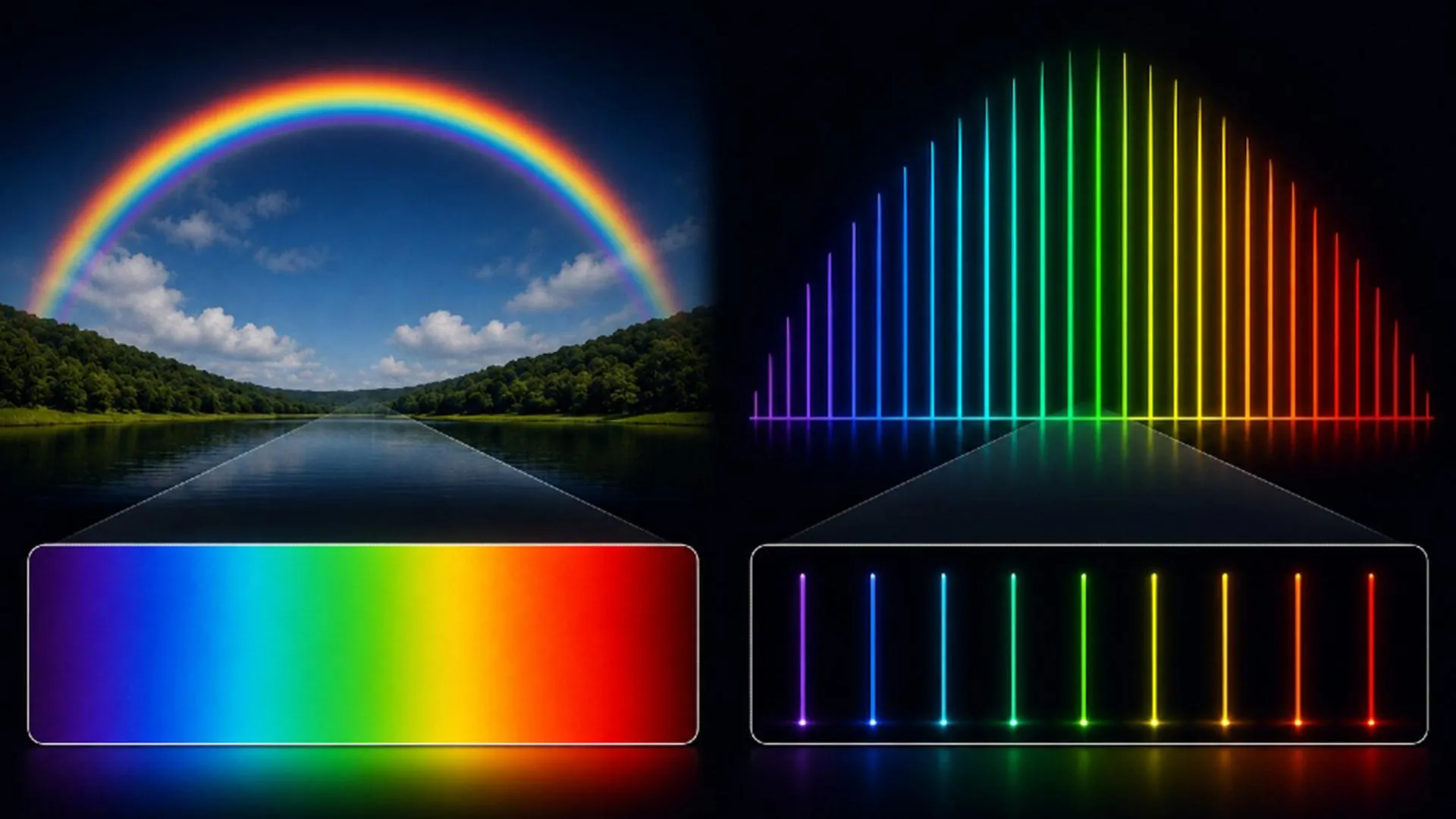
The University of Iowa team, led by graduate student Matthew Nelson in the Department of Physics and Astronomy, has unearthed an unexpected and ingenious connection between these two persistent problems. Their pivotal discovery reveals that when an atom emits multiple photons, the resulting wavelength spectrum and wave form of these unwanted emissions bear a striking resemblance to those of the very laser light used to trigger the photon release. This remarkable similarity is the key to their novel purification technique.
According to the researchers, this inherent likeness means that the unwanted multi-photon signal and the triggering laser light can be carefully manipulated and adjusted to cancel each other out. In essence, the very laser scatter that has historically been a nuisance and a source of interference can now be harnessed as a powerful tool to actively suppress the unwanted, multi-photon emissions. This is a paradigm shift, transforming a long-standing obstacle into a beneficial component of the photon generation process.
"We have shown that stray laser scatter, typically considered a nuisance, can be harnessed to cancel out unwanted, multi-photon emission," states Ravitej Uppu, assistant professor in the Department of Physics and Astronomy and the study’s corresponding author. "This theoretical breakthrough could turn a long-standing problem into a powerful new tool for advancing quantum technologies." This sentiment underscores the profound implications of their work, suggesting that what was once a fundamental limitation may now become a pathway to unprecedented control and efficiency in quantum systems.
The significance of single photons for quantum computing cannot be overstated. Photonic computing represents a frontier in computational power, utilizing light as the medium for calculations instead of traditional electricity. This offers the tantalizing prospect of systems that are not only faster but also dramatically more energy-efficient than their conventional counterparts. While standard computers operate using bits – discrete pulses representing binary states of one or zero – quantum computers employ qubits. These quantum bits, often embodied by subatomic particles like photons, can exist in multiple states simultaneously, enabling them to perform calculations in ways that are impossible for classical computers.
A stable, well-controlled stream of single photons is the bedrock upon which the future of photonic quantum computing will be built. Many emerging technology companies are investing heavily in photonic platforms, recognizing their potential to revolutionize fields ranging from drug discovery and materials science to artificial intelligence and financial modeling. The ability to generate and manipulate individual photons with high fidelity is therefore paramount to realizing this vision.
Beyond computational prowess, an orderly photon stream is also critical for enhancing the security of communication networks. The researchers draw an apt analogy to managing a cafeteria line: guiding students one at a time ensures order and prevents chaos, whereas allowing them to move as a crowd leads to congestion and potential disruption. Similarly, a neat, single-photon stream minimizes the risk of data being intercepted, eavesdropped upon, or otherwise compromised. This inherent security is a vital component for sensitive data transmission in government, finance, and military applications.
The new method hinges on precision control of the laser beam, as explained by Professor Uppu. "If we can control exactly how the laser beam shines on an atom — the angle at which it’s coming, the shape of the beam, and so on — you can actually make it cancel out all the additional photons that the atom likes to emit," he elaborates. "We would be left with a stream that is actually very pure." This level of control allows for a targeted approach, where the laser’s properties are meticulously tuned to achieve the desired outcome: a pure stream of single photons, free from unwanted contamination.
The theoretical framework developed by the Iowa team demonstrates that two major barriers to developing faster and more efficient photonic circuitry can be addressed simultaneously. This dual benefit is a significant advantage, simplifying the complex engineering challenges involved in quantum technology development. If this theoretical breakthrough can be successfully translated into experimental validation, the technique holds the potential to dramatically accelerate the pace of progress in creating advanced quantum computers and establishing more secure communication systems. The researchers are enthusiastic about the prospect and plan to rigorously test their findings in future experiments, bringing this promising theoretical concept closer to practical application.
The foundational study, titled "Noise-assisted purification of a single-photon source," has been published in the esteemed journal Optica Quantum, a testament to its scientific rigor and potential impact. The research was made possible through substantial funding from the Office of the Under Secretary of Defense for Research and Engineering within the U.S. Department of Defense, highlighting the strategic importance of this work for national security and technological advancement. Additional crucial support was provided through a seed grant from the University of Iowa Office of the Vice President for Research via the P3 program, an initiative designed to foster innovative projects and accelerate their launch. This collaborative funding ecosystem underscores the multi-faceted support behind this groundbreaking scientific endeavor.