Imroatul Nasiyah
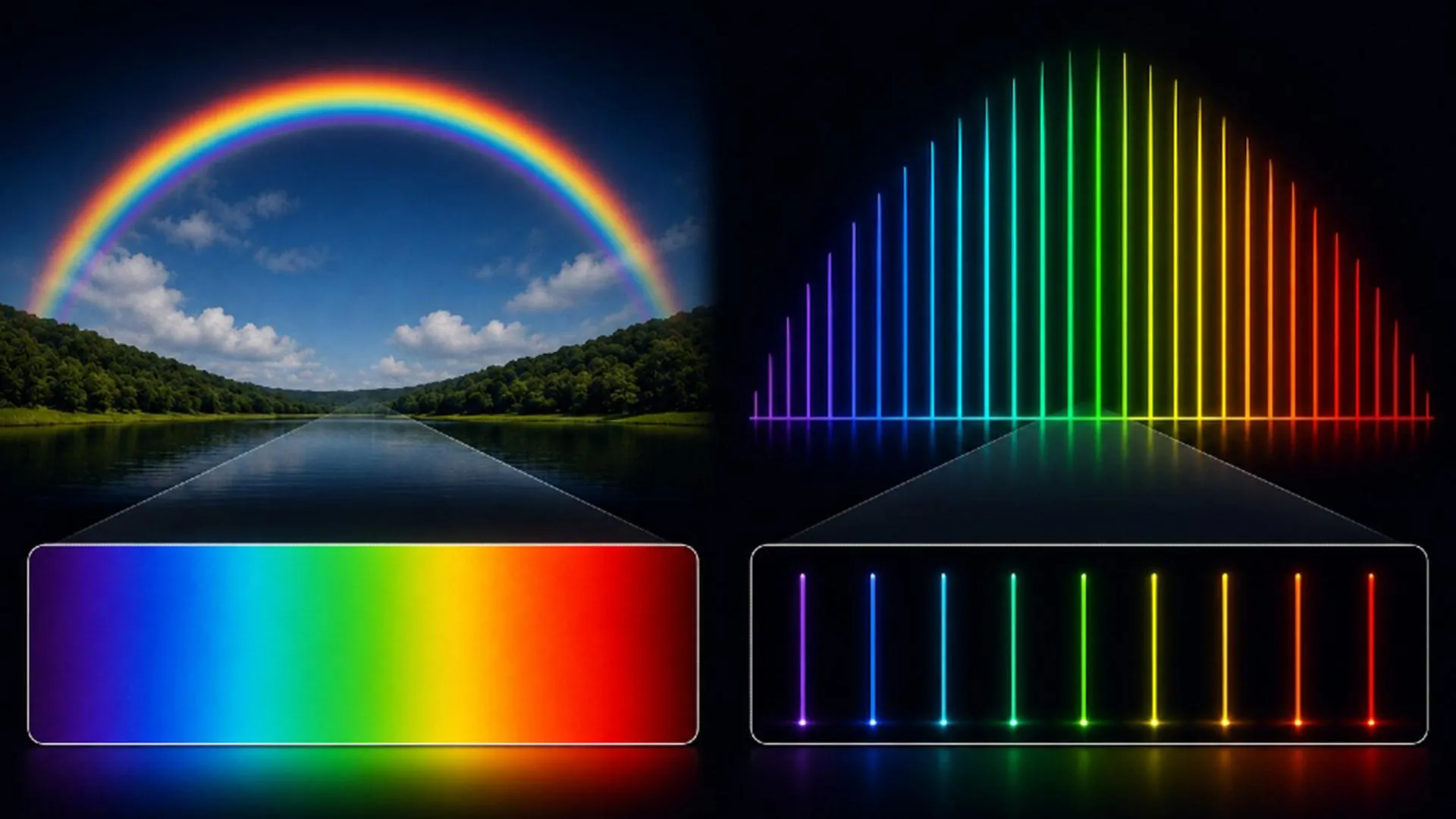
Physicists at the University of the Witwatersrand in South Africa, in collaboration with esteemed colleagues from the Universitat Autònoma de Barcelona, have achieved a groundbreaking feat: demonstrating the deliberate manipulation of light at the quantum level to sculpt it across both space and time, thereby engineering high-dimensional and multidimensional quantum states. This pioneering work involves meticulously controlling a photon’s spatial pattern, its temporal evolution, and its spectral characteristics, allowing scientists to design what are termed "structured photons." These custom-engineered particles of light represent a paradigm shift, unlocking unprecedented possibilities for developing ultra-high-capacity quantum communication networks and forging the next generation of quantum technologies.
The profound implications of this research are detailed in a comprehensive review published in the prestigious journal Nature Photonics. This seminal paper meticulously examines the rapid advancements in the creation, precise control, and sophisticated measurement of structured quantum light. It underscores the emergence of a powerful and ever-expanding arsenal of advanced tools, including cutting-edge on-chip integrated photonics, sophisticated nonlinear optical techniques, and innovative multiplane light conversion methods. Collectively, these methodologies are instrumental in transitioning structured quantum states from mere theoretical constructs confined to laboratory settings into robust, practical systems poised for transformative applications in advanced imaging, highly sensitive sensing, and the establishment of resilient quantum networks.
From Rudimentary Beginnings to Advanced Quantum Control: A Transformative Journey
Professor Andrew Forbes, the corresponding author of the study and a leading figure at Wits University, eloquently describes the astonishing metamorphosis of this scientific field over the past two decades. He emphasizes the accelerating pace at which the tailoring of quantum states – the deliberate engineering of quantum light for specific purposes – has progressed, finally revealing its immense and previously untapped potential. "Twenty years ago," Professor Forbes remarks, "the toolkit available for such precise control was virtually barren. Today, we possess on-chip sources of quantum structured light that are not only remarkably compact and exceptionally efficient but are also capable of generating and controlling quantum states with unprecedented fidelity."
One of the most significant advantages conferred by the ability to precisely shape photons is the liberation from the limitations of low-dimensional encoding schemes. This newfound capability allows researchers to harness high-dimensional encoding alphabets, a concept that can be simplified by understanding that each individual photon can now be imbued with the capacity to carry substantially more information. Furthermore, these intricately structured photons exhibit a heightened resilience to interference and environmental disturbances, making them exceptionally attractive candidates for the development of highly secure quantum communication systems that are intrinsically resistant to eavesdropping.
Navigating the Obstacles: Challenges in Achieving Long-Distance Quantum Communication
Despite the remarkable strides made, the practical implementation of these advanced quantum technologies in real-world scenarios continues to present formidable challenges. Certain communication channels, by their very nature, are not ideally suited for the transmission of spatially structured photons. This inherent limitation curtails the achievable transmission distances for these sophisticated signals when contrasted with more conventional quantum properties, such as polarization, which have demonstrated greater robustness over extended ranges. Professor Forbes candidly acknowledges these persistent hurdles: "Although we have achieved astonishing progress, there remain significant and challenging issues to surmount," he states. "The effective distance reach for structured light, encompassing both classical and quantum regimes, is still considerably limited. However, this very limitation also presents a profound opportunity, stimulating vigorous research into the exploration of more abstract degrees of freedom that can be exploited for enhanced transmission."
In a concerted effort to circumvent these distance limitations, researchers are actively investigating novel approaches that involve imbuing quantum states with topological properties. Topological features are inherently robust and can render quantum information significantly more stable and impervious to external perturbations and decoherence. "We have recently demonstrated," Professor Forbes explains, "how quantum wave functions, by their very nature, possess an inherent potential for topological behavior. This discovery holds immense promise for the preservation of quantum information, even in scenarios where the entanglement itself might be inherently fragile." This exploration into topological quantum states represents a critical frontier in the quest for long-distance, error-resistant quantum communication.
The Dawn of Multidimensional Entanglement and the Horizon of Future Applications
The comprehensive review further illuminates the breathtakingly rapid developments occurring in the realms of multidimensional entanglement, ultrafast temporal structuring of light, the implementation of advanced nonlinear detection techniques, and the design of highly compact, on-chip devices. These sophisticated components are now capable of generating and processing higher-dimensional quantum light than ever previously imagined. These multifaceted breakthroughs are collectively paving the way for revolutionary advancements across a spectrum of scientific and technological domains. These include the development of quantum imaging systems with unprecedented resolution, the creation of measurement tools exhibiting extraordinary levels of precision, and the establishment of robust quantum networks designed to transmit vast quantities of data through multiple interconnected channels, thereby dramatically enhancing computational and communication capabilities.
In summation, the field of structured quantum light is undeniably reaching a pivotal and transformative moment. Researchers are united in their belief that quantum optics, powered by the principles of structured light, is on the cusp of experiencing substantial and exponential growth. The future trajectory of this field appears "exceptionally bright indeed," to borrow Professor Forbes’ optimistic outlook. Nevertheless, significant additional research and development efforts are deemed essential to further augment dimensionality, substantially increase photon output, and engineer quantum states that possess the resilience and adaptability required to thrive within the complexities and imperfections of realistic optical environments. The journey from understanding the fundamental nature of photons to harnessing their hidden dimensions for practical applications is well underway, promising a future rich with quantum innovation.