Imroatul Nasiyah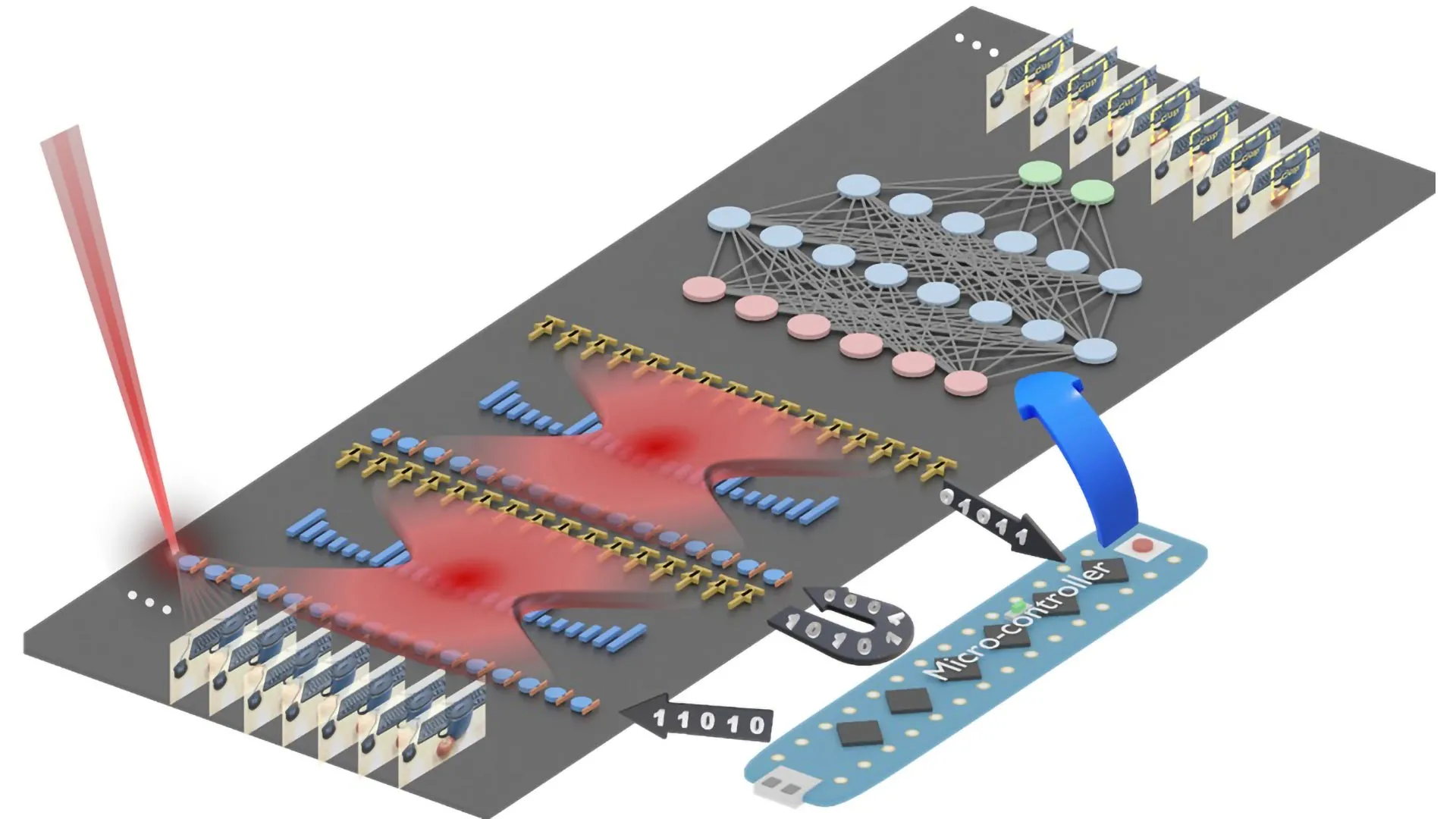
At the heart of this revolutionary technology lies the chip’s ingenious design, specifically engineered to perform convolution operations. These operations are not merely a minor component but rather a fundamental pillar of machine learning, enabling AI systems to discern intricate patterns and features within vast datasets, whether they be visual information from images and videos or textual data from natural language processing. Traditionally, these operations demand substantial computational power, translating directly into high energy consumption. The University of Florida team’s ingenious solution involves the direct integration of optical components onto a conventional silicon chip. This fusion creates a hybrid system that leverages the speed and efficiency of laser light, guided by microscopic lenses, to perform convolutions. The result is a dramatic reduction in energy consumption, often by orders of magnitude, and a significant acceleration of processing speeds, ushering in an era of unparalleled computational efficiency.
"Performing a key machine learning computation at near zero energy is a leap forward for future AI systems," stated study leader Volker J. Sorger, a distinguished Rhines Endowed Professor in Semiconductor Photonics at the University of Florida. This statement underscores the profound implications of their work. The ability to conduct these computationally demanding tasks with minimal energy expenditure is not just an incremental improvement; it is a paradigm shift. Sorger elaborated, "This is critical to keep scaling up AI capabilities in years to come." This sentiment highlights the direct correlation between energy efficiency and the future trajectory of AI development. As AI models continue to grow in complexity and the demand for their application expands across an ever-wider range of fields, the energy bottleneck has been a looming concern. This new chip offers a viable pathway to overcome that limitation, ensuring that the relentless progress of AI can continue unabated and sustainably.
The efficacy of this innovative chip was rigorously tested, with the prototype demonstrating remarkable performance. In its trials, the chip successfully classified handwritten digits with an impressive accuracy of approximately 98 percent. This level of precision is directly comparable to the performance of established, purely electronic chips, validating the viability of optical computation for critical AI tasks. The system’s sophistication is further evidenced by its use of two sets of miniature Fresnel lenses. These lenses, flat and ultrathin counterparts to the robust lenses found in lighthouses, are fabricated using standard, widely adopted semiconductor manufacturing techniques, which is a crucial factor for future scalability and integration. The precision of their construction is astonishing; these lenses are narrower than a human hair and are etched directly onto the chip’s surface, allowing for incredibly compact and efficient optical pathways.
The process by which the chip performs a convolution is elegantly orchestrated. Initially, the machine learning data, which is inherently digital, is converted into laser light on the chip. This light then traverses the precisely engineered Fresnel lenses. These lenses act as optical processors, performing the complex mathematical transformations required for convolution. Following this optical computation, the resulting light signal is converted back into a digital signal, completing the AI task. This seamless transition between optical and electronic domains is key to the chip’s efficiency. Hangbo Yang, a research associate professor in Sorger’s group at UF and a co-author of the study, emphasized the novelty of their achievement: "This is the first time anyone has put this type of optical computation on a chip and applied it to an AI neural network." This statement underscores the groundbreaking nature of their research, pushing the boundaries of what is currently possible in optical AI computing.
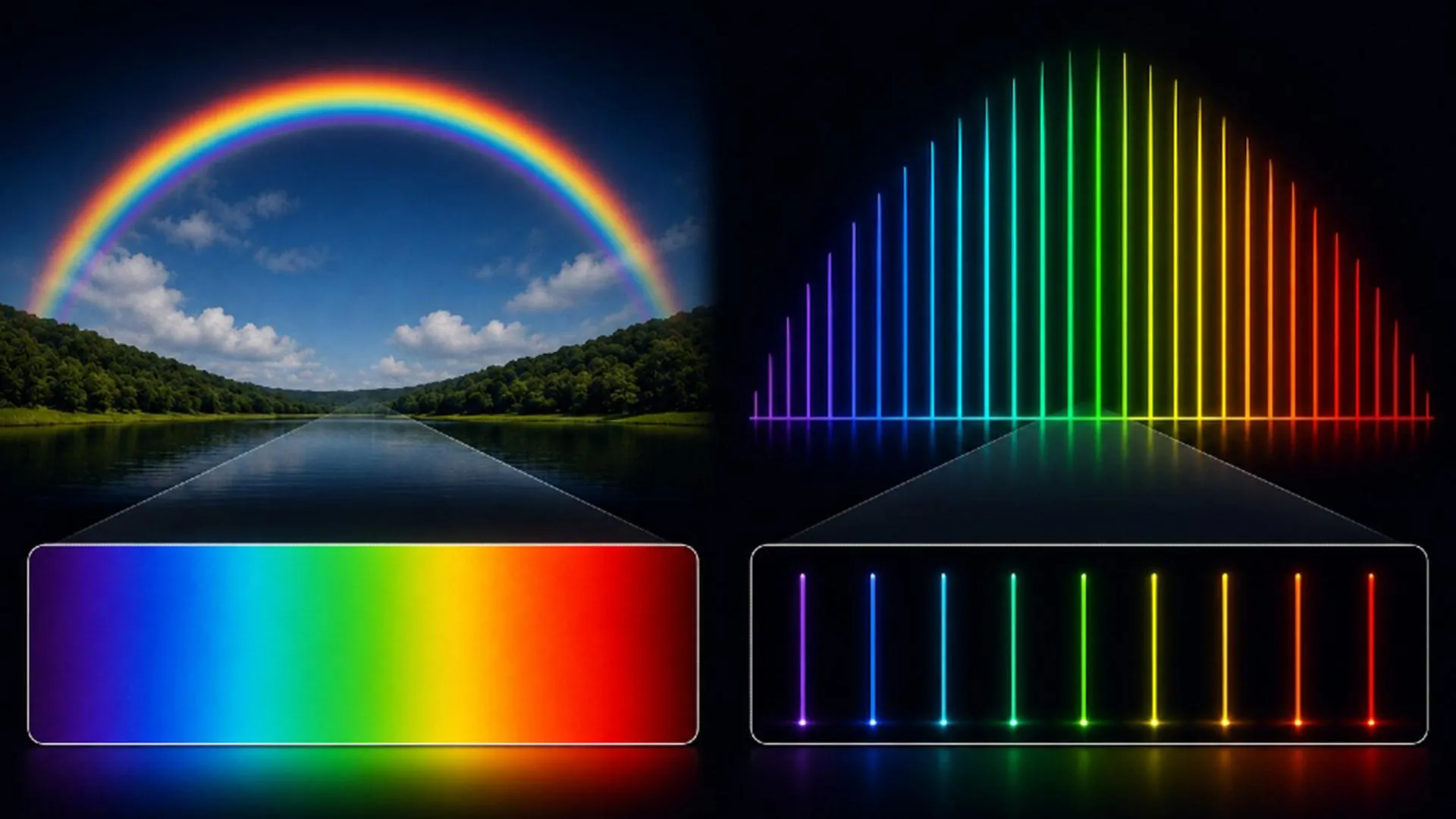
The team’s innovation doesn’t stop at single-stream processing. They have also ingeniously demonstrated the chip’s capacity to process multiple data streams concurrently. This is achieved through the sophisticated use of lasers emitting at different colors, a technique known as wavelength multiplexing. "We can have multiple wavelengths, or colors, of light passing through the lens at the same time," explained Yang. "That’s a key advantage of photonics." This ability to handle parallel data streams significantly amplifies the chip’s processing power and efficiency, making it exceptionally well-suited for handling the massive datasets characteristic of modern AI applications. The inherent parallelism of light-based systems offers a fundamental advantage over traditional electronic architectures, which are often constrained by serial processing limitations.
The collaborative spirit behind this breakthrough is noteworthy, with the research being conducted in close partnership with the Florida Semiconductor Institute, the University of California, Los Angeles (UCLA), and George Washington University. This interdisciplinary approach brought together diverse expertise, fostering an environment conducive to innovation. Professor Sorger also pointed to the potential for rapid adoption, noting that leading chip manufacturers such as NVIDIA are already incorporating optical elements into certain aspects of their AI systems. This existing infrastructure suggests a smoother integration pathway for this new optical AI technology. "In the near future, chip-based optics will become a key part of every AI chip we use daily," Sorger predicted with confidence. This vision of widespread adoption highlights the transformative potential of their work, suggesting a future where AI chips are not only more powerful but also significantly more sustainable. The final pronouncement from Sorger is bold and forward-looking: "And optical AI computing is next," signaling the dawn of a new era in artificial intelligence powered by light. This research represents a monumental stride towards realizing the full potential of AI in an energy-conscious world.