Imroatul Nasiyah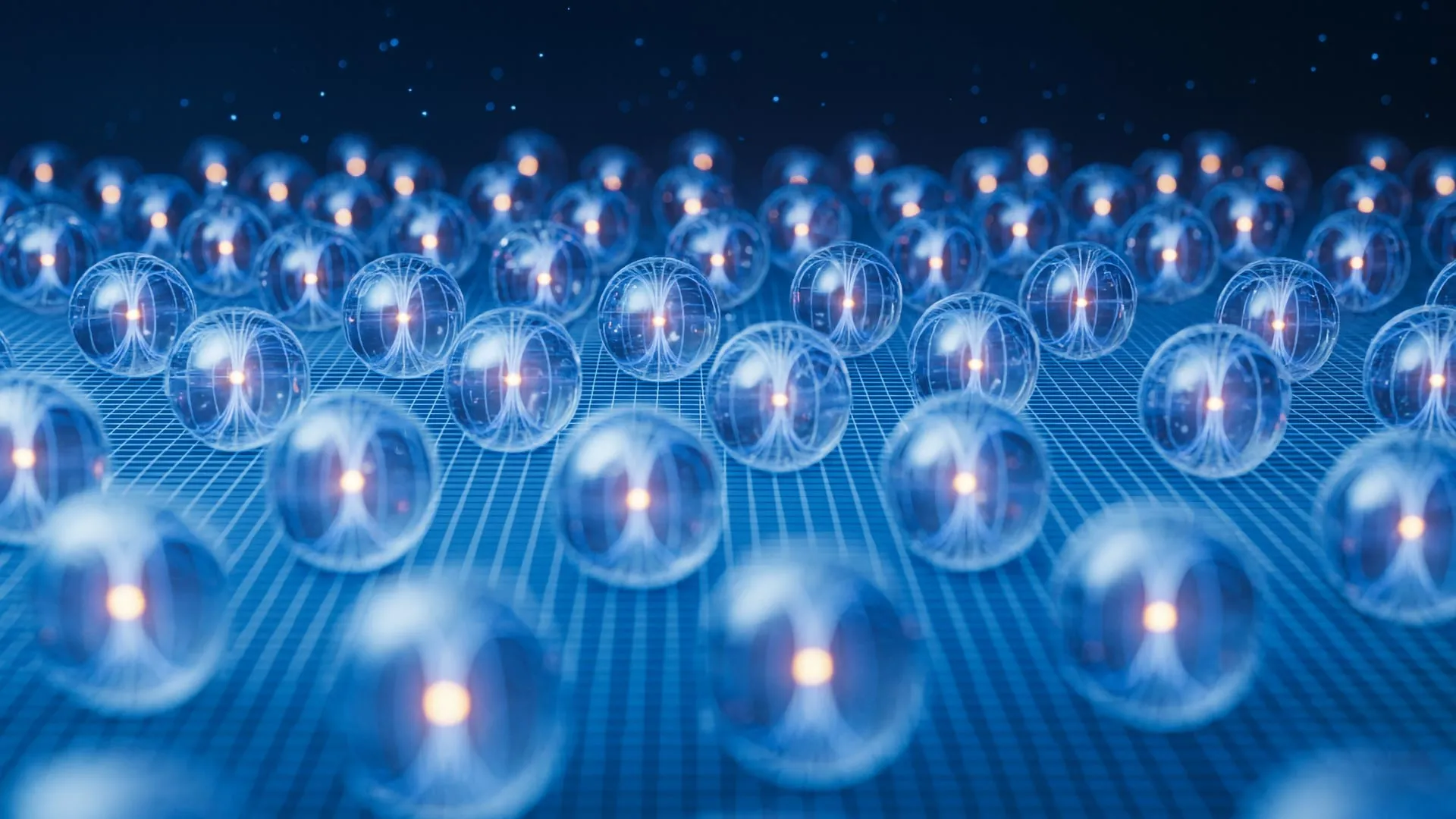
Quantum computers, poised to revolutionize fields from drug discovery and materials science to fundamental physics, hinge on the ability to harness the enigmatic principles of quantum mechanics. Unlike the binary bits of classical computing, which can represent either a 0 or a 1, quantum bits, or qubits, possess the extraordinary ability to exist in both states simultaneously – a phenomenon known as superposition. This quantum quirk imbues quantum computers with the potential to outperform their classical counterparts on specific, highly complex computational tasks. However, this inherent fragility of qubits, susceptible to environmental noise and decoherence, presents a significant hurdle. To overcome this, researchers are pursuing strategies that involve building quantum computers with a substantial number of extra, redundant qubits, meticulously designed to detect and correct errors. This necessity for robust error correction underscores the ultimate vision for powerful quantum computers: systems comprising hundreds of thousands, if not millions, of highly stable and controllable qubits.
In a groundbreaking stride towards realizing this ambitious future, a team of physicists at the California Institute of Technology (Caltech) has unveiled the largest neutral-atom qubit array ever assembled, boasting an impressive 6,100 qubits meticulously trapped and organized within a laser-generated grid. This remarkable achievement shatters previous benchmarks, as prior neutral-atom arrays of this nature typically housed only a few hundred qubits. This pivotal development arrives amidst an accelerating global race to scale up quantum computing capabilities, with diverse technological avenues being explored, including those based on superconducting circuits, trapped ions, and the neutral-atom approach pioneered in this latest study.
"This is an incredibly exciting moment for the field of neutral-atom quantum computing," expressed Manuel Endres, a professor of physics at Caltech and the principal investigator of the research. "We can now clearly envision a viable pathway towards building large-scale, error-corrected quantum computers. The fundamental building blocks are demonstrably in place." The seminal findings of this research were published on September 24th in the prestigious journal Nature, with the study itself spearheaded by three dedicated Caltech graduate students: Hannah Manetsch, Gyohei Nomura, and Elie Bataille.
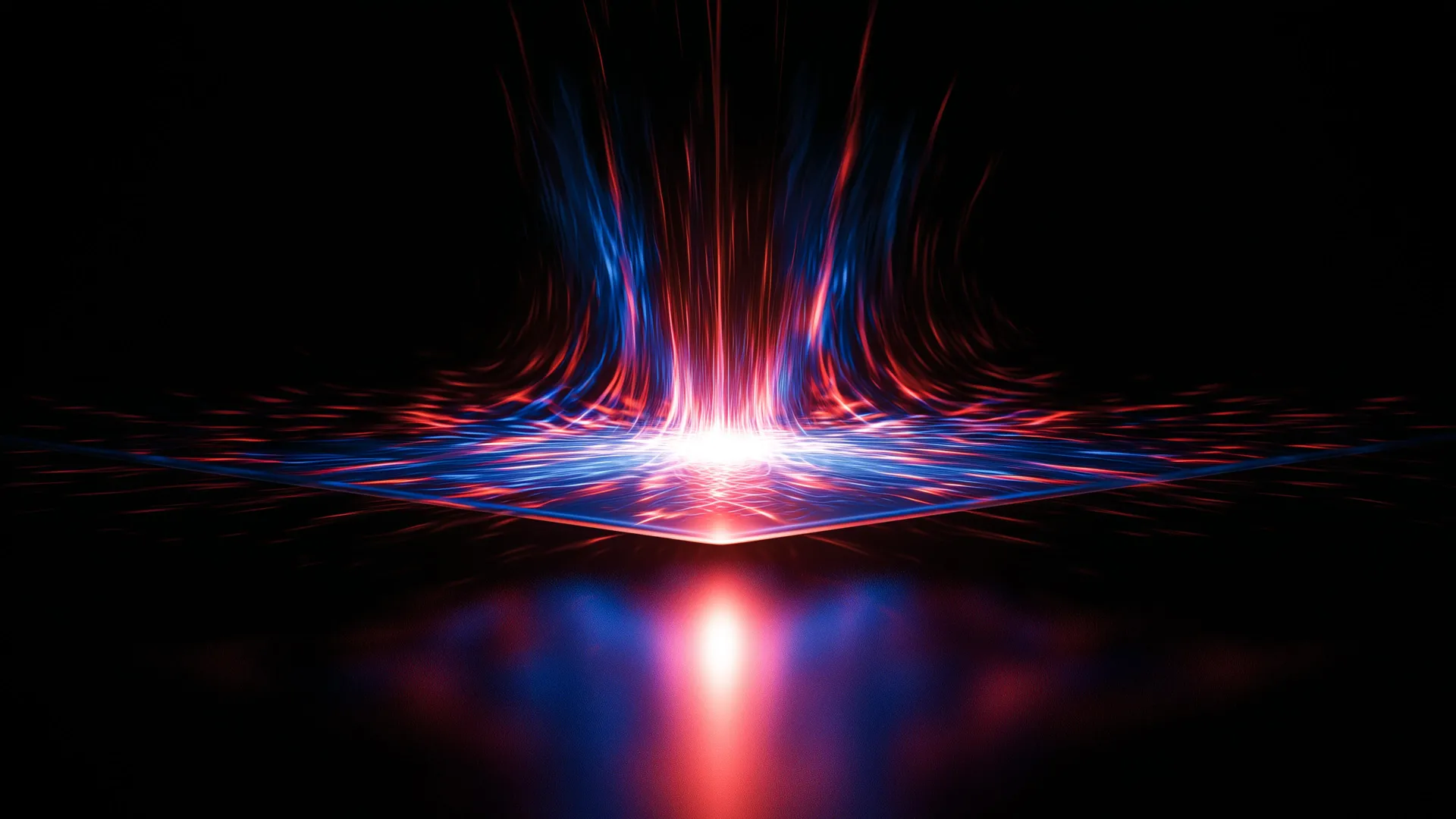
The Caltech team’s ingenious methodology involved employing optical tweezers – highly focused laser beams – to precisely trap thousands of individual cesium atoms within a meticulously arranged grid structure. To construct this expansive atomic array, the researchers ingeniously split a single laser beam into an astonishing 12,000 individual tweezers. These precisely controlled tweezers, working in concert, successfully held 6,100 cesium atoms in a carefully maintained vacuum chamber. "On our monitoring screens, we can actually observe each individual qubit as a distinct pinpoint of light," remarked Manetsch, vividly describing the visual representation of this cutting-edge quantum hardware. "It’s a truly striking image, showcasing quantum hardware operating at an unprecedented scale."
A critical and highly significant achievement of this research was demonstrating that this substantial increase in scale did not come at the expense of qubit quality, a common concern in scaling up quantum systems. Even with over 6,000 qubits coexisting within a single array, the team managed to maintain them in their delicate superposition states for an impressive duration of approximately 13 seconds. This represents a nearly tenfold improvement compared to the coherence times previously achieved in similar, smaller-scale neutral-atom arrays. Furthermore, the researchers demonstrated remarkable precision in manipulating individual qubits, achieving an accuracy rate of 99.98 percent. "There’s a prevailing notion that larger scale, with more atoms, often leads to a compromise in accuracy," explained Nomura. "However, our results emphatically show that we can achieve both high quantity and high quality simultaneously. Qubits are functionally useless without quality. Now, we have definitively achieved both."
The team further showcased the versatility of their system by demonstrating the ability to move individual atoms across the array over distances of hundreds of micrometers, all while crucially preserving their superposition states. This capability to dynamically shuttle qubits is a key advantage inherent to neutral-atom quantum computers. It facilitates more efficient and flexible error correction strategies when contrasted with traditional, fixed-architecture platforms like superconducting qubits, where qubit interactions are hard-wired and less adaptable.
Manetsch eloquently likened the intricate task of moving individual atoms while preserving their fragile superposition states to the challenging feat of balancing a glass of water while running. "The act of trying to hold an atom while simultaneously moving it is akin to trying to prevent a glass of water from tipping over," she explained. "Adding the requirement of keeping the atom in a state of superposition is like being exceptionally careful to avoid running so fast that the water splashes out."
The next significant milestone for the broader field of quantum computing is the successful implementation of quantum error correction at the scale of thousands of physical qubits. This latest work from Caltech strongly positions neutral atoms as a leading contender for achieving this critical objective. "Quantum computers will fundamentally need to encode information in a manner that is inherently tolerant to errors, allowing us to perform meaningful and reliable calculations," stated Bataille. "A fundamental difference from classical computers is that qubits cannot be simply copied due to the well-established no-cloning theorem. Consequently, error correction strategies must rely on more sophisticated and subtle techniques."
Looking towards the horizon, the Caltech researchers have ambitious plans to further advance their system by linking the qubits within their array into a state of quantum entanglement. Entanglement is a profound quantum phenomenon where particles become intrinsically correlated and behave as a single, unified entity, irrespective of their spatial separation. This is a crucial step for quantum computers to transcend the mere storage of information in superposition and to begin executing complex, full-fledged quantum computations. It is precisely this ability to harness entanglement that unlocks the ultimate power of quantum computers – their capacity to simulate natural phenomena with unparalleled fidelity. In the natural world, entanglement is the fundamental force that shapes the behavior of matter at every conceivable scale. The overarching goal is clear: to leverage the power of entanglement to unlock groundbreaking scientific discoveries, ranging from the revelation of novel phases of matter and the design of advanced materials to the intricate modeling of the quantum fields that govern the very fabric of space-time.
"It is truly exhilarating to be at the forefront of creating machines that will empower us to explore and understand the universe in ways that only the profound principles of quantum mechanics can illuminate," concluded Manetsch, reflecting on the transformative potential of their work.
The groundbreaking study, titled "A tweezer array with 6100 highly coherent atomic qubits," received crucial funding from a consortium of esteemed organizations. These include the Gordon and Betty Moore Foundation, the Weston Havens Foundation, the National Science Foundation (through its Graduate Research Fellowship Program and the Institute for Quantum Information and Matter at Caltech), the Army Research Office, the U.S. Department of Energy (including its Quantum Systems Accelerator initiative), the Defense Advanced Research Projects Agency, the Air Force Office for Scientific Research, the Heising-Simons Foundation, and the AWS Quantum Postdoctoral Fellowship. Additional contributors to this significant research include Kon H. Leung, an AWS Quantum senior postdoctoral scholar research associate in physics at Caltech, and Xudong Lv, a former Caltech postdoctoral scholar now affiliated with the Chinese Academy of Sciences.