Imroatul Nasiyah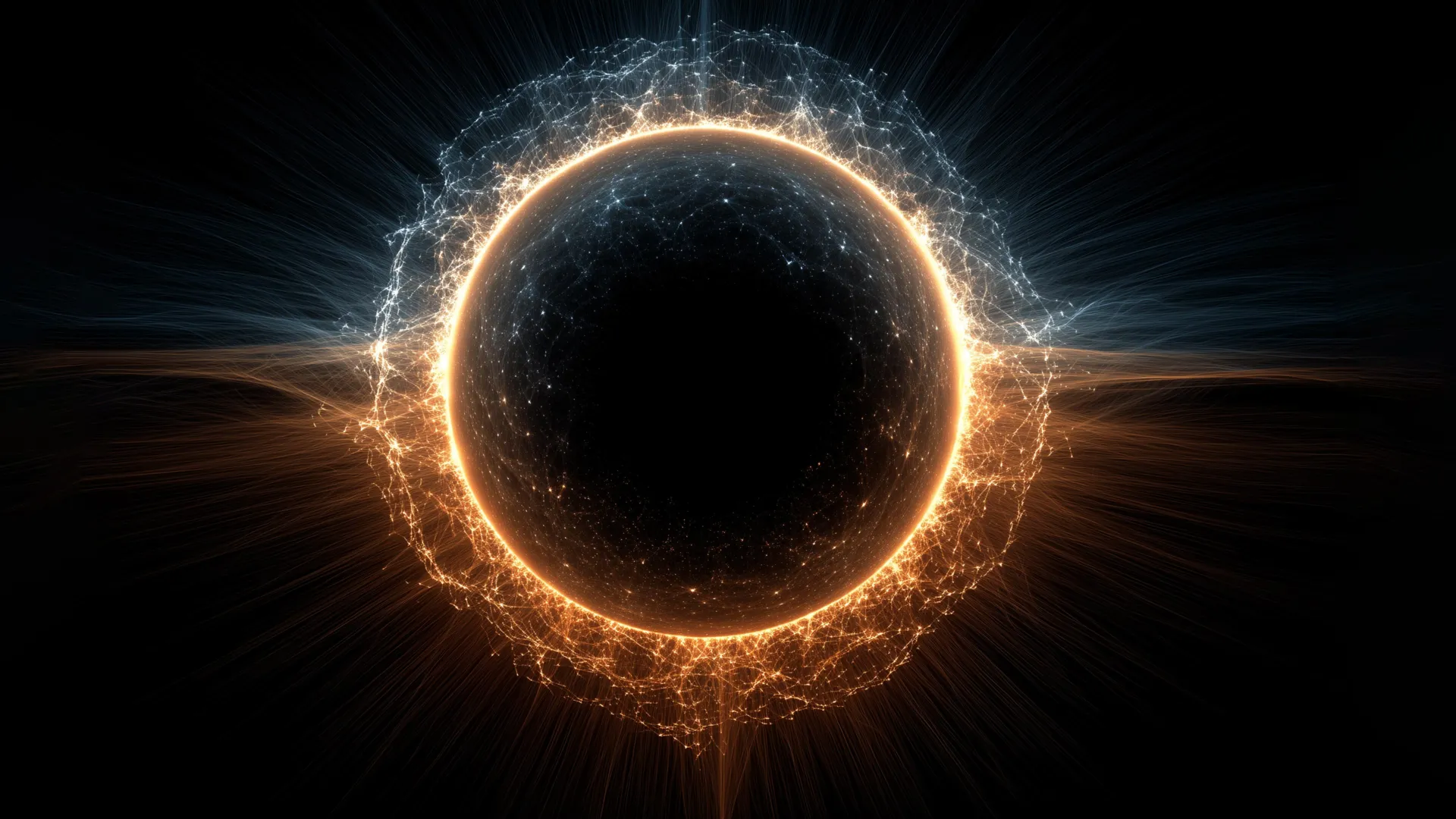
For nearly a century, the enigmatic presence of dark matter has stood as one of cosmology’s most profound puzzles. Though invisible to direct observation, its pervasive gravitational influence acts as the cosmic architect, sculpting the formation and evolution of galaxies and the vast, interconnected web of large-scale cosmic structures. At the esteemed Perimeter Institute for Theoretical Physics, two brilliant minds, James Gurian and Simon May, are at the forefront of unraveling a particularly fascinating aspect of this cosmic mystery: how a theoretical variant known as self-interacting dark matter (SIDM) might dynamically alter the growth and transformation of these celestial structures over eons. Their groundbreaking research, detailed in a pivotal publication in Physical Review Letters, introduces a novel computational tool engineered to meticulously study the intricate ways in which SIDM impacts the delicate dance of galaxy formation. This innovative approach transcends previous limitations, finally making it feasible to explore regimes of particle interactions that were once computationally prohibitive or exceedingly difficult to model with accuracy.
When Dark Matter Engages in Intimate Collisions
Self-interacting dark matter (SIDM) represents a theoretical paradigm where dark matter particles possess the remarkable ability to collide and interact with each other, while crucially remaining aloof and unresponsive to baryonic matter – the familiar stuff of protons, neutrons, and electrons that constitutes stars, planets, and ourselves. These particle-on-particle collisions are not dissipative in the traditional sense; instead, they conserve energy through a process physicists term elastic self-interactions. This unique collisional behavior can exert a profound and formative influence on dark matter halos, those immense, invisible envelopes of dark matter that encircle galaxies, providing the gravitational scaffolding that guides their very existence and evolutionary trajectory. James Gurian, a postdoctoral fellow at the Perimeter Institute and a co-author of the seminal study, elaborates on this concept: "Dark matter forms relatively diffuse clumps which are still much denser than the average density of the universe. The Milky Way and other galaxies live in these dark matter halos." These halos are not merely passive containers; they are dynamic entities shaped by the internal interactions of their constituent particles.
The Torrid Tale of Heat, Energy Flow, and Gravothermal Collapse
The inherent self-interacting nature of SIDM can ignite a dramatic phenomenon within these cosmic cradles known as gravothermal collapse. This process, seemingly counterintuitive to our everyday understanding of heat and energy, arises from a fundamental property of gravity itself. In systems bound by gravitational forces, such as dark matter halos, losing energy does not lead to cooling; rather, it results in heating. This paradoxical behavior is the engine driving gravothermal collapse. Gurian further illuminates this process: "You have this self-interacting dark matter which transports energy, and it tends to transport energy outwards in these halos. This leads to the inner core getting really hot and dense as energy is transported outwards." Over vast cosmic timescales, this continuous outward transport of energy from the halo’s periphery to its center can escalate, driving the dense inner core of the dark matter halo toward a catastrophic and dramatic collapse. The implications of such a collapse are far-reaching, potentially influencing the very mass distribution and gravitational potential of the halo, and by extension, the galaxies embedded within it.
Bridging the Chasm: A Missing Link in Dark Matter Modeling
The computational simulation of structures formed by SIDM has long presented a formidable challenge to astrophysicists and cosmologists. Traditional simulation methodologies, while powerful in their own right, typically excel under specific conditions, often failing to capture the full spectrum of SIDM behavior. Existing methods generally bifurcate: some perform optimally when dark matter is sparsely distributed and particle collisions are infrequent, mirroring the behavior of cold dark matter (CDM) models. Others are effective only in regimes of extremely high dark matter density where interactions are rampant. This leaves a significant observational and theoretical gap. "One approach is an N-body simulation approach that works really well when dark matter is not very dense and collisions are infrequent," Gurian explains. "The other approach is a fluid approach — and this works when dark matter is very dense and collisions are frequent." The critical problem arises in the intermediate regime, where the density is neither extremely low nor exceptionally high, and interactions are neither rare nor ubiquitous. "But for the in-between, there wasn’t a good method," Gurian laments. "You need an intermediate range approach to correctly go between the low-density and high-density parts. That was the origin of this project." This need for a bridging methodology was the driving force behind their innovative research.
A Revolution in Simulation: KISS-SIDM, Faster and More Accessible
To surmount this critical obstacle, Gurian and his collaborator, Simon May – a former postdoctoral researcher at Perimeter now serving as an ERC Preparative Fellow at Bielefeld University – have engineered a groundbreaking new computational code christened KISS-SIDM. This sophisticated software elegantly bridges the theoretical chasm between existing simulation paradigms, delivering a remarkable leap in accuracy while simultaneously demanding significantly less computational horsepower. Furthermore, its commitment to open science means that KISS-SIDM is publicly available, empowering the broader research community to explore the frontiers of SIDM physics. "Before, if you wanted to check different parameters for self-interacting dark matter, you needed to either use this really simplified fluid model, or go to a cluster, which is computationally expensive," Gurian states. "This code is faster, and you can run it on your laptop." This democratization of advanced cosmological simulation promises to accelerate discoveries and foster new avenues of research that were previously inaccessible due to computational constraints.
Unlocking New Realms of Dark Matter Physics
In recent years, the scientific community’s interest in interacting dark matter models has experienced a significant surge. This heightened focus is partly fueled by perplexing observational anomalies detected in the structures and dynamics of galaxies, features that appear to defy the predictions of standard, non-interacting dark matter models. Neal Dalal, a distinguished member of the Perimeter Institute research faculty, underscores this burgeoning interest: "There has been considerable interest recently in interacting dark matter models, due to possible anomalies detected in observations of galaxies that may require new physics in the dark sector." Dalal further emphasizes the transformative impact of Gurian and May’s work: "Previously, it was not possible to perform accurate calculations of cosmic structure formation in these sorts of models, but the method developed by James and Simon provides a solution that finally allows us to simulate the evolution of dark matter in models with significant interactions. Their paper should enable a broad spectrum of studies that previously were intractable." The KISS-SIDM code, by enabling precise simulations of these complex interactions, is poised to unlock a wealth of new insights into the fundamental nature of dark matter and its role in shaping the universe.
Profound Implications: From Black Holes to the Universe’s Deepest Secrets
The potential for the collapse of dark matter cores within SIDM halos holds particularly tantalizing implications, as it may leave behind observable signatures that could be detected by future astronomical surveys. Among these potential signatures, intriguing connections to the formation of supermassive black holes have been hypothesized. However, the ultimate fate and endpoint of this dramatic gravothermal collapse process remain a profound and open question in theoretical physics. "The fundamental question is, what’s the final endpoint of this collapse? That’s what we’d really like to do — study the phase after you form a black hole," Gurian expresses with a sense of scientific frontier. By providing the means to meticulously explore these extreme conditions and the subsequent evolutionary phases in unprecedented detail, the revolutionary KISS-SIDM code represents a monumental stride forward. It is a crucial key that promises to unlock some of the most profound and enduring questions about the elusive nature of dark matter and the intricate, dynamic tapestry of the universe we inhabit. This development heralds a new era in our quest to comprehend the invisible forces that govern cosmic evolution.