Imroatul Nasiyah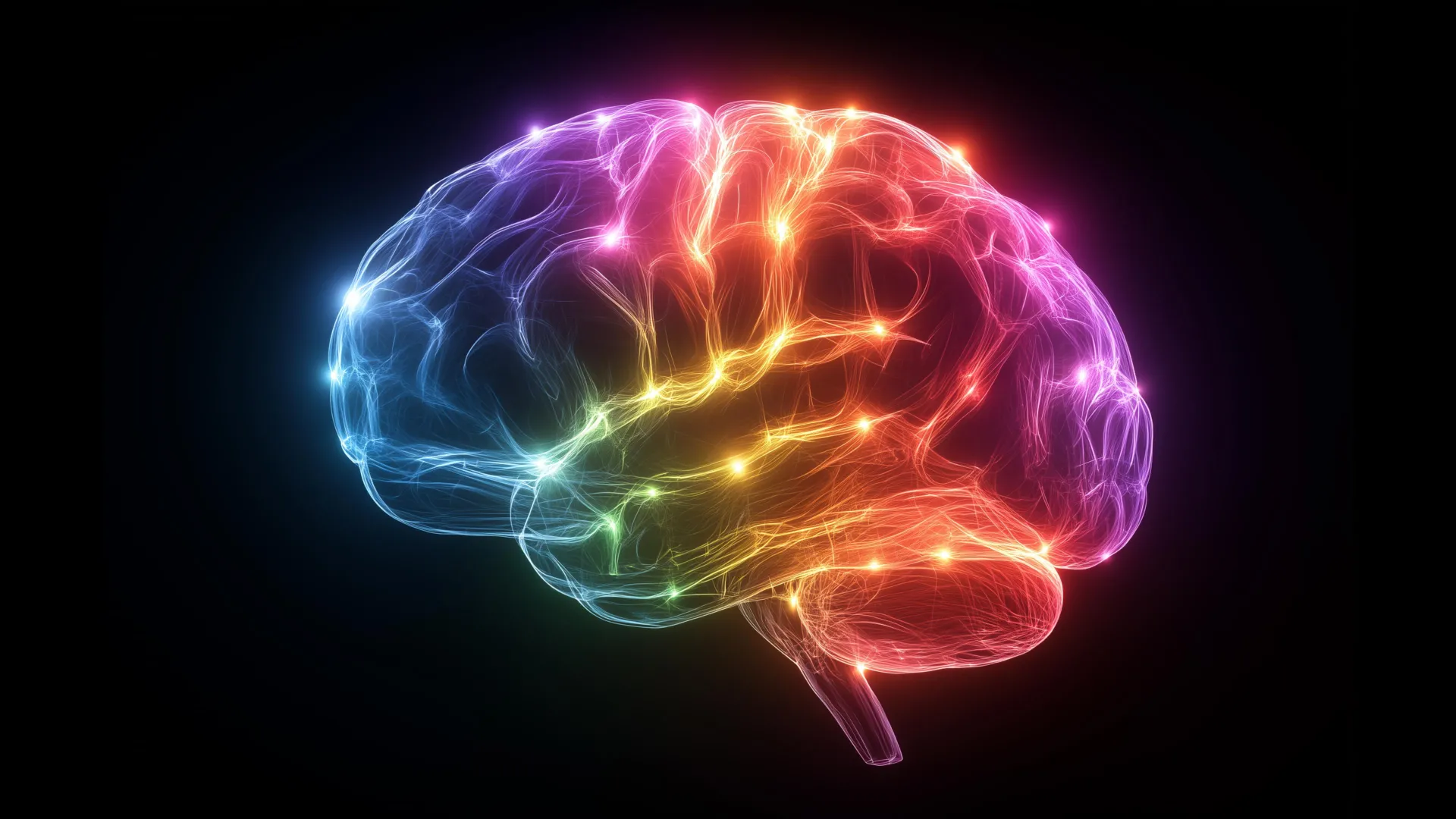
Researchers at Skoltech have pioneered a groundbreaking mathematical model that delves into the intricate workings of memory, revealing a potentially optimal sensory framework for the human brain. Their analysis, published in the prestigious journal Scientific Reports, has yielded fascinating insights with far-reaching implications for robotics, artificial intelligence, and our fundamental understanding of how the human mind encodes and retains information. The findings suggest that the commonly accepted five senses might not be the brain’s ideal configuration, hinting at a "sweet spot" of seven senses for maximizing cognitive capacity.
Professor Nikolay Brilliantov, a co-author of the study and a prominent figure at Skoltech AI, elaborated on the speculative yet compelling nature of their conclusions regarding human perception. "Our conclusion is of course highly speculative in application to human senses, although you never know: It could be that humans of the future would evolve a sense of radiation or magnetic field," he stated. "But in any case, our findings may be of practical importance for robotics and the theory of artificial intelligence. It appears that when each concept retained in memory is characterized in terms of seven features—as opposed to, say, five or eight—the number of distinct objects held in memory is maximized." This assertion directly challenges our ingrained understanding of sensory input and opens a new avenue for exploring the limits and potential of cognitive systems.
The Skoltech team’s research builds upon a rich academic tradition dating back to the early 20th century, focusing on the fundamental building blocks of memory: engrams. These engrams, conceptualized as transient patterns of neural activity across various brain regions, are the physical correlates of our memories. Each engram encapsulates a specific concept, defined by a constellation of distinct features. For instance, the concept of a banana, a familiar object to us, is not merely a single data point but a complex construct incorporating its visual appearance, characteristic aroma, unique taste, and other sensory attributes. Within this theoretical framework, the banana transforms into a five-dimensional entity within the vast, multi-dimensional landscape of our mental repository, where every stored memory occupies its own unique dimensional space.
A crucial aspect of engram function, as modeled by the researchers, is their dynamic evolution. Engrams are not static entities; they are constantly being refined and reshaped by ongoing sensory experiences. When an engram is repeatedly activated by external stimuli, it becomes "sharper," indicating a more robust and easily retrievable memory. Conversely, infrequent activation leads to a "diffuse" engram, making the memory more susceptible to fading or forgetting. This continuous interplay between sensory input and neural representation forms the very essence of learning and forgetting, shaping our perception of the world as we interact with it.
Professor Brilliantov further explained the mathematical underpinnings of this evolutionary process. "We have mathematically demonstrated that the engrams in the conceptual space tend to evolve toward a steady state, which means that after some transient period, a ‘mature’ distribution of engrams emerges, which then persists in time," he commented. "As we consider the ultimate capacity of a conceptual space of a given number of dimensions, we somewhat surprisingly find that the number of distinct engrams stored in memory in the steady state is the greatest for a concept space of seven dimensions. Hence the seven senses claim." This "steady state" represents a stable equilibrium where the brain has optimally organized its memories. The surprising finding is that this optimal organization appears to be achieved when concepts are described by seven features.
To further clarify this pivotal conclusion, the researchers presented it in a more accessible manner. Imagine the objects that populate our reality, each characterized by a finite set of attributes, or "features." These features can be conceptualized as dimensions within a broader "conceptual space." The goal, from a memory perspective, is to maximize the brain’s capacity to store and differentiate distinct concepts associated with these objects. A larger capacity translates to a more profound and nuanced understanding of the world. The mathematical models revealed that this capacity is indeed maximized when the dimensionality of this conceptual space—essentially, the number of features used to describe each concept—is precisely seven. This mathematical elegance is what leads to the intriguing hypothesis of seven optimal senses.
A significant aspect of this discovery is its robustness. The researchers emphasize that this "magic number" of seven is not contingent on the specific intricacies of their model or the nature of the sensory stimuli themselves. Instead, it appears to be an inherent, persistent characteristic of memory engrams as fundamental units of information storage. However, a crucial caveat is acknowledged: engrams that are similar in nature and clustered around a common central representation are treated as a single, consolidated memory when calculating overall capacity. This suggests that the brain employs a form of memory compression or generalization to avoid redundancy and optimize storage.
The enigma of memory, intertwined with the profound mystery of consciousness, has long captivated scientists and philosophers. Advancing theoretical models of memory, such as the one developed by the Skoltech team, is paramount to unlocking new insights into the human mind. Furthermore, these advancements hold immense promise for the field of artificial intelligence, offering a potential roadmap for creating AI agents that can replicate humanlike memory capabilities, leading to more sophisticated and adaptable intelligent systems. The quest to understand memory, it seems, is not just about recalling the past, but about shaping the future of both human cognition and artificial intelligence. The possibility that our brains might be wired for a richer sensory experience than we currently perceive is a tantalizing prospect that warrants further exploration and research. The implications for fields ranging from neuroscience to computational modeling are profound, potentially revolutionizing how we design and interact with intelligent systems.