Imroatul Nasiyah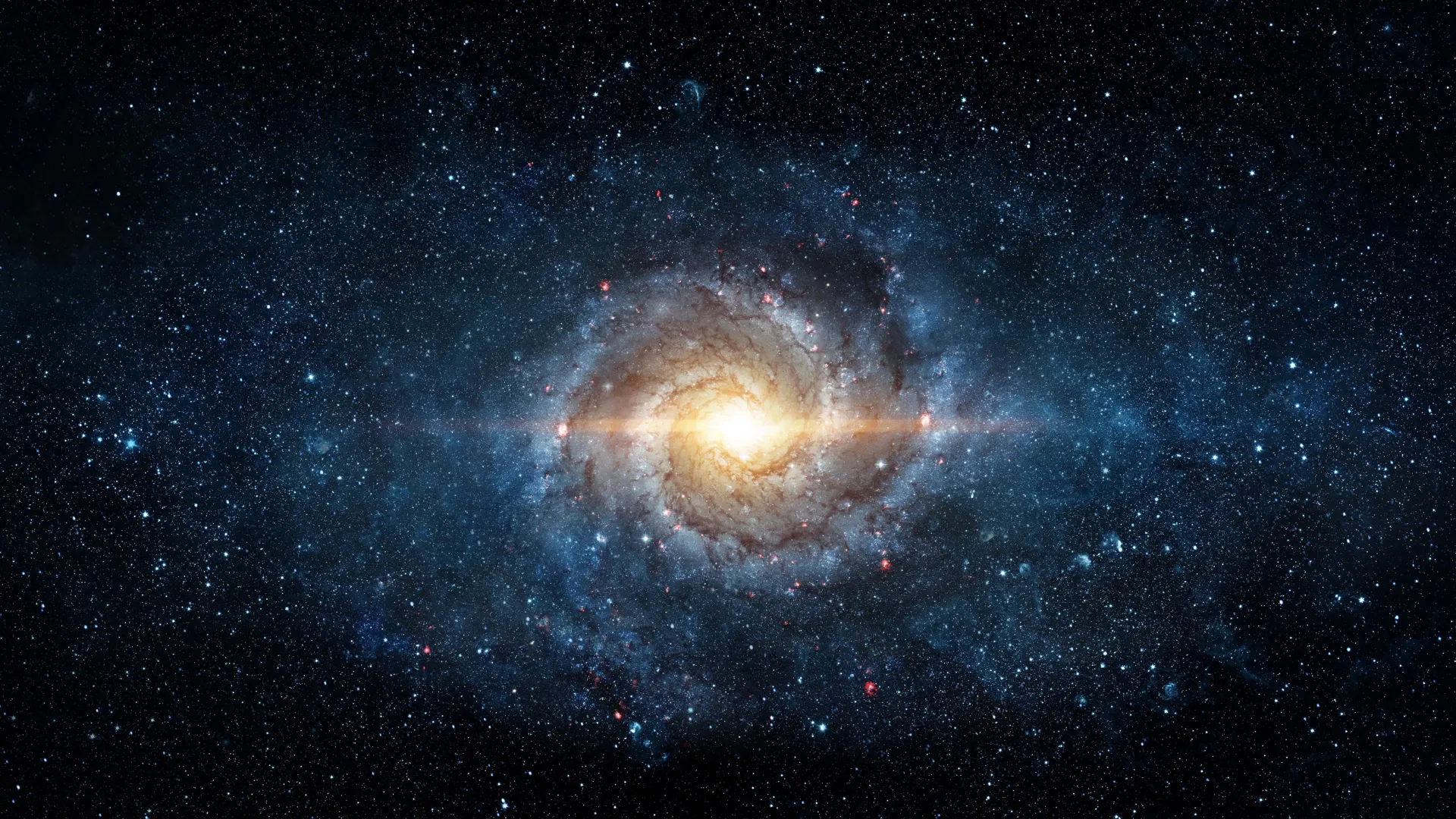
A groundbreaking achievement in computational astrophysics and artificial intelligence has emerged from the collaborative efforts of researchers led by Keiya Hirashima at the RIKEN Center for Interdisciplinary Theoretical and Mathematical Sciences (iTHEMS) in Japan, in partnership with The University of Tokyo and Universitat de Barcelona in Spain. This international team has unveiled the first simulation of the Milky Way galaxy capable of tracking the evolution of over 100 billion individual stars across a span of 10,000 years. This monumental feat was realized by ingeniously merging advanced artificial intelligence (AI) techniques with sophisticated numerical simulation methodologies. The resulting model boasts a star count that is an astonishing 100 times greater than that of previous state-of-the-art simulations, and remarkably, it was generated over 100 times faster. The significance of this work, presented at the prestigious international supercomputing conference SC ’25, extends far beyond astrophysics, heralding a new era for high-performance computing and AI-assisted scientific modeling. The innovative strategy employed by Hirashima’s team holds immense potential to be adapted for large-scale Earth system studies, including critical research in climate and weather prediction.
The long-standing ambition of astrophysicists has been to construct simulations of the Milky Way that possess the granular detail to follow the trajectory and evolution of every single star. Such comprehensive models would provide an unparalleled opportunity for researchers to directly compare theoretical frameworks of galactic evolution, structure, and the intricate processes of star formation against a wealth of observational data. However, the sheer complexity of accurately simulating a galaxy like the Milky Way presents formidable challenges. This endeavor necessitates the precise calculation of gravitational interactions, the complex dynamics of fluid behavior within the interstellar medium, the nucleosynthesis of chemical elements, and the energetic phenomena of supernova explosions, all across vast temporal and spatial scales. The computational demands of such a task are, therefore, exceptionally immense.
Historically, scientists have been unable to simulate a galaxy as vast as the Milky Way while simultaneously maintaining the fine-grained resolution required to track individual stars. Current leading-edge simulations typically represent systems with a mass equivalent to roughly one billion suns, a figure significantly dwarfed by the more than 100 billion stars that constitute our own galaxy. Consequently, the smallest computational "particle" in these models usually represents a collective of approximately 100 stars. This aggregation inevitably leads to an averaging effect, obscuring the unique behaviors of individual stars and thereby limiting the fidelity of small-scale processes. A primary obstacle is intrinsically linked to the time intervals between computational steps. To accurately capture rapid and transient events, such as the dramatic evolution of a supernova, simulations must advance in extremely small time increments.
Reducing the time step for a simulation translates directly into a substantial increase in computational effort. Even with the most advanced physics-based models available today, simulating the Milky Way star by star would demand approximately 315 hours of computation for every 1 million years of galactic evolution. At this demanding rate, generating just 1 billion years of galactic activity would require over 36 years of real-world time. The intuitive approach of simply augmenting the number of supercomputer cores to accelerate the process is not a practical or efficient solution. As the number of cores increases, energy consumption escalates dramatically, and computational efficiency tends to diminish.
To surmount these significant barriers, Hirashima and his team conceived and implemented a novel methodology that artfully blends a deep learning surrogate model with conventional physical simulations. The surrogate model was meticulously trained using high-resolution simulations of supernova events. Through this training, it acquired the capability to predict the dispersion of gas following a supernova explosion over periods of up to 100,000 years, all without imposing any additional computational burden on the main simulation. This intelligent AI component empowered the researchers to effectively capture the overarching behavior of the galaxy while simultaneously modeling intricate small-scale events, including the detailed physics of individual supernovae. The team rigorously validated their innovative approach by comparing its outcomes against large-scale simulation runs conducted on RIKEN’s Fugaku supercomputer and The University of Tokyo’s Miyabi Supercomputer System.
This pioneering method achieves true individual-star resolution for galaxies containing more than 100 billion stars, and it accomplishes this with an unprecedented level of speed. The simulation of a single million years of galactic evolution now takes a mere 2.78 hours, meaning that a billion years of activity can be simulated in approximately 115 days, a stark contrast to the previously estimated 36 years.
The implications of this hybrid AI approach extend far beyond the realm of astrophysics, promising to revolutionize numerous fields of computational science that grapple with the challenge of linking small-scale physical phenomena with large-scale behaviors. Disciplines such as meteorology, oceanography, and climate modeling face analogous complexities and stand to benefit immensely from tools that can accelerate intricate, multi-scale simulations.
"I believe that the integration of AI with high-performance computing represents a fundamental paradigm shift in how we approach multi-scale, multi-physics problems across the computational sciences," stated Hirashima. He further emphasized the broader scientific impact: "This achievement also demonstrates that AI-accelerated simulations can transcend mere pattern recognition and evolve into genuine instruments for scientific discovery—aiding us in tracing the very origins of the elements that form the basis of life itself within our galaxy." This breakthrough signifies not only a leap in our understanding of the cosmos but also a powerful testament to the transformative potential of AI in scientific exploration.