Imroatul Nasiyah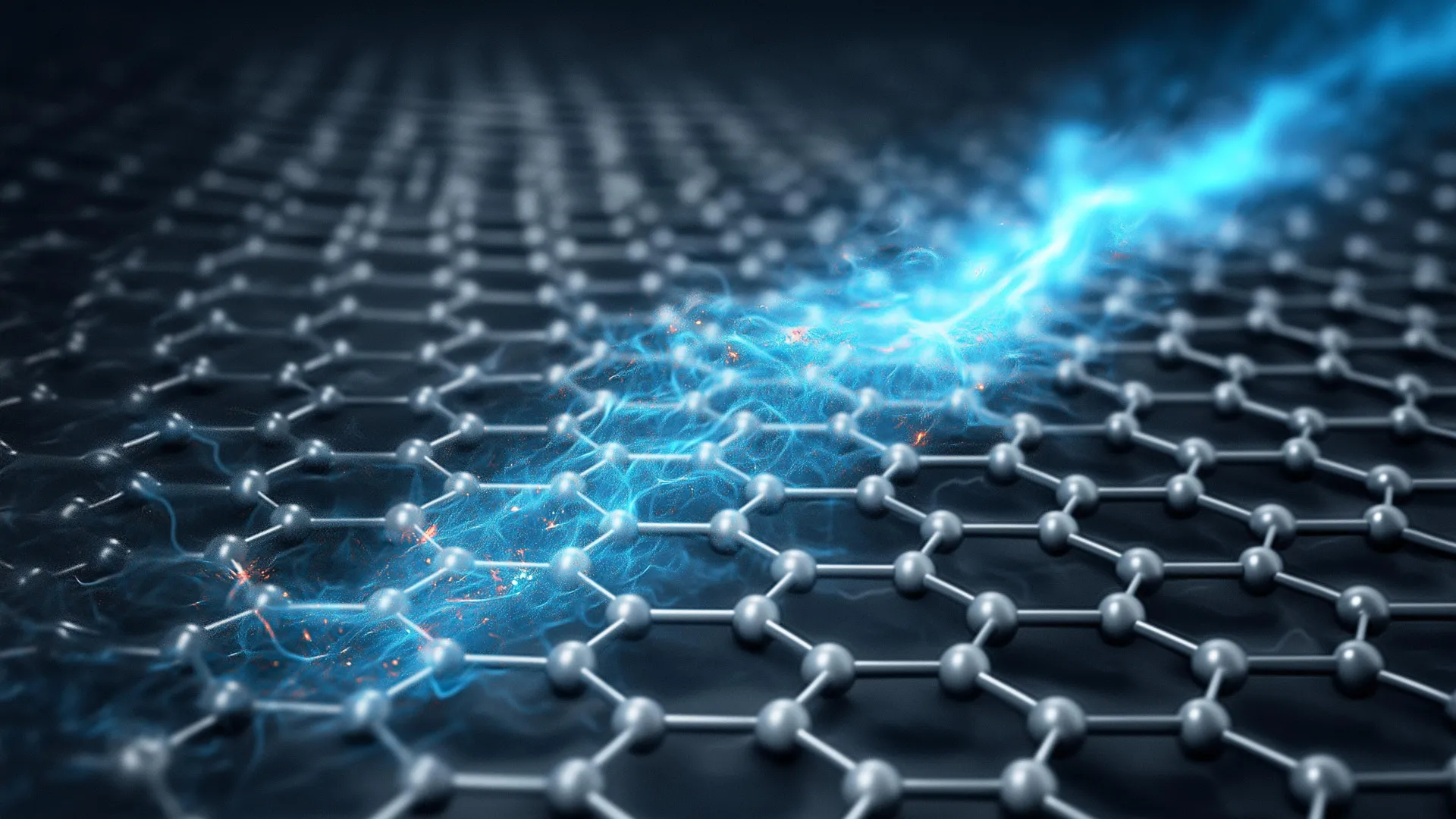
At its core, graphene is a marvel of atomic architecture. Imagine a honeycomb lattice, but made of a single, perfectly flat layer of carbon atoms, each bonded intimately to its neighbors. This seemingly simple structure, just one atom thick, bestows upon graphene an astonishing combination of strength, flexibility, and electrical conductivity that has captivated scientists and engineers for years. Its remarkable thinness, coupled with its robustness and its ability to ferry electrons with unparalleled ease, has earned it the moniker "miracle material." This has already spurred a flurry of research and development, with applications ranging from the screens of our smartphones and wearable devices, which could become as pliable as paper, to highly sensitive sensors capable of detecting even the faintest traces of substances. Furthermore, its prowess in electrical conductivity and energy storage makes it a prime candidate for next-generation batteries that charge in minutes and solar cells that capture sunlight with unprecedented efficiency.
However, the recent findings from a collaborative effort led by the University of Göttingen, in partnership with research teams from Braunschweig, Bremen, and Fribourg, suggest that graphene’s potential extends far beyond these already impressive applications. The researchers have, for the first time, directly witnessed and confirmed the presence of "Floquet effects" within graphene. This is a significant breakthrough because it validates the concept of Floquet engineering – a sophisticated technique that harnesses precisely timed pulses of light to fundamentally alter a material’s inherent properties. Crucially, this study demonstrates that Floquet engineering is not limited to specific types of materials but can also be effectively applied to metallic and semi-metallic quantum materials, with graphene serving as a compelling example. This discovery is not merely an academic curiosity; it represents a critical step towards a future where materials can be sculpted and tuned at the quantum level with remarkable precision.
The experimental ingenuity employed in this study was paramount to its success. To observe these fleeting quantum phenomena, the scientists utilized a cutting-edge technique known as femtosecond momentum microscopy. This advanced method acts like an ultra-high-speed camera for electrons, enabling researchers to capture and analyze extremely rapid changes in their behavior. The process involved illuminating the graphene samples with rapid bursts of laser light. Immediately following these light pulses, a second, delayed pulse was used to probe the graphene. This allowed the scientists to meticulously track the response of the electrons to the light stimulus over unimaginably short timescales – fractions of a second known as femtoseconds. It is within these infinitesimally small durations that the quantum transformations, governed by Floquet effects, occur.
Dr. Marco Merboldt, the lead author of the study from the University of Göttingen, expressed the significance of their findings: "Our measurements clearly prove that ‘Floquet effects’ occur in the photoemission spectrum of graphene." He elaborated on the profound implications: "This makes it clear that Floquet engineering actually works in these systems — and the potential of this discovery is huge." The direct evidence gathered in this research unequivocally demonstrates that Floquet engineering is a viable and effective approach for manipulating a wide spectrum of materials. This breakthrough brings scientists significantly closer to achieving a sophisticated level of control, where they can design and shape quantum materials with bespoke characteristics, all by employing precisely timed laser pulses within extremely short intervals.
The ability to precisely tune materials at the quantum level is not just an abstract scientific achievement; it holds the key to unlocking a new generation of advanced technologies. Professor Marcel Reutzel, who co-led the project in Göttingen alongside Professor Stefan Mathias, highlighted the transformative potential: "Our results open up new ways of controlling electronic states in quantum materials with light. This could lead to technologies in which electrons are manipulated in a targeted and controlled manner." This implies a future where the very behavior of electrons within a material can be dictated with laser-like precision, leading to devices that operate with unprecedented speed, efficiency, and intelligence.
What makes this discovery particularly exciting, according to Professor Reutzel, is its capacity to unlock and investigate "topological properties." These are not just ordinary characteristics; they are exceptionally stable and robust properties inherent to certain quantum materials. These special properties have immense implications for the development of technologies that are inherently reliable and fault-tolerant. For instance, the pursuit of stable and scalable quantum computers, which promise to solve problems currently intractable for even the most powerful supercomputers, could be significantly accelerated by harnessing these topological properties. Similarly, new types of sensors, capable of detecting minute changes in their environment with unparalleled accuracy and resilience, could emerge from this research.
The research that led to this groundbreaking discovery was generously supported by the German Research Foundation (DFG) through the University of Göttingen’s Collaborative Research Centre, aptly named "Control of Energy Conversion at Atomic Scales." This funding highlights the significant national and international recognition of the importance of this line of inquiry. The collaborative nature of the project, bringing together expertise from multiple institutions, underscores the complex and interdisciplinary nature of modern quantum physics research.
In essence, this research moves graphene from being a remarkable material with impressive electrical and physical properties to a programmable quantum platform. By understanding and applying Floquet engineering, scientists can now envision a future where the fundamental behavior of electrons within graphene can be precisely controlled by light. This opens up a vista of possibilities for future electronics, including computers that operate at speeds and efficiencies currently unimaginable, and sensors that can detect and analyze with unparalleled sensitivity. Furthermore, the ability to manipulate topological properties in graphene could be a critical stepping stone towards realizing robust and scalable quantum computers, ushering in a new era of computational power and scientific discovery. The "miracle material" has indeed revealed a hidden quantum power, poised to reshape the technological landscape of tomorrow.