Imroatul Nasiyah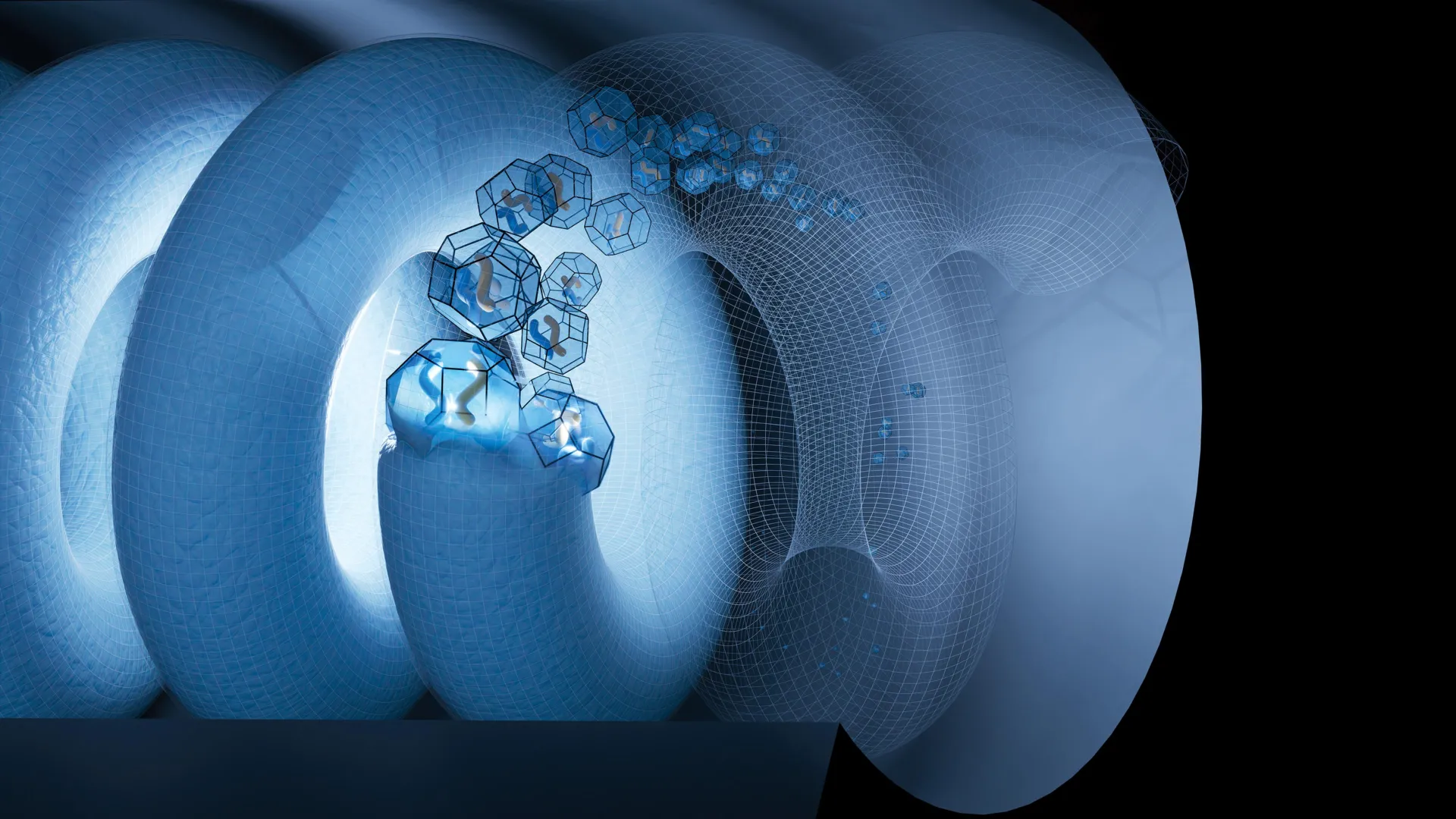
This groundbreaking development, led by Professor Young Keun Kim of Korea University and Professor Ki Tae Nam of Seoul National University, centers on the creation of novel chiral magnetic nanohelices. Their pioneering work, detailed in the prestigious scientific journal Science, utilizes these unique nanostructures to regulate electron spin without the need for extreme conditions. "These nanohelices achieve spin polarization exceeding ~80% — just by their geometry and magnetism," stated Professor Young Keun Kim, a co-corresponding author of the study. He elaborated on the significance of their findings, emphasizing, "This is a rare combination of structural chirality and intrinsic ferromagnetism, enabling spin filtering at room temperature without complex magnetic circuitry or cryogenics, and provides a new way to engineer electron behavior using structural design."
The research team’s ingenuity lies in their ability to fabricate both left- and right-handed chiral magnetic nanohelices through a meticulously controlled electrochemical metal crystallization process. A key innovation was the introduction of trace amounts of specific chiral organic molecules, such as cinchonine or cinchonidine. These molecules acted as templates, guiding the formation of helices with precisely defined handedness – a remarkable feat, particularly in inorganic systems where such control is notoriously difficult. The researchers then experimentally demonstrated a crucial property: when these nanohelices exhibit a right-handedness, they preferentially allow electrons with one spin direction to pass through, while effectively blocking electrons with the opposite spin. This discovery marks the first instance of a three-dimensional inorganic helical nanostructure capable of achieving such precise electron spin control.
Professor Ki Tae Nam, also a co-corresponding author, highlighted the significance of chirality in this context. "Chirality is well-understood in organic molecules, where the handedness of a structure often determines its biological or chemical function," he noted. "But in metals and inorganic materials, controlling chirality during synthesis is extremely difficult, especially at the nanoscale. The fact that we could program the direction of inorganic helices simply by adding chiral molecules is a breakthrough in materials chemistry." This ability to imbue inorganic materials with a specific "handedness" at the nanoscale opens up new avenues for designing functional materials.
To rigorously confirm the chirality of the fabricated nanohelices, the research team developed an innovative electromotive force (emf)-based chirality evaluation method. By subjecting the helices to rotating magnetic fields, they measured the generated emf. Crucially, the left- and right-handed helices produced distinct and opposite emf signals. This provided a quantitative and reliable method for verifying chirality, even in materials that might not exhibit strong interactions with light, which is often used for chiral detection.
Beyond their ability to filter spins based on handedness, the research team made another significant discovery regarding the magnetic properties of the nanohelices. They found that the inherent magnetization of the material itself, stemming from the aligned spins of its electrons, facilitates long-distance spin transport at room temperature. This remarkable effect, sustained by strong exchange energy within the magnetic material, remained consistent regardless of the angle between the chiral axis and the direction of spin injection. This phenomenon was notably absent in non-magnetic nanohelices of comparable scale, underscoring the critical role of the material’s intrinsic magnetism. This observation represents the first measurement of asymmetric spin transport within a relatively macro-scaled chiral body, a critical step towards practical applications. Furthermore, the team successfully demonstrated a solid-state device that exhibited chirality-dependent conduction signals, a compelling indication of the technology’s readiness for practical spintronic applications.
Professor Kim articulated the broad implications of their work, stating, "We believe this system could become a platform for chiral spintronics and architecture of chiral magnetic nanostructures." This research signifies a powerful convergence of geometric design, magnetism, and spin transport, all realized using scalable and readily available inorganic materials. The versatility of their electrochemical method, which allows for control over not only the handedness (left/right) but also the complexity of the helical structure (e.g., double or multiple strands), is expected to be a significant contributor to the development of entirely new application areas. The ability to precisely engineer magnetic nanostructures with specific chiral properties opens doors to a new generation of spintronic devices, potentially leading to advancements in data storage density, processing speeds, and energy efficiency that were previously confined to theoretical discussions. The implications extend beyond computing, potentially impacting fields like quantum information processing and novel sensor technologies. The controlled manipulation of electron spin at the nanoscale, as demonstrated by these magnetic nanohelices, is a fundamental requirement for many advanced technological frontiers.