Imroatul Nasiyah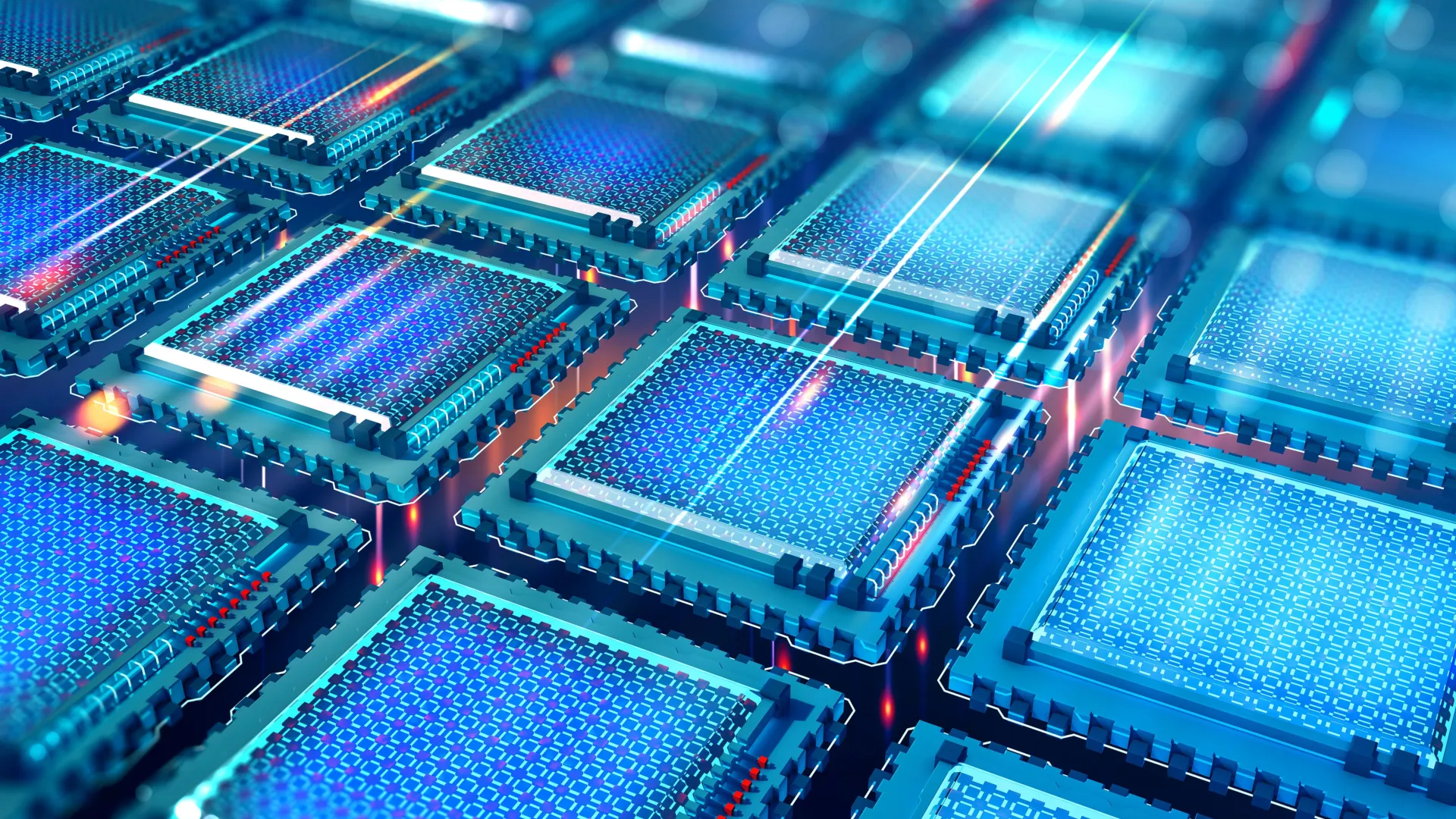
UNSW Sydney nano-tech startup Diraq has achieved a monumental breakthrough, demonstrating that its quantum chips are not merely theoretical prototypes confined to pristine laboratory conditions but can robustly perform in real-world production environments, consistently maintaining the critical 99% accuracy essential for the viability of quantum computers. This pivotal achievement, detailed in a groundbreaking publication in the prestigious journal Nature, signifies a significant leap forward in the quest for practical, scalable quantum computing, moving it from the realm of academic curiosity to tangible industrial application.
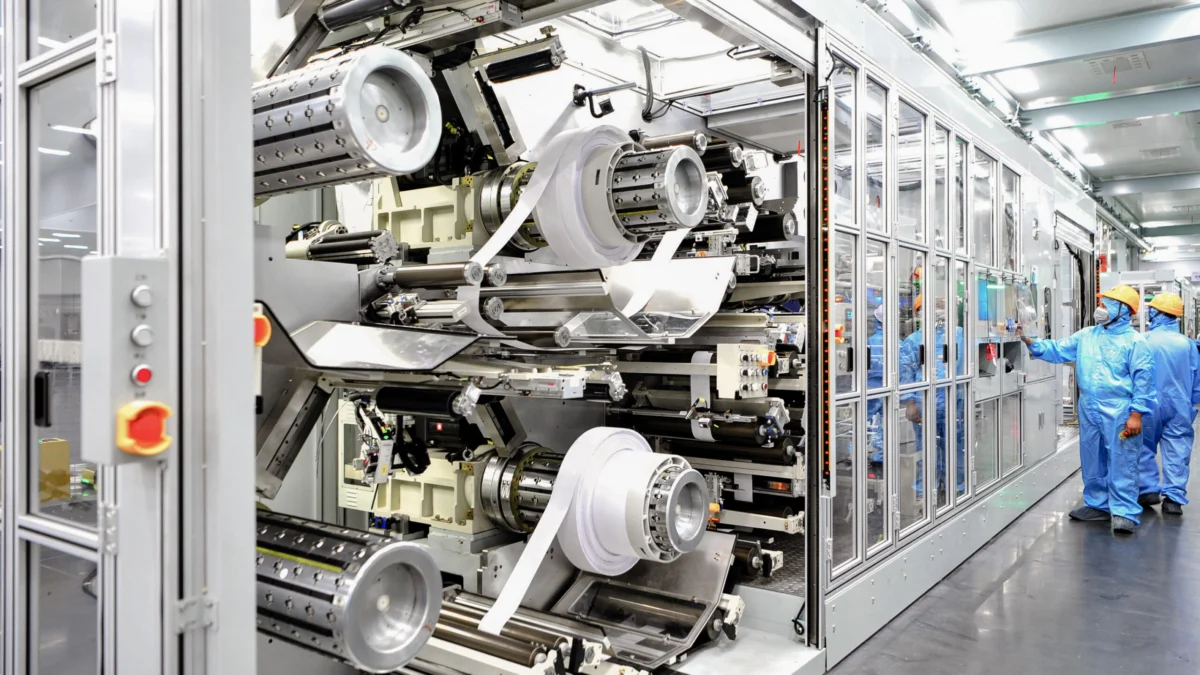
At the heart of this development lies a strategic collaboration between Diraq, a trailblazer in the field of silicon-based quantum computing, and the esteemed European nanoelectronics institute, imec. This partnership has culminated in the successful demonstration that quantum chips, when manufactured on a standard semiconductor chip fabrication line, exhibit the same level of reliability and performance as those meticulously crafted and tested under the controlled experimental conditions of a research laboratory at UNSW. This transition from lab to fab is a critical hurdle that many quantum computing technologies have struggled to overcome, and Diraq’s success with silicon qubits marks a significant validation of their approach.
Professor Andrew Dzurak, a distinguished figure in UNSW Engineering and the visionary founder and CEO of Diraq, articulated the profound implications of this achievement. He highlighted that until this point, a definitive proof that the high fidelity, or accuracy, of quantum processors achieved in experimental settings could be successfully translated to a large-scale manufacturing environment had remained elusive. "Now it’s clear that Diraq’s chips are fully compatible with manufacturing processes that have been around for decades," Professor Dzurak stated, underscoring the seamless integration of their advanced quantum technology with established industrial infrastructure. This compatibility is a game-changer, suggesting that the immense scaling potential of the semiconductor industry can be leveraged for quantum computing.
The research paper, published on September 24th, meticulously details the findings. Diraq-designed, imec-fabricated devices consistently achieved over 99% fidelity in operations involving two quantum bits, or ‘qubits’. This specific metric is of paramount importance as it directly impacts the potential for Diraq’s quantum processors to reach what is known as ‘utility scale’. Utility scale is defined as the point at which a quantum computer’s commercial value surpasses its operational cost, a key benchmark established by the United States’ Defense Advanced Research Projects Agency (DARPA) through its Quantum Benchmarking Initiative. This initiative aims to assess the progress of Diraq and 17 other leading companies in their pursuit of functional, valuable quantum computing systems.
The promise of utility-scale quantum computers lies in their unprecedented ability to tackle complex problems that are currently intractable for even the most powerful high-performance classical computers. However, achieving this threshold necessitates the precise storage and manipulation of quantum information within millions of qubits. This massive scale is required to counteract the inherent fragility of quantum states and mitigate the errors that inevitably arise. Professor Dzurak emphasized this point, stating, "Achieving utility scale in quantum computing hinges on finding a commercially viable way to produce high-fidelity quantum bits at scale."
The strategic alliance between Diraq and imec offers a clear and compelling solution to this challenge. "Diraq’s collaboration with imec makes it clear that silicon-based quantum computers can be built by leveraging the mature semiconductor industry, which opens a cost-effective pathway to chips containing millions of qubits while still maximizing fidelity," Professor Dzurak elaborated. This approach harnesses the decades of innovation and infrastructure built around silicon semiconductor manufacturing, a trillion-dollar industry that has perfected the art of packing billions of transistors onto a single chip.
Silicon has emerged as a front-runner among the various materials being explored for quantum computing applications. Its inherent advantages are manifold: it possesses the capacity to integrate millions of qubits onto a single chip and, crucially, it integrates seamlessly with the existing microchip industry. This compatibility allows for the utilization of established manufacturing techniques that have driven the exponential growth in computing power over the past several decades.
Prior to this landmark achievement, Diraq had already demonstrated that qubits fabricated within the controlled environment of an academic laboratory could attain high fidelity when performing two-qubit logic gates, which are the fundamental building blocks of any future quantum computer. Nevertheless, a lingering question remained: could this high level of fidelity be replicated in qubits manufactured in the more demanding environment of a semiconductor foundry? Diraq’s latest results definitively answer this question in the affirmative.
"Our new findings demonstrate that Diraq’s silicon qubits can be fabricated using processes that are widely used in semiconductor foundries, meeting the threshold for fault tolerance in a way that is cost-effective and industry-compatible," Professor Dzurak affirmed. Fault tolerance, the ability of a quantum computer to correct errors that arise from its fragile quantum nature, is a non-negotiable requirement for building reliable and useful quantum machines. By meeting this threshold in an industry-compatible manner, Diraq is not only advancing the science but also paving a practical road to mass production.
This is not the first time Diraq and imec have joined forces to push the boundaries of quantum computing. In previous collaborations, they had already established that qubits manufactured using CMOS processes – the very same technology that powers everyday computer chips – could achieve remarkable accuracy, boasting 99.9% accuracy in single-qubit operations. However, the more complex two-qubit operations, which are absolutely critical for unlocking the full potential of quantum computing and achieving utility scale, had not yet been demonstrated with this level of industrial compatibility.
The successful demonstration of high-fidelity two-qubit operations in a manufactured setting represents a significant leap beyond their previous achievements. This advancement directly addresses a key bottleneck in the development of quantum computers. Professor Dzurak concluded with a powerful statement about the future implications: "This latest achievement clears the way for the development of a fully fault-tolerant, functional quantum computer that is more cost effective than any other qubit platform." This assertion points towards a future where quantum computing is not only scientifically feasible but also economically viable, potentially democratizing access to its transformative capabilities across a wide range of industries and scientific disciplines. The implications for fields such as drug discovery, materials science, financial modeling, and artificial intelligence are profound, promising accelerated innovation and the resolution of problems previously deemed unsolvable.