Imroatul Nasiyah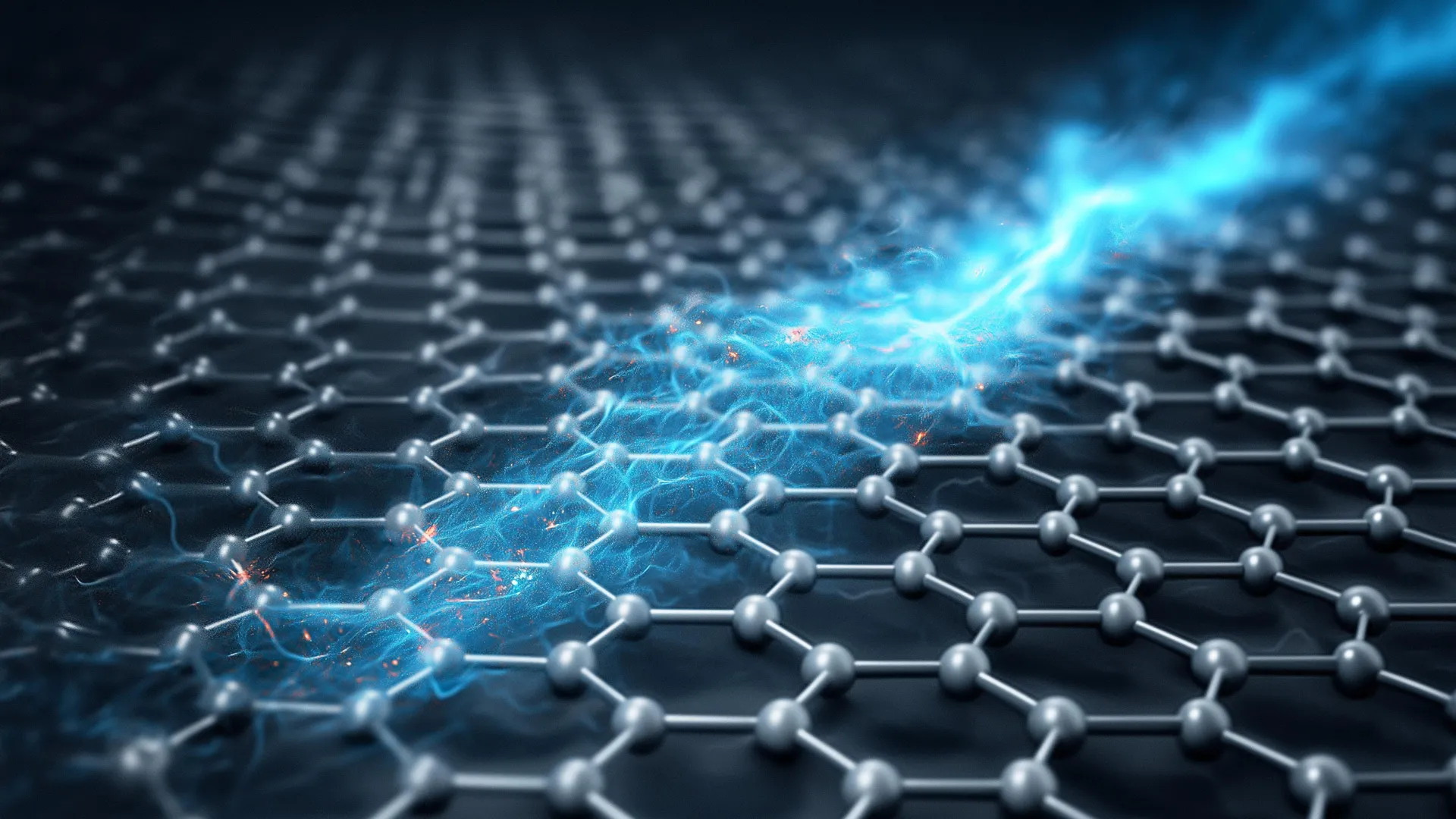
A groundbreaking new study, spearheaded by researchers at the University of Göttingen in close collaboration with esteemed scientific teams in Braunschweig, Bremen, and Fribourg, has unveiled a previously hidden quantum capability within graphene, suggesting it is poised to achieve even more astonishing feats. For the first time in scientific history, researchers have directly observed and confirmed the presence of "Floquet effects" within graphene. This pivotal finding not only validates a long-standing scientific hypothesis but also definitively answers a crucial question that has captivated the quantum physics community for years: can Floquet engineering, a sophisticated technique that leverages precisely timed light pulses to dynamically alter a material’s intrinsic properties, be effectively applied to metallic and semi-metallic quantum materials like graphene? The profound implications of this discovery have been formally documented and published in the prestigious scientific journal Nature Physics, marking a significant milestone in our understanding and manipulation of quantum matter.
The scientific endeavor to probe these elusive Floquet effects in graphene was executed with remarkable precision and ingenuity, employing a cutting-edge methodology known as femtosecond momentum microscopy. This advanced technique empowers researchers with the extraordinary ability to capture and analyze incredibly rapid changes in the electronic behavior of materials at the atomic and subatomic levels. In this experiment, meticulously prepared graphene samples were subjected to intense, ultrashort bursts of light, delivered in rapid pulses. Immediately following these excitation pulses, the researchers utilized a second, precisely timed delayed pulse to meticulously observe and track the subsequent response of the electrons within the graphene lattice. This dynamic interplay between light and matter, captured at timescales measured in femtoseconds (quadrillionths of a second), provided an unprecedented window into the quantum phenomena at play.
"Our measurements provide unequivocal and crystal-clear proof that ‘Floquet effects’ are indeed occurring within the photoemission spectrum of graphene," stated Dr. Marco Merboldt, the lead author of the study and a distinguished researcher at the University of Göttingen. He further elaborated, "This finding unequivocally demonstrates that Floquet engineering is not merely a theoretical concept but a practically viable and highly effective technique for manipulating these particular types of quantum systems. The sheer potential inherent in this discovery is immense and far-reaching." The research unequivocally shows that the principles of Floquet engineering are applicable across a broad spectrum of materials, pushing the boundaries of what was previously thought possible. This breakthrough brings scientists significantly closer to achieving the ultimate goal of precisely shaping quantum materials, imbuing them with specific, tailor-made characteristics by employing laser pulses with exquisite temporal control, all within unimaginably short intervals.
The ability to precisely tune the properties of materials with such unparalleled accuracy holds the promise of revolutionizing numerous technological domains, laying a robust foundation for the development of future generations of electronics, computing devices, and highly advanced sensor systems. Professor Marcel Reutzel, who co-led this pioneering project in Göttingen alongside Professor Stefan Mathias, elucidated the broader significance of their findings: "Our results unveil entirely novel avenues for controlling the electronic states within quantum materials using light as a precise tool. This opens the door to the creation of sophisticated technologies where electrons can be manipulated in a highly targeted, controlled, and predictable manner."
Professor Reutzel continued, highlighting an especially exciting facet of their research: "What is particularly exhilarating about this development is that it also bestows upon us the capability to thoroughly investigate topological properties. These are a special class of highly stable and robust properties that hold immense promise for the development of exceptionally reliable quantum computers and novel, ultra-sensitive sensors for the future." Topological properties are of paramount importance in quantum computing because they are inherently resistant to environmental noise and disturbances, offering a pathway to building fault-tolerant qubits. In the realm of sensors, these properties could lead to devices capable of detecting even the faintest signals with unprecedented accuracy.
This groundbreaking research was made possible through the generous support of the German Research Foundation (DFG), specifically through its funding of Göttingen University’s Collaborative Research Centre, aptly named "Control of Energy Conversion at Atomic Scales." This interdisciplinary center fosters an environment of innovation and collaboration, bringing together leading minds to tackle fundamental challenges in physics and materials science. The successful observation of Floquet effects in graphene represents a significant leap forward in our quest to harness the exotic properties of quantum materials, promising to usher in an era of transformative technological advancements that could reshape our world in ways we are only beginning to imagine. The implications for future electronics are particularly profound, suggesting the possibility of devices that are not only faster and more energy-efficient but also possess entirely new functionalities driven by quantum phenomena. From advanced artificial intelligence and sophisticated data processing to highly sensitive medical diagnostics and robust quantum communication networks, the fingerprints of this quantum leap in graphene research are likely to be found across a vast array of future innovations. The ability to precisely engineer quantum materials with light offers a tantalizing glimpse into a future where technology is not merely built but sculpted at the most fundamental levels of matter and energy.