Imroatul Nasiyah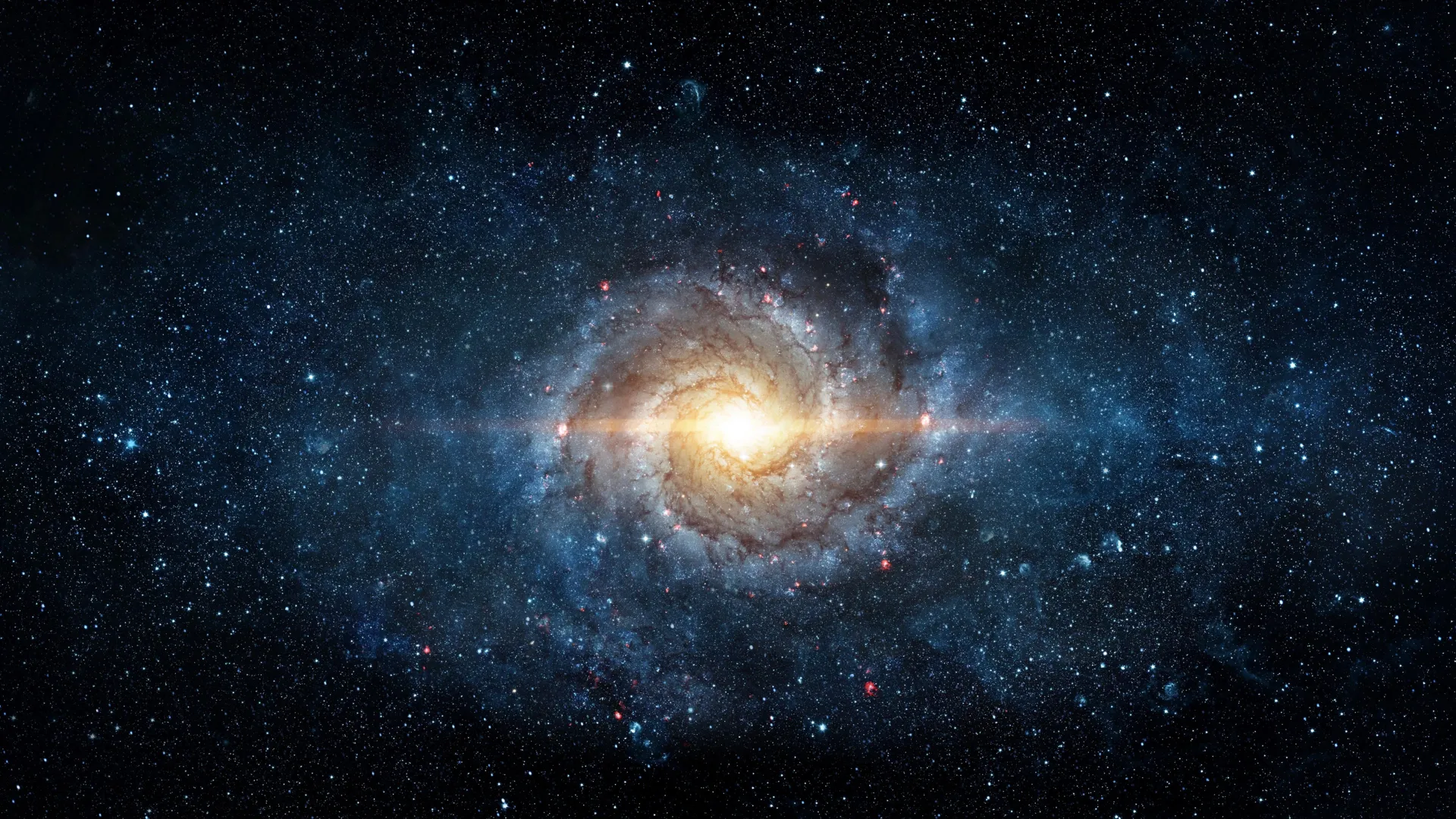
This pioneering work, unveiled at the prestigious international supercomputing conference SC ’25, represents a paradigm shift for astrophysics, high-performance computing, and the burgeoning field of AI-assisted scientific modeling. The underlying strategy, demonstrating remarkable versatility, holds immense promise for application in vast Earth system studies, including crucial research into climate and weather patterns.
The Intractable Challenge of Modeling Every Star
For decades, astrophysicists have harbored the ambition of constructing Milky Way simulations so detailed that they could meticulously follow the trajectory and evolution of each individual star. Such comprehensive models would empower researchers to directly compare theoretical frameworks of galactic evolution, structure, and star formation against the wealth of observational data available. However, the sheer complexity of accurately simulating a galaxy of our Milky Way’s magnitude presents an almost insurmountable computational hurdle. It necessitates the precise calculation of gravitational forces, intricate fluid dynamics, the complex processes of chemical element nucleosynthesis, and the violent cataclysms of supernova explosions, all while spanning immense temporal and spatial scales. This makes the task extraordinarily computationally demanding.
Historically, scientists have been unable to realistically model a galaxy as expansive as the Milky Way while simultaneously preserving the fine-grained detail essential for tracking individual stars. The most advanced simulations currently available are capable of representing systems with a total mass equivalent to roughly one billion suns. This figure falls significantly short of the Milky Way’s actual stellar population, which exceeds 100 billion stars. Consequently, the smallest discrete unit, or "particle," within these existing models typically represents a collective of approximately 100 stars. This aggregation inherently averages out the unique behaviors of individual stars, thereby limiting the accuracy of simulations for small-scale astrophysical processes. A primary contributor to this limitation is the interval between computational steps. To faithfully capture transient and rapid events, such as the complex evolution of a supernova, simulations must advance through incredibly small increments of time.
Reducing the time step for a simulation translates directly into a dramatically amplified computational burden. Even with the most sophisticated physics-based models available today, simulating the Milky Way on a star-by-star basis would demand approximately 315 hours of computation for every 1 million years of galactic evolution. At this prohibitive rate, generating just 1 billion years of galactic activity would require over 36 years of continuous, real-time processing. The intuitive solution of simply augmenting the number of supercomputer cores is not a practical or scalable approach, as energy consumption escalates astronomically, and computational efficiency tends to diminish as the number of cores increases.
A Novel Deep Learning Paradigm
To surmount these formidable obstacles, Hirashima and his dedicated team devised an innovative methodology that artfully integrates a deep learning surrogate model with established physical simulation techniques. This surrogate model was meticulously trained using high-resolution simulations of supernova events. Through this training, it acquired the ability to predict the intricate patterns of gas dispersal following a supernova explosion over a 100,000-year period, all without demanding additional computational resources from the primary simulation framework. This AI component proved instrumental, enabling the researchers to capture the galaxy’s overarching behavior while simultaneously resolving the fine details of localized, small-scale events, including the intricate physics of individual supernovae. The team rigorously validated their novel approach by comparing its outputs against large-scale simulations performed on RIKEN’s powerful Fugaku supercomputer and The University of Tokyo’s Miyabi Supercomputer System, confirming its accuracy and efficacy.
This revolutionary method delivers true individual-star resolution for galaxies harboring more than 100 billion stars, achieving this remarkable feat with astonishing speed. The simulation of 1 million years of galactic evolution, which previously took an prohibitive amount of time, was accomplished in a mere 2.78 hours. This translates to the astonishing capability of completing 1 billion years of simulated evolution in approximately 115 days, a stark contrast to the previously estimated 36 years.
Expansive Implications for Climate, Weather, and Ocean Modeling
The potential ramifications of this hybrid AI approach extend far beyond the realm of astrophysics, promising to revolutionize numerous areas of computational science that grapple with the challenge of linking microscopic physical phenomena with macroscopic behavior. Fields such as meteorology, oceanography, and climate modeling, which confront analogous multi-scale complexities, stand to benefit immensely from the development of tools that can significantly accelerate intricate, multi-scale simulations.
"I firmly believe that the integration of AI with high-performance computing signifies a fundamental transformation in how we approach and solve multi-scale, multi-physics problems across the entire spectrum of computational sciences," states Hirashima. He further elaborates, "This achievement unequivocally demonstrates that AI-accelerated simulations are poised to transcend their current role in pattern recognition and emerge as genuine engines for scientific discovery. They will empower us to meticulously trace the very origins of the elements that underpin life itself, charting their genesis and journey within our galaxy." This advancement not only offers an unprecedented window into the cosmos but also heralds a new era of computational science, promising accelerated discoveries across diverse scientific disciplines.